
Beach camping sounds like the simplest thing in the world until you try to work out where it is actually allowed. Most beaches in the United States prohibit overnight camping outright, enforcement varies from a polite word to a substantial fine, and the places that do permit it often require a permit booked months ahead. The appeal is real, and so is the paperwork.
You can tent camp on the beach at designated sites within national seashores, many state parks with beachfront campgrounds, some national forest and Bureau of Land Management coastal land, and a number of county and private campgrounds. What you generally cannot do is pitch a tent on a public municipal beach, which is where most people imagine beach camping happening. The practical approach is to search for designated beach campgrounds in the area you want, confirm the permit system, and work out tide times before choosing a pitch, because the tide decides more about your night than the view does.
In short: designated sites with permits, almost never a public town beach, and always check the tide table first.
The National Park Service manages several national seashores where beach camping is permitted under specific rules, and its guidance is consistent in one respect: rules, closures and permit systems vary by unit and by season, so the managing agency for your specific beach is the authority rather than any general article.
Below: where beach camping is actually permitted, how to find and book sites, how tides and sand change the way you pitch, what salt and wind do to equipment, and the wildlife and safety considerations specific to a shoreline.
Key Takeaways
- Most public municipal beaches prohibit overnight camping. Designated sites are the realistic route.
- National seashores, coastal state parks and some federal land offer permitted beach camping.
- Permits are often required and popular sites book out months in advance.
- Tide tables matter more than the view. Pitch above the high tide line, with margin.
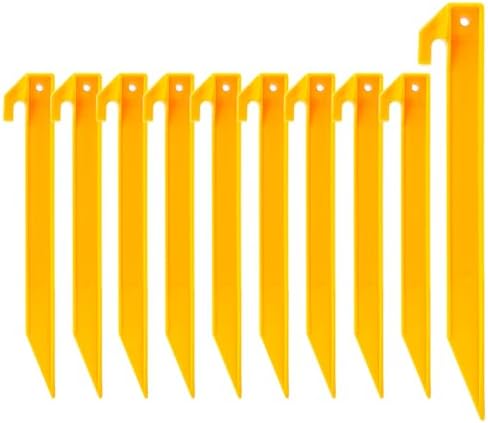
- Normal tent pegs do not hold in sand. Use sand stakes, screw anchors or buried deadmen.
- Salt air corrodes zips, poles and hardware, so rinse everything with fresh water after a trip.
- Nesting shorebirds and sea turtles close sections of beach seasonally, and those closures are enforced.
Gear That Works on Sand
Beach camping punishes ordinary camping kit in two specific ways: nothing holds in sand, and salt gets into everything. The items below address anchoring, shade and the sheltered space that makes a windy beach tolerable.
Anchoring is the part worth spending on. A shelter that lifts in an onshore gust at two in the morning is both a lost night and a safety problem for everyone downwind of it.



Where It Is Actually Permitted
The land manager determines the answer, and there are broadly five categories where beach camping happens legally. Knowing which one you are dealing with tells you what the booking process and the rules will look like before you start searching.
National seashores are the classic option. Several National Park Service units along the Atlantic, Gulf and Pacific coasts permit camping, sometimes in developed campgrounds behind the dunes and sometimes as backcountry or off-road-vehicle camping directly on the sand. Rules vary significantly between units.
| Land type | Typically allowed? | How it works |
|---|---|---|
| National seashore | Often, in designated areas | Permit or reservation, rules vary by unit |
| Coastal state park | Frequently | Reservation system, often booked far ahead |
| National forest or BLM coastal land | Sometimes | Dispersed rules, stay limits, seasonal closures |
| County or private campground | Often | Direct booking, usually the easiest option |
| Public municipal beach | Almost never | Overnight use usually prohibited by local ordinance |
| Private beachfront | Only with permission | Trespass otherwise, regardless of how empty it looks |
The category that catches people out is the municipal beach, because it is the one most people picture. Town and city beaches are typically governed by local ordinances that prohibit overnight presence entirely, and the fact that a beach is empty at midnight is not evidence that camping is permitted there.
Finding and Booking a Site
The search works best from the land manager inward rather than from a map outward. Pick the stretch of coast you want, identify which agency manages it, and go to that agency directly. Agency pages list what is permitted, what the permit system is, and which sections are closed.
Federal sites generally book through the central reservation system, state parks through their own, and private campgrounds directly. Popular beachfront sites in summer are among the hardest reservations in camping, and many release on a rolling window that regulars watch closely.
Off-road-vehicle beach camping is a specific sub-category worth knowing about. Several seashores permit driving on designated beach sections with a permit, which opens up camping spots that are inaccessible on foot. It brings its own requirements, typically including tyre pressure rules, recovery equipment and a vehicle permit.
Tides Decide Where You Sleep
This is the part that separates a good beach night from an emergency. The high tide line visible when you arrive reflects whatever the last high tide happened to be, and tonight can be considerably higher. Tides vary with the lunar cycle, and spring tides around new and full moons run noticeably further up the beach.
Onshore wind adds to this. A strong wind blowing toward the shore pushes water further up than the predicted tide height alone suggests, and a storm surge further still. The combination of a spring tide and an onshore blow is the scenario that floods tents.
The practical reading is the wrack line, the band of seaweed, driftwood and debris left by recent high water. Pitch well above it. If the ground between the wrack line and the dunes is narrow, that is a signal to find a different spot rather than a reason to squeeze in.
Anchoring in Sand
Ordinary tent pegs are designed to work by friction and resistance against soil structure. Sand has almost no structure, so a thin peg driven vertically pulls straight out under tension. This is the single most common beach camping failure, and it happens in the middle of the night during the first real gust.
Three approaches work. Wide plastic sand stakes present far more surface area to resist pulling. Screw-in anchors thread into the sand so that pulling against them engages the whole buried length. And deadman anchors, where something is buried horizontally and loaded from the middle, use the weight of sand above as the resistance.
- Check the tide table first. Find the high tide time and height for your dates before choosing a spot. The tide line you can see may be from a lower tide than the one coming tonight.
- Pitch above the wrack line, with margin. The wrack line is the band of seaweed and debris marking recent high water. Camp well above it, and further still if a spring tide or onshore wind is forecast.
- Find firmer sand if you can. Slightly damp, compacted sand holds anchors far better than loose dry sand. Look for firmer ground near the base of dunes, without damaging the dune vegetation.
- Use sand-specific anchors. Wide plastic sand stakes, screw-in anchors or buried deadmen all work. Standard thin pegs pull straight out of sand under any real tension.
- Bury deadman anchors where needed. Fill a stuff sack with sand, tie the guy line around it, bury it a foot down and pack sand over the top. It holds far better than anything driven vertically.
- Angle the tent into the wind. Put the narrowest, lowest end toward the prevailing onshore wind, and keep the door on the sheltered side to stop sand blowing straight into the inner.
- Guy out everything available. Beaches are open ground with nothing to break the wind. Use every guy point, not just the ones that look necessary in a calm afternoon.
- Rinse everything afterwards. Back home, rinse the tent, poles, zips and stakes with fresh water and dry completely. Salt left on hardware corrodes it and salt in fabric holds moisture.
| Method | How it resists pull | Holds in loose dry sand? | Trade-off |
|---|---|---|---|
| Standard thin tent peg | Friction against soil structure | No, pulls straight out | Useless on a beach, bring something else |
| Wide plastic sand stake | Large surface area against sand | Reasonably well | Bulky to pack, can snap if forced into shingle |
| Screw-in ground anchor | Threads engage the full buried length | Yes, the most reliable | Heavier and more expensive per anchor |
| Buried deadman | Weight of sand above a horizontal object | Yes, very well | Slow to set, and awkward to retrieve |
| Weight bags on a shelter | Mass holding the frame down | For shade shelters, yes | Heavy to carry, no use for guy lines |
What Salt, Sand and Sun Do to Your Kit
A beach is the harshest environment most camping gear ever sees, and the damage is cumulative rather than dramatic. Salt is hygroscopic, meaning it attracts and holds moisture, so salt left in fabric keeps that fabric slightly damp long after it looks dry. That is an ideal setup for mildew in storage.
Sand is abrasive and gets into zip teeth, where it grinds against the slider every time you open the door. A zip that feels gritty will eventually fail, and forcing it accelerates that. Brushing teeth clean and rinsing with fresh water is the difference between a tent that lasts years and one that does not.
UV exposure is higher at the coast because sand reflects a significant amount of light back up at your tent, so a fly gets hit from both directions. Over repeated trips that degrades coatings faster than inland use, which is one reason a dedicated beach shelter for daytime shade is worth having alongside your sleeping tent.
Do
- Confirm with the managing agency that camping is permitted before you go
- Check tide times and heights for your actual dates
- Pitch well above the wrack line and away from dunes
- Use sand stakes, screw anchors or buried deadmen, never thin pegs
- Rinse tent, poles, zips and stakes with fresh water afterwards
- Dry everything completely before storage to avoid mildew
Don’t
- Do not assume an empty municipal beach means camping is allowed
- Do not pitch below the wrack line or on a sandbar
- Do not dig into or camp on dunes or their vegetation
- Do not enter posted wildlife closures, which are enforced
- Do not leave food or rubbish out, since shore wildlife finds it fast
- Do not pack a salty tent away damp
If salt and damp have already caught up with your tent, see getting mildew out of a tent. For choosing a tent in the first place, family camping tents worth considering covers the options.
Wildlife and Shoreline Specifics
Beaches are nesting habitat, and that drives most of the seasonal closures you will encounter. Shorebirds nest directly on open sand in shallow scrapes that are almost invisible, and sea turtle nesting seasons close long stretches of coast in the south-east and Gulf. Both are protected, and both are enforced.
Artificial light is a specific issue during turtle nesting season, because hatchlings orient toward the brightest horizon and lights inland draw them away from the sea. Many beaches require shielded or red lighting during the season, which is worth checking before you arrive with a white headlamp as your only light.
Food storage matters as much as inland. Gulls, raccoons, foxes and crabs all investigate campsites, and an unsecured food bag on a beach disappears faster than almost anywhere else. Hard containers or a sealed cooler in a vehicle are the practical answers.
For the general kit list, see what to pack for tent camping, and check the National Park Service camping pages for the unit you plan to visit, since rules and closures differ between seashores.
Honest Limits
This article cannot tell you whether a specific beach permits camping, and anyone who claims to has not accounted for how often these rules change. Permit systems, seasonal closures, vehicle access rules and stay limits are all set locally and revised regularly, sometimes within a season.
Tide behaviour is also local. Tidal range varies enormously by coast, from a foot or two in parts of the Gulf to many feet on parts of the Atlantic and Pacific, and local geography modifies the published predictions. Use a tide table for the specific location rather than a general sense of how tides work.
The gear recommendations here are based on what the products are designed for rather than on controlled testing on a beach. Anchoring performance in particular depends heavily on sand type and moisture content, which no listing can predict for your location.
Stay Safe Out There
Water is the main hazard, and it is not just the tide. Rip currents are the leading cause of beach rescues, they are strongest near piers, jetties and sandbar gaps, and swimming at an unguarded beach at dawn or dusk when nobody is around compounds the risk considerably.
Exposure cuts both ways on a coast. Sun reflected off sand and water burns faster than people expect during the day, and a clear night with an onshore wind gets cold quickly even in summer. Pack for both, and treat shade during the day as seriously as insulation at night.
Weather moves fast on open coast with nothing to block your view or slow it down. Watch for building wind and approaching storms, and be prepared to strike camp and move rather than ride out a squall in a tent on exposed sand. Lightning is an immediate reason to get off an open beach and into a hard-sided vehicle or building.
Disclaimer: this article is general outdoor information, not safety, legal or medical advice. Beach rules, closures, tides and conditions vary and change, and you are responsible for decisions made on your trip. Check with the managing agency, read local tide tables, and seek professional medical help for any injury that concerns you.
Frequently Asked Questions
Where can you legally tent camp on a beach?
At designated sites within national seashores, many coastal state parks, some national forest and Bureau of Land Management coastal land, and county or private campgrounds. Public municipal beaches almost always prohibit overnight camping under local ordinances.
Can I camp on any empty beach?
No. An empty beach is not an unregulated one. Most public beaches prohibit overnight use, private beachfront is trespass, and protected areas carry seasonal closures. Check with whichever agency manages that stretch of coast before planning anything.
Do I need a permit for beach camping?
Usually yes at the places that allow it. National seashores and state parks typically operate permit or reservation systems, and popular beachfront sites book out months ahead in summer. Some also require a separate vehicle permit for beach driving.
How far from the water should I pitch my tent?
Well above the wrack line, the band of seaweed and debris marking recent high water, with extra margin if a spring tide or onshore wind is forecast. If the space between the wrack line and the dunes is narrow, find somewhere else.
How do I stake a tent in sand?
Use wide plastic sand stakes, screw-in anchors, or deadman anchors where you bury a sand-filled stuff sack horizontally and tie the guy line around its middle. Standard thin pegs pull straight out of sand under any real tension.
What does salt air do to a tent?
Salt is hygroscopic, so it holds moisture in fabric long after the tent looks dry, which invites mildew in storage. It also corrodes zips, pole ferrules and hardware. Rinse everything with fresh water and dry fully after a beach trip.
Can I have a campfire on the beach?
Sometimes, in designated areas and with conditions attached, but many beaches prohibit it entirely and others restrict it seasonally or require a permit. Rules vary between adjacent beaches, so check locally rather than assuming.
Are there seasonal closures to know about?
Yes, and they are enforced. Shorebird nesting and sea turtle nesting seasons close sections of beach, sometimes at short notice. Turtle nesting areas also commonly restrict artificial lighting, so check lighting rules as well as access.
Is beach camping safe for families?
At managed campgrounds, generally yes, with the usual water supervision. Rip currents are the main hazard and are strongest near piers, jetties and gaps in sandbars. Avoid swimming at unguarded beaches when nobody else is around.
What should I do if a storm comes in?
Strike camp and move rather than riding it out on exposed sand. Open coast gives wind nothing to slow it down, and lightning is an immediate reason to get off the beach entirely and into a hard-sided vehicle or building.
The Bottom Line
Beach camping is widely available and narrowly permitted, which is why the question is harder than it looks. National seashores, coastal state parks, some federal land and private campgrounds all offer it, usually with a permit and often with a booking window you need to watch. Public town beaches almost never allow it, regardless of how quiet they look after dark.
Once you have a legal spot, two things determine how the night goes. Read the tide table and pitch well above the wrack line, because water rising into your tent is the one mistake that cannot be fixed at two in the morning. And anchor properly, with sand stakes, screw anchors or buried deadmen, because ordinary pegs do not hold in sand and a beach gives wind nothing at all to slow it down.