
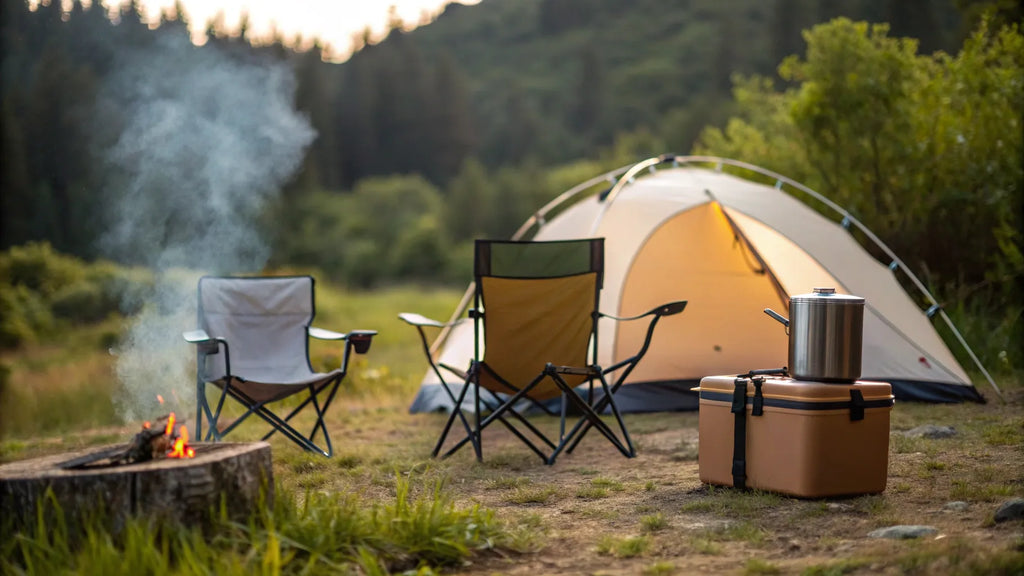
Camping checklists tend to be written by people trying to sell you forty items. The honest version is much shorter, because a first trip fails for predictable reasons and almost none of them involve a missing gadget. People come home early because they were cold, wet, could not see, or could not sleep, and that is a list of four problems rather than forty.
What you need for tent camping breaks down into four essentials and a short list of useful extras. The essentials are shelter, meaning a tent with a rainfly and enough pegs; sleep, meaning an insulated mat and a bag rated below the overnight low; light, meaning a headlamp with working batteries; and water, meaning enough to drink plus a way to treat more. After that come cooking kit, a camp chair, a first aid kit and weather-appropriate clothing. Everything else is comfort, and comfort can wait until you know whether you enjoy this.
In short: shelter, sleep, light and water first. Add cooking and comfort once those four are genuinely sorted.
The National Park Service makes the point that conditions change faster than forecasts, which is the reasoning behind carrying more insulation and more water than the day appears to need. A kit list is really a list of margins, and the margin matters most on the trip where something does not go to plan.
Below: the four essentials in detail, the second tier worth adding, what beginners reliably overbuy, a checklist you can work through, and the mistakes that send people home early.
Key Takeaways
- Four things matter first: shelter, sleep, light and water. Everything else is optional on a first trip.
- Sleep is where to spend. An insulated mat does more for warmth than any extra blanket.
- The ground conducts heat away faster than cold air, which is why mat R-value matters so much.
- Choose a sleeping bag rated below the forecast overnight low, not at it.
- A tent is only as good as its pegs and guy lines, and both get left out of cheap sets.
- Beginners reliably overbuy cooking kit and underbuy sleeping kit.
- Borrow or rent before buying a full setup, since two nights tells you more than any review.
A Starter Setup That Actually Works
This is a working first setup rather than an exhaustive list. It covers the four essentials plus cooking and somewhere to sit, which is the point at which most people find camping genuinely comfortable.
If the budget is tight, prioritise the sleeping mat and bag over everything else. A cheap tent in good weather is survivable; a cold night is what makes people decide camping is not for them.


The Four Things That Actually Matter
Everything on a camping list exists to solve one of four problems: staying dry, staying warm enough to sleep, being able to see, and having safe water. Get those right and a trip is enjoyable with remarkably little else. Get one wrong and no amount of other equipment compensates.
Shelter means a tent with a rainfly that covers the inner, enough pegs to stake it properly, and guy lines that get used. The fly and the guy lines are the parts beginners skip, and both are the difference between a dry night and a wet one when weather arrives.
Sleep means an insulated mat and a bag rated below the overnight low. This is where most first-timers go wrong, because the mat looks like a comfort item and is actually the main piece of insulation. Light means a headlamp rather than a lantern, because you need hands free. Water means enough for the trip plus a way to treat more if the site has no tap.
| Essential | Minimum version | What goes wrong without it |
|---|---|---|
| Shelter | Tent with full rainfly, all pegs, guy lines used | Wet gear, wet bedding, trip ends early |
| Sleep system | Insulated mat plus a bag rated below the low | Cold night, no sleep, and a decision never to camp again |
| Light | Headlamp with charged batteries or a spare set | Cooking, pitching and finding the toilet all become ordeals |
| Water | Enough to drink plus a filter or tablets | Dehydration, or drinking untreated water and regretting it |
Choosing a Tent Without Overthinking It
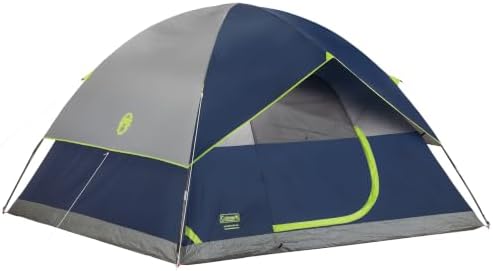
For a first tent, three things matter and the rest is marketing. It needs a rainfly that reaches well down the sides, sealed or taped seams, and a capacity rating at least two higher than the number of people sleeping in it. Capacity ratings count bodies on the floor with no gear at all.
Beyond that, the choice is between a dome, which packs small and handles wind well, and a cabin, which gives standing room at the cost of bulk and wind resistance. For a first purchase, a dome is the safer bet because it is more forgiving of a bad pitch and a windy night.
Check what comes in the box. Budget tents often ship with the bare minimum number of thin pegs and no guy lines attached, both of which you will want. A handful of better pegs and a set of guy lines costs very little and improves a cheap tent considerably.
If you are camping as a group rather than solo, the sizing calculation changes significantly: see family camping tents worth considering.
The Sleep System Is the Whole Game
Here is the mechanism that explains most bad first nights. Air is a poor conductor of heat, but the ground is a good one. Lying on cold ground, your body loses heat by conduction far faster than it loses it to the surrounding air, and a sleeping bag compressed underneath you has almost no insulating value because its loft is crushed.
That is why the mat matters more than the bag for warmth. Mats are rated by R-value, which measures resistance to heat flow, and higher numbers mean more insulation. Roughly, R-2 suits summer, R-4 handles three seasons, and R-5 and above is what you want on cold ground or snow.
For the bag, choose a rating below the forecast overnight low rather than at it. Temperature ratings are often survival or limit figures rather than comfort figures, and individual tolerance varies a lot. A bag rated ten degrees colder than you expect costs little extra and removes the main failure mode.
The Second Tier: Useful, Not Essential
Once the four essentials are sorted, a small second tier makes camping pleasant rather than merely survivable. A camp chair is the single biggest comfort upgrade per dollar, because sitting on the ground for an evening gets old quickly and nobody plans for it.
Cooking kit comes next, and here the honest advice is to start minimal. A single stove, one pot, a lighter and something to eat with handles most camp food. Elaborate cook sets look appealing and mostly travel back and forth unused for the first several trips.
| Item | Priority | Why |
|---|---|---|
| Camp chair | High | Biggest comfort gain per dollar on any trip |
| Stove, fuel, pot, utensil | High if staying more than a night | Hot food and drink change how a cold evening feels |
| First aid and repair kit | High | Small problems end trips when you cannot fix them |
| Layered clothing and waterproof | High | Weather changes faster than forecasts do |
| Cooler or food box | Medium | Matters for drive-in camping, not for one night |
| Camp table | Medium | Useful at a site with no picnic table |
| Lantern | Low | A headlamp covers most of it; a lantern is a luxury |
| Multi-tool, cordage, tarp | Low but cheap | Solve problems you cannot predict in advance |
Fire-related kit sits slightly apart. A lighter is enough at a campsite with a fire ring and permitted fires, but a ferro rod and prepared tinder weigh almost nothing and work when a lighter is soaked or empty, which is a situation that happens more often than you would think.
We cover that in detail in lighting a fire without matches.
What Beginners Overbuy
The pattern is consistent: people overbuy cooking equipment and camp furniture, and underbuy sleeping equipment. A full cook set, a table, a lantern and a coffee press add up to real money and real car space, while the mat that would have made the night comfortable gets skipped as an extra.
Pack size is the other thing people underestimate. Everything has to go in a car alongside passengers, and a bulky instant tent plus a full kitchen plus chairs fills a boot fast. Starting minimal and adding what you actually miss is cheaper and produces a better-tuned kit than buying a complete setup in one go.
Do
- Borrow or rent a setup before buying your own
- Spend the most on the sleeping mat and bag
- Pitch the tent at home before the first trip
- Pack layers rather than complete outfits
- Carry more water and more insulation than the forecast suggests
- Keep headlamp, waterproof and water within easy reach
Don’t
- Do not buy a full cook set for a first overnight trip
- Do not rely on a phone torch as your only light source
- Do not wear or pack cotton as an insulating layer
- Do not choose a tent by capacity rating alone
- Do not skip the guy lines because the evening looks calm
- Do not pack the tent away damp at the end of the trip
If you are wondering whether you need a dedicated pack for all this, we worked through that question in whether a hiking backpack is worth it.
Working Through the Pack
The sequence below is ordered so that the things that end trips get confirmed first. It takes about twenty minutes the first time and much less after that, once you know what your own setup looks like.
- Check the overnight low, not the daytime high. Look up the forecast minimum for your location and date. Everything about your sleeping kit follows from that number, and it is usually colder than people expect.
- Lay out the four essentials first. Tent with fly, pegs and guy lines; sleeping mat and bag; headlamp with charged batteries; water plus a way to treat more. Confirm all four before anything else goes in.
- Count the pegs against the tent. Pitch the tent at home and count what you actually need. Missing or bent pegs are the most common small failure, and spares weigh almost nothing.
- Pack clothing in layers, not outfits. A base layer, an insulating mid layer and a waterproof shell cover far more conditions than the same weight of cotton clothing.
- Add cooking only if you will use it. A stove, fuel, a pot and something to eat with. For one night, food that needs no cooking removes an entire category of things to forget.
- Build a small first aid and repair kit. Plasters, tape, painkillers, any personal medication, plus duct tape and a spare pole sleeve. Most trip-ending problems are small and fixable.
- Keep the essentials reachable. Headlamp, waterproof and water go where you can get them without unpacking. You will want all three in the dark at some point.
- Do a dry run in the garden. Pitch the tent, inflate the mat and get in the bag at home. Finding out something is missing or broken in your garden costs nothing.
Honest Limits
This is a general list for mild to moderate conditions at a developed or lightly developed campsite. Winter camping, backcountry trips with no water source, and anywhere with specific wildlife requirements such as bear canisters all add their own non-negotiable items.
Temperature tolerance also varies more between people than any list can account for. The same bag and mat that one person finds comfortable at 40 degrees F leaves another cold, so treat ratings as a starting point and adjust based on your own first few trips.
The products here are selected from listing specifications and from what buyers widely report rather than from controlled testing. Fit, in the sense of how a bag suits your body and how a tent suits your car and your campsite, is individual and not something an article can settle for you.
Stay Safe Out There
Tell someone where you are going and when you expect to be back, even for a one-night trip at a developed campground. It costs nothing and is the single most useful thing you can do before leaving, because it shortens the response time if something goes wrong.
Cold is the hazard beginners underestimate most, and it is almost always a sleeping system problem rather than a weather problem. Watch for shivering that will not stop, clumsiness and confusion, which mean someone needs dry insulation and shelter straight away rather than another hour outside.
Local rules, fire restrictions and closures change through the season. The National Park Service publishes guidance that is updated as conditions do, and rangers would far rather answer a question at the visitor centre than respond to a problem.
Disclaimer: this article is general outdoor information, not safety or medical advice. Conditions change, equipment fails, and you are responsible for decisions made on your trip. Check local rules, ask a ranger when you are unsure, and seek professional medical help for any injury or cold-related symptom that concerns you.
Frequently Asked Questions
What do you really need for tent camping?
Four things: a tent with a rainfly and its pegs, an insulated sleeping mat and a bag rated below the overnight low, a headlamp, and water plus a way to treat more. Everything else is comfort you can add later.
What should I spend the most on?
The sleeping mat, then the bag. Cold nights are what make people give up on camping, and the ground draws heat away faster than the air does, so insulation underneath you matters more than anything over you.
Do I need a sleeping mat, or is a bag enough?
You need the mat. A sleeping bag compressed underneath you has almost no insulating value because its loft is crushed flat, so without a mat you are effectively lying on cold ground inside a thin fabric shell.
What temperature sleeping bag should I get?
One rated below the forecast overnight low rather than at it. Ratings are often limit or survival figures rather than comfort figures, and tolerance varies. A bag rated ten degrees colder than expected removes most of the risk.
Do I need a camping stove for one night?
Not necessarily. Food that needs no cooking removes an entire category of things to forget and go wrong. For trips of more than one night, or in cold weather where a hot drink matters, a stove becomes worth carrying.
What clothes should I pack?
Layers rather than outfits: a base layer, an insulating mid layer and a waterproof shell. Avoid cotton, which stops insulating once wet and dries slowly, and pack more warm layers than the daytime forecast suggests.
Can I just use a phone torch instead of a headlamp?
It works in an emergency but not as a plan. A headlamp keeps both hands free for pitching, cooking and finding things, and it does not drain the battery on the device you may need to call for help.
How much water should I bring?
Enough for drinking, cooking and basic washing, plus a filter or tablets for topping up. Roughly two litres per person per day for drinking is a reasonable baseline, more in heat or at altitude.
What do beginners most often forget?
A headlamp, spare pegs, and something to sit on. After that, the most common gap is an insulated sleeping mat, which people treat as a comfort item rather than the main piece of insulation it actually is.
Should I buy or borrow my first setup?
Borrow or rent if you can. Two nights tells you more about what suits you than any amount of reading, and it avoids spending several hundred dollars before finding out whether you enjoy sleeping outdoors.
The Bottom Line
A first camping kit is shorter than the lists suggest, because first trips fail for four reasons: cold, wet, dark and thirsty. Cover shelter, sleep, light and water properly and you have solved almost everything that actually ends trips early. A tent with its fly and pegs, an insulated mat and a decent bag, a headlamp, and water plus a way to treat more is a complete setup.
After that, add deliberately rather than all at once. A camp chair and a simple stove are the two upgrades most people actually use; elaborate cook sets and lanterns mostly travel back and forth untouched. Borrow a setup for a couple of nights before committing to buying one, spend the money you do have on the sleeping mat, and let the trips tell you what is missing.