
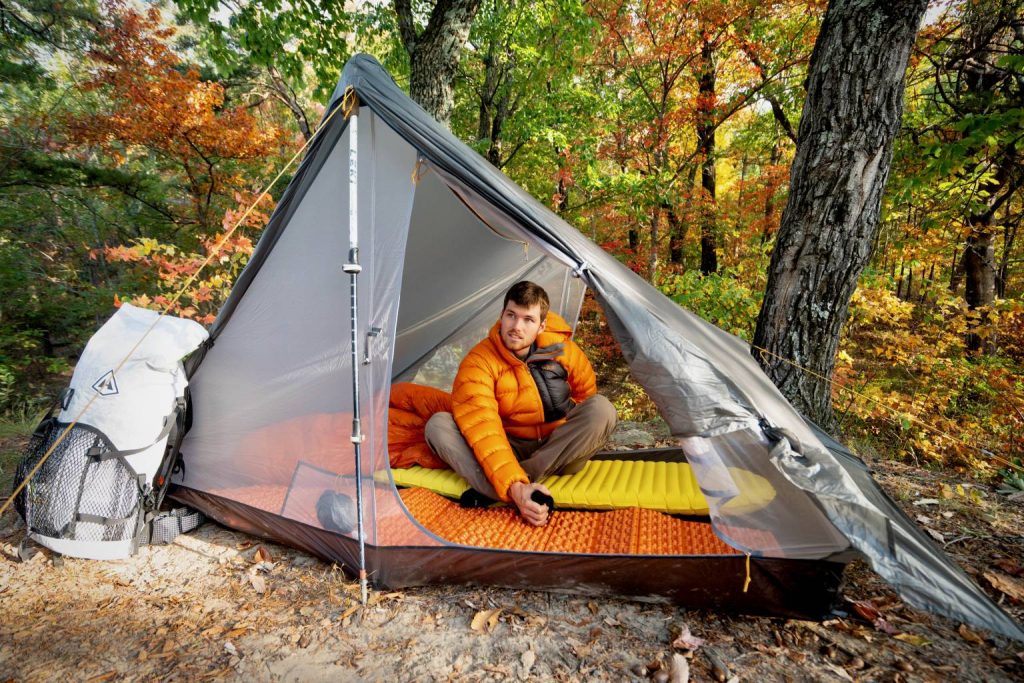
Tent brands get ranked as though they are competing on a single scale, and they are not. A company making canvas basecamp shelters and one making two-pound backpacking tents are solving different problems for different people, and the best brand is whichever one is good at the thing you need. This guide covers 10 brands, each represented by one flagship tent.
The best camping tent brand depends on what kind of camping you do, and the useful split is between four groups. Canvas specialists such as Teton Sports build for durability and long stays. Family car camping brands including CORE, Coleman and Naturehike compete on space, pitching speed and weather protection. Technical backpacking brands such as Marmot and Kelty bring decades of engineering to tents you carry. And value-focused makers including Clostnature, GEERTOP and OneTigris deliver strong specification sheets at lower prices, with correspondingly less history and support behind them. Knowing which of those four groups you belong to settles most of the question before you compare a single tent.
In short: pick the category first, then the brand within it, because cross-category rankings mislead.
Brand matters less in tents than in packs, because fit is not individual in the same way, and more than in some categories because construction quality shows up in exactly the conditions where a tent has to work. A taped fly and sealed seams are brand decisions, not features you can inspect in a photograph.
Below you will find how we chose these brands, the 10 flagship tents in price order with honest limits on each, and a buying guide covering what actually separates brands, which construction details to check, and how to match a brand to the camping you do.
We may earn a commission from qualifying purchases made through links on this page, at no extra cost to you. Full disclosure.
Top 3 Picks at a Glance
Key Takeaways
- Best Overall is Teton Sports, shown through its canvas family tent, because canvas breathes and lasts in a way coated synthetics do not.
- Best Instant Pitch is Naturehike, whose Village instant tent combines a fast pole system with a full rainfly.
- Best Family Cabin is CORE, whose 9 person instant cabin gives standing room across the floor in a two minute pitch.
- Brands specialise: canvas, family car camping, technical backpacking and value are four separate markets.
- Construction details such as taped flies and sealed floor seams matter more than brand reputation alone.
- Heritage brands like Marmot, Kelty and Coleman bring support and spares that marketplace names do not.
- Value brands often publish better specifications than their price suggests, with shorter track records.
How We Chose These Products
These are research-based picks rather than field tests. For a brand round-up we shortlisted makers that are widely available and widely reviewed, then selected one flagship tent from each to represent it. Established outdoor specialists were favoured where their tents were competitive, and brands with thin review histories were excluded.
Each tent was checked against the specifications that actually determine performance: fabric and coating, whether the fly is full or partial, pole material, floor dimensions and centre height, ventilation design, and the stated pitching method. Claims we could not confirm from the listing were left out.
Only one product per brand appears, which is the point of a brand round-up, and we excluded near-duplicates and sponsored placements. The list deliberately spans canvas basecamp shelters through to two person backpacking tents, because those are different markets rather than points on one scale.
The 10 Best Camping Tent Brands Right Now
The list runs from the highest priced tent down to the lowest, each representing its brand. Badges describe what each brand does best rather than ranking them on a single scale, because a canvas basecamp tent and a two person backpacker are not competing for the same buyer.
| # | Product | Best for | Standout feature | |
|---|---|---|---|---|
| 1 | Teton Sports Canvas Tent for All-Season Family Camping | canvas durability for people who camp in all seasons | Cotton canvas construction rather than coated nylon | View |
| 2 | Naturehike Village Instant Tent with Full Rainfly | getting a large tent up without threading poles | Instant pole system with a full rainfly | View |
| 3 | CORE 9 Person Instant Cabin Tent | large family groups wanting standing room fast | Pre-attached poles that lock out in about two minutes | View |
| 4 | MARMOT Crane Creek 2P/3P Backpacking Tent | carrying a tent rather than driving it to a pitch | An established technical brand at an accessible price | View |
| 5 | OneTigris COSMITTO 2 Person Backpacking Tent | pitching on ground where stakes will not hold | Free standing design in a light three-season tent | View |
| 6 | Coleman Sundome Camping Tent with Rainfly | wet-climate camping without spending much | WeatherTec welded corners and inverted seams | View |
| 7 | GEERTOP 4 Person 4 Season Camping Tent | camping outside the normal three-season window | A four-season rating in a family-sized tent | View |
| 8 | Kelty Late Start Backpacking Tent, Two Person | a long-established backpacking brand without the premium | Quickcorners pole attachment for faster pitching | View |
| 9 | Amazon Basics 3-Season Dome Tent with Rainfly | finding out whether you enjoy camping at all | Freestanding dome that pitches in under six minutes | View |
| 10 | Clostnature Lightweight Backpacking Tent, 1 to 4 Person | backpacking capability at the lowest sensible price | Aluminium poles and PU 5000 coating at a budget price | View |
Teton Sports Canvas Tent for All-Season Family Camping

Best for: canvas durability for people who camp in all seasons
Teton Sports takes the top spot because canvas is a genuinely different proposition from the coated polyester almost everything else here uses. Canvas breathes, which largely removes the condensation problem that defines synthetic tents, and it tolerates sun, abrasion and repeated pitching for years rather than seasons. The listing positions it for family camping in all seasons.
Every other brand on this list makes lighter, cheaper and more packable tents, and for a weekend in summer those advantages are real. What canvas buys is longevity and comfort over long stays, which is why it dominates basecamp and seasonal camping. It is also by some distance the heaviest option here.
Key features
- Cotton canvas construction rather than coated synthetic
- Built for family camping across all seasons
- Breathable fabric that reduces interior condensation
- Designed for repeated long-stay pitching
Pros
- Canvas breathes, so condensation is far less of a problem
- Durability measured in years rather than seasons
- Comfortable for long stays in one place
Cons
- Heavy and bulky compared with every synthetic tent here
- Needs proper drying before storage, like all canvas
Skip it if: you move campsite often or carry your tent any distance.
Check Price on AmazonNaturehike Village Instant Tent with Full Rainfly

Best for: getting a large tent up without threading poles
Naturehike has built its reputation on well-specified tents at prices below the traditional outdoor brands, and this is the family end of that range. The listing combines an instant pole system with a full rainfly and waterproof construction, covering anywhere from four to eight people depending on which version of the tent you choose to buy.
Against the backpacking brands further down this list it is a completely different category, built for car camping rather than carrying. Against the budget family tents lower down, the specification and the full rainfly are both a clear step up, and the brand has a considerably longer track record than most marketplace names selling at the same price.
Key features
- Instant pole system for a fast pitch
- Full rainfly rather than a partial cover
- Available in four and eight person versions
- Waterproof construction for car camping use
Pros
- Fast to pitch for a tent of this size
- Full rainfly is better weather protection than partial
- Established brand with a broad outdoor range
Cons
- Bulky packed size, as all instant tents are
- Too large and heavy for anything but car camping
Skip it if: you need something you can carry on your back.
Check Price on AmazonCORE 9 Person Instant Cabin Tent

Best for: large family groups wanting standing room fast
CORE has built a strong following specifically in the family cabin tent category, and this is the clearest expression of it. The listing describes pre-attached poles that lock into place for a pitch in two minutes or less, on a 14 by 9 foot floor with a 78 inch centre height and H20 Block coated fabric.
Naturehike offers a comparable instant system and Coleman offers better weatherproofing detail at a lower price. CORE sits between the two, with the cabin geometry that gives genuine standing room across most of the floor rather than only at the peak, which is the thing families notice first and comment on most.
Key features
- Pre-attached poles for a two minute pitch
- 14 by 9 foot floor with 78 inch centre height
- H20 Block coated fabric with taped rainfly
- Lower vents plus mesh ceiling for airflow
Pros
- Genuinely fast to pitch even alone
- Standing room across most of the floor
- Good ventilation design from floor to ceiling
Cons
- Bulky packed size because poles stay attached
- Large footprint needs a generous pitch
Skip it if: your usual campsite pitches are small or uneven.
Check Price on AmazonMARMOT Crane Creek 2P/3P Backpacking Tent

Best for: carrying a tent rather than driving it to a pitch
Marmot is one of the established technical outdoor brands, and the Crane Creek is where that engineering meets a sensible price. It is a two or three person backpacking tent sold with a footprint option, which is the kind of detail that signals a maker expecting the tent to be used hard rather than stored in a garage.
Against the family brands above it is a fraction of the size and weight and is built to be carried. Against Kelty and OneTigris, which occupy very similar ground on this list, the differences come down to pole geometry, vestibule arrangement, packed size and which brand’s design philosophy happens to suit how you camp.
Key features
- Two and three person versions available
- Footprint available to protect the floor
- Backpacking-oriented weight and packed size
- Built by an established technical outdoor brand
Pros
- Technical pedigree at an accessible price point
- Light enough to carry for multi-day trips
- Footprint option extends floor life
Cons
- Far smaller than any family tent here
- Backpacking tents trade space for weight
Skip it if: you camp from a car and want room to stand up.
Check Price on AmazonOneTigris COSMITTO 2 Person Backpacking Tent
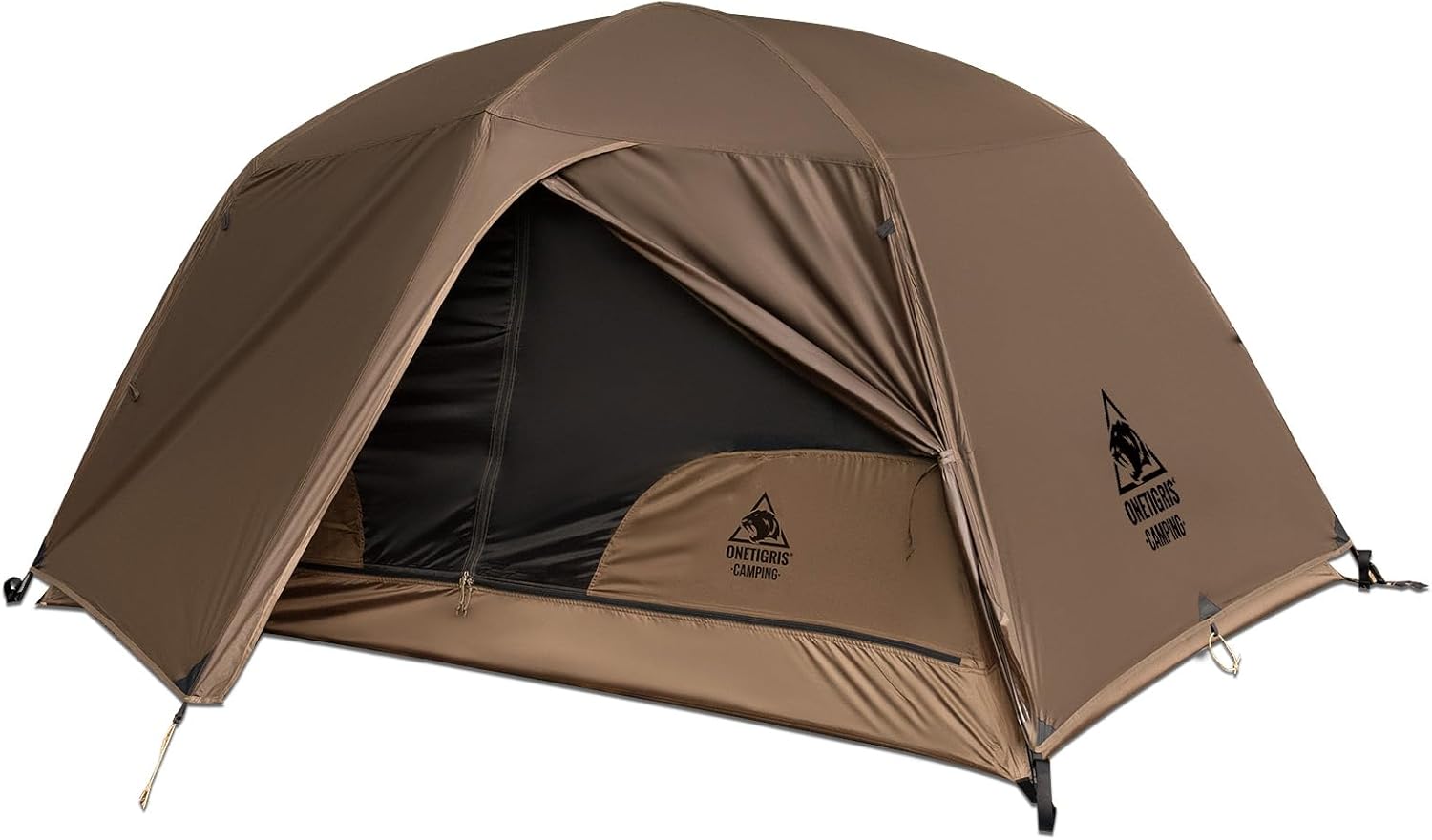
Best for: pitching on ground where stakes will not hold
OneTigris has grown from a tactical gear maker into a credible shelter brand, and the COSMITTO shows the approach. The listing describes a free standing, lightweight, waterproof two person three-season tent, and freestanding matters more than people expect on rock, gravel and hard ground where pegs simply will not go in.
Marmot and Kelty bring longer track records in backpacking specifically. What OneTigris offers instead is a freestanding structure and a design sensibility drawn from a different part of the outdoor market entirely, frequently at a lower price than the established names for a broadly comparable specification sheet, which is a trade some backpackers will take happily and others will not.
Key features
- Free standing structure that holds shape without pegs
- Two person three-season design
- Lightweight construction for carrying
- Waterproof fabric and fly
Pros
- Freestanding is genuinely useful on hard ground
- Light enough for multi-day carrying
- Good specification relative to price
Cons
- Shorter track record than the heritage brands
- Two person tents are tight with gear inside
Skip it if: you want a brand with decades of backpacking history behind it.
Check Price on AmazonColeman Sundome Camping Tent with Rainfly

Best for: wet-climate camping without spending much
Coleman is the brand most people have camped in at some point, and the Sundome is the reason it keeps that position. The listing describes a WeatherTec system with welded corners and inverted seams, which attacks the place tents actually leak, the floor perimeter, rather than the fly where attention usually goes.
The family brands above offer more space and faster pitching. What Coleman offers instead is a specification that addresses the leak paths that actually matter, at a price well below any of them, plus the broadest availability and the best spare part support of any brand on this list, which matters more than it sounds once a pole snaps mid trip.
Key features
- WeatherTec system with welded corners and inverted seams
- Six foot centre height with room for two queen airbeds
- Large windows and a ground vent for airflow
- Continuous pole sleeves with clip attachments
Pros
- Floor construction genuinely resists water ingress
- Packs smaller than any cabin tent here
- Widest availability and support of any brand listed
Cons
- Dome walls cut usable space at the edges
- No room divider or porch
Skip it if: you want standing room across the whole floor.
Check Price on AmazonGEERTOP 4 Person 4 Season Camping Tent
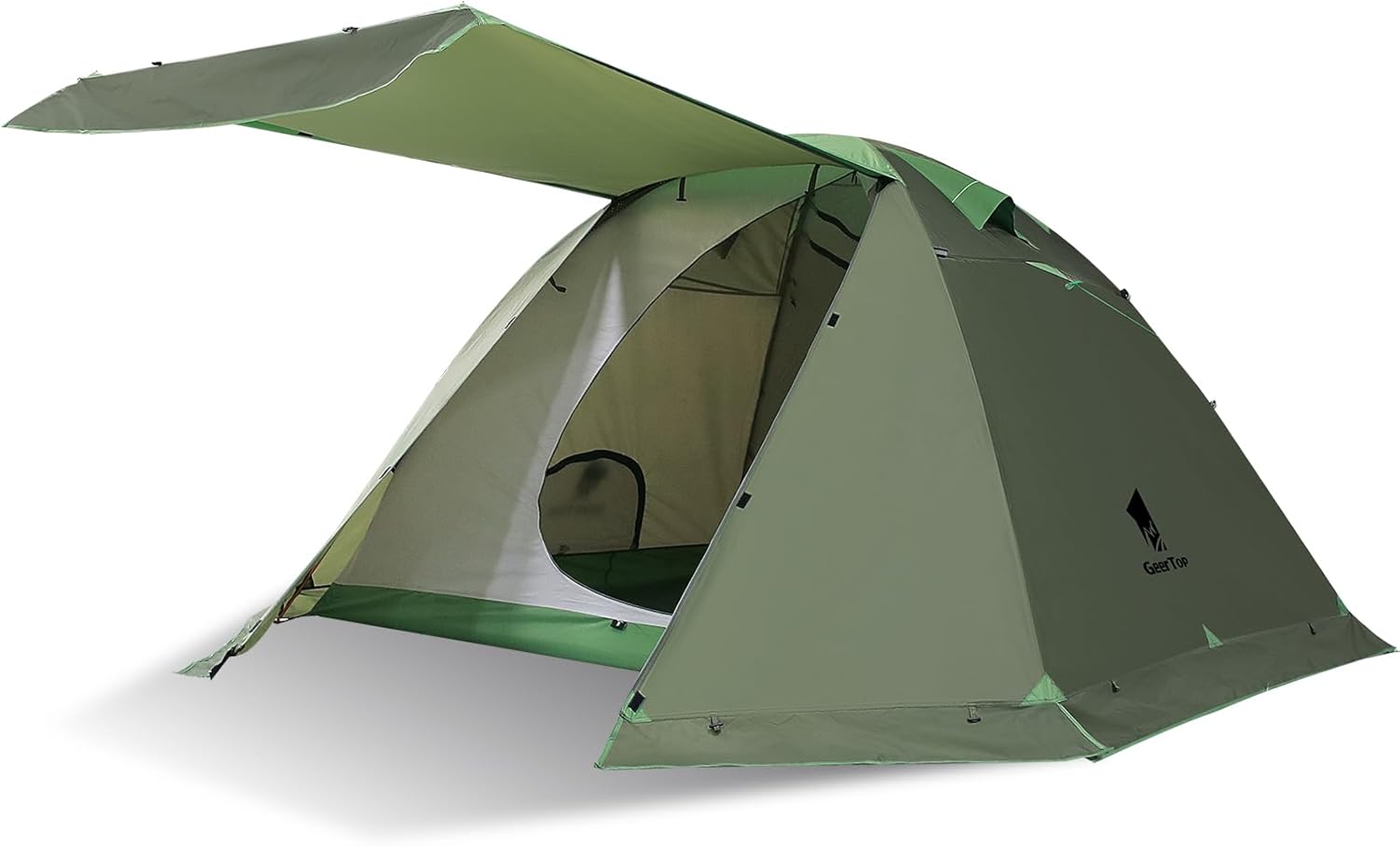
Best for: camping outside the normal three-season window
GEERTOP has carved out a niche in four-season shelters at prices the established brands do not reach, and a four person four-season tent is an unusual combination. Most winter-rated tents are built for one or two people, so a family-sized option opens up cold-weather camping to groups rather than only to solo mountaineers.
Against Clostnature, which also works in this space, the difference is mainly capacity. Against the three-season family brands higher up the list, this one is built around snow load and wind resistance rather than summer ventilation, and it will feel noticeably stuffier than any of them in warm weather, so it is a poor choice as a one tent year round solution.
Key features
- Four-season rating in a four person size
- Waterproof construction for cold conditions
- Family capacity rather than solo or two person
- Built for wind and snow rather than summer airflow
Pros
- Four-season capability at a family size
- Covers trips outside the normal camping season
- Priced well below specialist winter brands
Cons
- Less ventilation than a three-season tent in summer
- Heavier for the same capacity
Skip it if: you only ever camp between spring and autumn.
Check Price on AmazonKelty Late Start Backpacking Tent, Two Person

Best for: a long-established backpacking brand without the premium
Kelty has been making packs and tents since the 1950s, and the Late Start is the brand at its most accessible. The listing describes a lightweight two person camping tent shelter with Quickcorners, a pole attachment system designed to speed up pitching, which matters most when you arrive somewhere late and tired.
Marmot occupies very similar ground at a slightly higher price with a footprint option. OneTigris undercuts both. What Kelty brings to the comparison is decades of backpacking heritage and a design clearly aimed at making the end of a long day easier, rather than at shaving off the last few grams of packed weight.
Key features
- Two person lightweight backpacking design
- Quickcorners pole attachment system
- Shelter built for thru-hiking and general backpacking
- Long-established brand in packs and tents
Pros
- Heritage brand at an accessible price
- Quickcorners genuinely speeds up a tired pitch
- Light enough for multi-day trips
Cons
- Smaller review base than the mass-market brands
- Two person capacity is tight with gear
Skip it if: you need space for more than two people.
Check Price on AmazonAmazon Basics 3-Season Dome Tent with Rainfly

Best for: finding out whether you enjoy camping at all
Not a brand anyone chooses for prestige, and that is rather the point of including it on a list about brands. The listing covers the fundamentals properly: water-resistant coated polyester with welded seams, a removable rainfly with a cool-air port, shock-corded poles in snag-free sleeves, and a stated setup time under six minutes for a freestanding dome.
Every established brand above offers better fabric, better poles or better support. What this offers instead is an entry point low enough that buying a tent stops being a commitment at all, which for a first-time camper is worth considerably more than any amount of brand heritage or any refinement they are not yet equipped to notice.
Key features
- Water-resistant coated polyester with welded seams
- Removable rainfly with back window and cool-air port
- Shock-corded poles in snag-free sleeves
- Freestanding dome that can be lifted and repositioned
Pros
- Lowest risk way to try camping
- Freestanding and easy to reposition
- Simple enough to pitch without instructions
Cons
- Basic fabric and poles compared with the rest
- No brand support or spare parts network
Skip it if: you already know you camp often.
Check Price on AmazonClostnature Lightweight Backpacking Tent, 1 to 4 Person

Best for: backpacking capability at the lowest sensible price
Clostnature has built a following by specifying aluminium poles and heavy coatings at prices where fibreglass and PU 1000 are the norm. The listing covers one through four person versions as a lightweight, durable, waterproof, compact and freestanding backpacking tent with two doors, which is a lot of specification for the money.
Marmot, Kelty and OneTigris all bring more refinement and longer track records. What Clostnature brings to the table is the specification sheet itself, and for someone starting out in backpacking who does not yet know what they want from a tent, that is a perfectly reasonable trade against brand heritage.
Key features
- Aluminium poles rather than fibreglass
- Available from one to four person versions
- Freestanding with two doors
- Compact packed size for backpacking
Pros
- Specification well above its price point
- Aluminium poles are lighter and more durable
- Range of sizes under one design
Cons
- Less refined than the heritage backpacking brands
- Support and spares are limited
Skip it if: you want a brand that will still be supporting the tent in ten years.
Check Price on AmazonWhat Actually Separates Tent Brands
Tent marketing is dominated by numbers that sound meaningful and predict very little. Hydrostatic head ratings, denier figures and capacity claims all appear prominently, and none of them explains why one tent stays dry in a storm and another does not.
The details that do predict performance are duller. A fully taped rainfly has heat-sealed tape over the stitch lines so needle holes cannot admit water. Welded or inverted floor seams move stitching away from where water sits. Aluminium poles flex and recover where fibreglass cracks. These are decisions a brand makes about cost.
| Detail | Predicts performance? | Why |
|---|---|---|
| Fully taped rainfly | Yes, strongly | Stops water entering through stitch holes |
| Sealed or welded floor seams | Yes, strongly | The floor perimeter is where tents actually leak |
| Aluminium versus fibreglass poles | Yes | Aluminium flexes and recovers; fibreglass cracks |
| Ventilation at two heights | Yes | Drives airflow and controls condensation |
| Hydrostatic head rating | Weakly | Says nothing about seams or fly contact |
| Capacity rating | No | Counts bodies on the floor with no gear at all |
| Denier figure alone | Weakly | Thickness without coating or weave tells you little |
Support is the other brand difference and it only shows up later. Heritage brands supply replacement poles, flies and parts years after purchase, which makes a damaged tent repairable. Marketplace brands frequently do not, which quietly makes their tents disposable.
The Four Categories, and Who Leads Each
Treating these brands as one ranked list is the mistake this article is trying to correct. They cluster into four groups that barely compete with each other, and knowing which group you are shopping in resolves most of the confusion.
Canvas and basecamp brands sell durability and comfort for long stays in one place. Teton Sports represents that here. The trade is weight and bulk, which is total: nobody carries a canvas tent anywhere.
Family car camping brands compete on usable space, pitching speed and weather protection. CORE, Coleman and Naturehike all sit here, and the differences between them come down to whether you value standing room, speed or weatherproofing detail most.
| Category | Brands here | Optimises for | Accepts |
|---|---|---|---|
| Canvas and basecamp | Teton Sports | Durability, breathability, long stays | Very heavy and bulky |
| Family car camping | CORE, Coleman, Naturehike | Space, pitching speed, weather | Too large to carry |
| Technical backpacking | Marmot, Kelty, OneTigris | Low weight and packed size | Minimal interior space |
| Four-season specialist | GEERTOP | Snow load and wind resistance | Poor summer ventilation |
| Value and entry level | Clostnature, Amazon Basics | Specification per dollar | Shorter track record, less support |
If you want individual tents compared rather than brands, see family camping tents compared individually and tents built for winter camping.
Choosing a Brand for Your Camping
The sequence below works from the trip backwards, which is the order that avoids buying a brand reputation that does not apply to you. The first step eliminates most of the list immediately, which is the point.
- Decide which category you are in. Car camping, backpacking, basecamp canvas or occasional use. Brands specialise, and a cross-category comparison will point you at the wrong one.
- Size by realistic capacity, not the rating. Capacity figures count bodies on the floor with no gear. Add at least two places to the rating, and four if anyone brings an airbed.
- Check the fly and seam construction. Look for a fully taped rainfly and sealed or welded floor seams. These predict real-world dryness far better than any waterproof rating on the box.
- Check the pole material. Aluminium poles are lighter and more durable than fibreglass, which cracks and splinters. Brands that specify aluminium at a given price are telling you something.
- Consider support and spares. Heritage brands supply replacement poles and parts years later. Marketplace brands often do not, which makes a damaged tent disposable.
- Match pitching speed to how you camp. Instant poles suit arriving late with children. Conventional poles pack far smaller, which suits moving campsite every night.
- Read the capacity and weight together. A backpacking brand and a family brand both make four person tents, and one weighs five times what the other does. Check both numbers.
- Buy the category, then the brand. Once you know which group you are shopping in, brand differences within it come down to detail, support and how the specification is executed.
Do
- Decide your category before comparing any brands
- Check for a fully taped fly and sealed floor seams
- Prefer aluminium poles where the price allows
- Size up by at least two places over the capacity rating
- Consider whether spare parts will be available in five years
- Dry any tent fully before storage, whatever the brand
Don’t
- Do not compare a backpacking brand against a family brand on price
- Do not treat hydrostatic head figures as a dryness guarantee
- Do not buy on capacity rating alone
- Do not assume a heritage name guarantees a good budget model
- Do not dismiss value brands on specification, only on support
- Do not pack a tent away damp, which kills coatings permanently
Heritage Brands Versus Marketplace Brands
The split that generates the most argument is between long-established outdoor companies and newer brands that reached the market through online retail. Both produce good tents, and they fail differently, which is the useful distinction.
Heritage brands such as Coleman, Marmot and Kelty bring design iteration over decades, consistent sizing between production runs, and parts availability. A pole section that breaks on a Kelty in year four is a repair; the same break on an unnamed brand is often a new tent.
Value brands such as Clostnature, GEERTOP and OneTigris compete by specifying better materials than their price point usually allows, and the specifications are frequently genuine. What they cannot offer yet is a track record showing how those tents behave in year five, or a parts network when something fails.
For a first tent, or for occasional camping, the value brands are an entirely rational choice. For someone who camps often and wants the same tent for a decade, the support argument starts to outweigh the specification argument.
Whichever you choose, the rest of the kit matters as much: see what to pack for tent camping.
Honest Limits
These picks come from listing specifications and from what buyers widely report, not from controlled testing. We have not pitched these tents side by side, measured their waterproofing or put them through a season of weather, and nothing here is a durability verdict.
A brand round-up has a further limit worth naming plainly. One tent cannot represent a range, and every brand here makes tents that differ substantially from the one listed. The brand is the signal about design philosophy, build quality and support; the specific tent is one example of it.
Specifications also change without notice. Makers revise fabrics, poles and feature sets between production runs while keeping the same product name, so check current listing details rather than relying on a model name you remember from a previous season.
Stay Safe Out There
No tent brand makes a shelter that is safe in severe weather, and the marketing in this category occasionally implies otherwise. If a serious storm is forecast, the right decision is to pack up and leave rather than to trust any tent beyond its design.
Pitch choice does more for your safety than brand choice. Avoid the lowest point of a site where water collects, stay clear of dead branches overhead, and on exposed ground put the tent behind whatever natural shelter exists and guy it out fully.
Campground rules, fire restrictions and closures vary by location and season. The National Park Service publishes guidance that is updated as conditions change, and checking before you travel is always worth the time.
Disclaimer: this article is general outdoor information, not safety advice. Conditions change, equipment fails, and you are responsible for decisions made on your trip. Follow manufacturer instructions and local rules, ask a ranger when unsure, and seek professional medical help for any injury that concerns you.
Frequently Asked Questions
What is the best camping tent brand?
It depends on your category. Teton Sports leads for canvas durability, CORE and Coleman for family car camping, Marmot and Kelty for backpacking, and Clostnature or GEERTOP for specification per dollar. Cross-category rankings mislead.
Is the most expensive brand worth it?
The Teton Sports canvas tent earns its price if you camp often and stay put, because canvas breathes and lasts for years. For occasional weekends, Coleman delivers proven weatherproofing for a fraction of the cost.
Which brand is best for families?
CORE for standing room and a two minute pitch, Coleman for weather protection and a smaller packed size, or Naturehike for an instant system with a full rainfly. All three are built for car camping rather than carrying.
Which brand should I choose for backpacking?
Marmot or Kelty if you want decades of backpacking engineering, OneTigris if a freestanding structure matters on hard ground, or Clostnature if you want aluminium poles at the lowest sensible price.
Are cheaper tent brands any good?
Often yes on specification. Clostnature and GEERTOP publish aluminium poles and heavy coatings at prices where fibreglass is normal. What they lack is a long track record and a parts network when something breaks.
Does brand matter more than specification?
Neither alone. Specifications tell you what a tent should do; brand reputation tells you whether it was executed properly and whether parts will exist in five years. Check both rather than choosing between them.
What construction details actually matter?
A fully taped rainfly, sealed or welded floor seams, aluminium rather than fibreglass poles, and ventilation at two heights. Those predict real-world performance far better than hydrostatic head or denier figures.
Why do capacity ratings vary so much between brands?
Because they all count bodies on the floor with no gear, which is a packing figure rather than a comfort one. Two tents sold as six person can differ by thirty square feet of floor area.
Are canvas tents worth the weight?
For basecamp and long stays, yes. Canvas breathes, which largely removes condensation, and it tolerates sun and repeated pitching for years. For anything involving carrying it or moving every night, no.
Which brand has the best warranty and support?
Heritage brands generally. Coleman, Marmot and Kelty have established parts and support networks, which turns a broken pole into a repair rather than a replacement tent. Marketplace brands rarely match that.
The Bottom Line
There is no single best camping tent brand, and the ranking that would produce one is the wrong question. Canvas specialists, family car camping brands, technical backpacking makers and value brands are four separate markets, and a company that excels in one has no particular claim in another. Work out which category your camping falls into and most of the list eliminates itself.
Within a category, the things that separate brands are duller than the marketing suggests. A fully taped fly and sealed floor seams predict dryness; hydrostatic head figures do not. Aluminium poles survive what cracks fibreglass. And heritage brands supply parts years later, which is the difference between a repair and a replacement. Buy the category first, check those details second, and treat the badge on the bag as the least informative thing about it.
The Verdict
Top pick: Teton Sports Canvas Tent for All-Season Family Camping
Teton Sports takes the top spot because canvas changes the experience rather than improving it incrementally. It breathes, which largely removes the condensation that defines synthetic tents, and it lasts for years of repeated pitching rather than seasons.
Choose Coleman instead if you want proven weatherproofing at a fraction of the price and a tent that packs small, or CORE if you need a large family cabin with standing room that goes up in two minutes.
Check Price on Amazon