
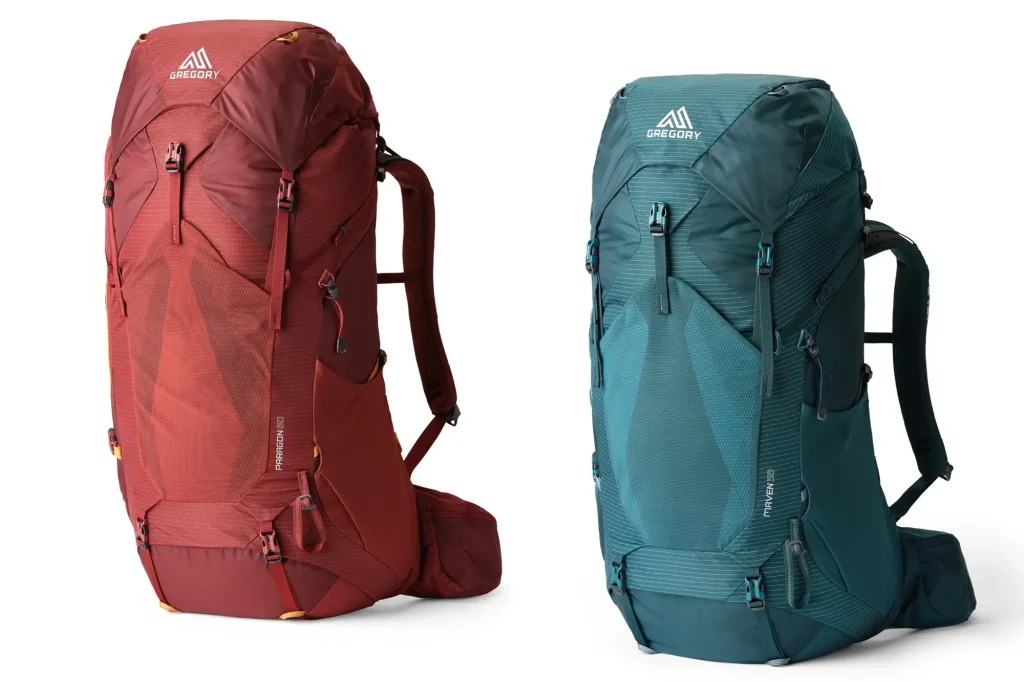
Standing in a shop looking at a two hundred dollar pack when there is a perfectly good school rucksack in the cupboard at home is a reasonable place to hesitate. Plenty of people walk miles with ordinary backpacks and are fine. Plenty of others buy a technical pack and never use its features. The honest answer depends on two things: how much weight you carry, and for how long.
A regular backpack is fine for walks under about three hours carrying less than fifteen pounds. Past that, a hiking backpack becomes genuinely worth it, because its internal frame and padded hipbelt transfer most of the load off your shoulders and onto your hip bones, which are built to carry weight. A regular backpack has no frame and no functional hipbelt, so everything hangs from two straps across your shoulders. At low weights that is unnoticeable. At twenty-five pounds over six hours it causes real pain in your shoulders, neck and lower back.
In short: under fifteen pounds and under three hours, use what you own. Above either threshold, a hiking pack stops being a luxury.
The National Park Service makes a related point about preparation: conditions change faster than forecasts, so carrying extra layers, water and light matters more than saving weight. A pack that carries comfortably is what makes you willing to bring that margin instead of talking yourself out of it.
Below: what a hiking pack actually does differently, the weight threshold where it starts to matter, when a regular backpack is genuinely fine, how to make the one you own work better, and how to fit a proper pack if you decide to buy.
Key Takeaways
- Under roughly fifteen pounds and three hours, a regular backpack is genuinely fine for most people on maintained trails.
- The hipbelt is the feature that matters. A padded belt on a framed pack moves most of the load onto your hip bones.
- Without a frame there is nothing to transfer weight to the belt, which is why webbing straps on school bags do nothing.
- Ventilation is the second real difference: hiking packs hold the body off your back so air can move.
- Water resistance on regular backpacks is usually minimal, and a soaked sleeping layer is a safety issue rather than an annoyance.
- You can improve a regular backpack a lot by packing heavy items high and close to your spine.
- Torso length, not height or waist size, decides whether a hiking pack fits you.
Hiking Backpacks Worth Considering
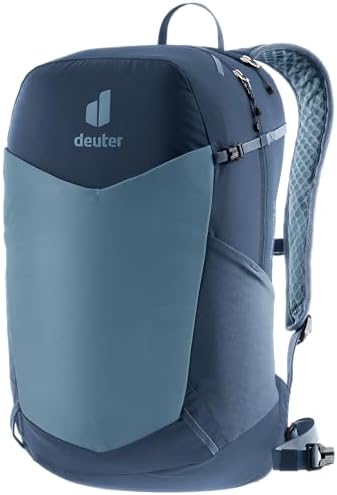
If you decide a dedicated pack is worth it, the options below span a light 21 litre daypack through to a 65 litre multi-day carrier, covering the volumes most people actually need.
Check the torso size chart on the listing before ordering. Fit varies more between brands than any specification, and a well-fitted mid-priced pack will outperform a premium one that does not suit your back.


What a Hiking Backpack Actually Does Differently
The visible differences between a hiking pack and a regular one are the straps, buckles and pockets. The differences that matter are structural, and there are only three of them: a frame, a load-bearing hipbelt and a ventilated backpanel. Everything else is refinement.
The frame is a pair of aluminium stays or a stiff plastic framesheet inside the pack body. Its only job is to stop the pack collapsing under its own load and to give the weight a rigid path downward. Without that path, weight simply hangs from the shoulder straps no matter what else the pack has.
The hipbelt is where that path ends. A proper belt is padded, several inches wide, and sits on your iliac crest, the shelf of bone you can feel at the top of each hip. That shelf is load-bearing in a way your shoulders are not, which is why a correctly fitted hiking pack feels lighter than the same weight in a school bag.
The Weight and Time Thresholds That Decide It
This is the part most guides skip, because the honest answer is a threshold rather than a rule. Under about fifteen pounds, the difference between pack types is small enough that fit and comfort matter more than construction. Above roughly twenty pounds, shoulder-only carry becomes genuinely uncomfortable within a couple of hours.
Time compounds weight. Fifteen pounds for an hour is nothing; fifteen pounds for seven hours is a sore trapezius and a stiff neck the next day. If you are regularly out for a full day, the threshold where a hiking pack pays for itself drops considerably.
| Trip | Typical load | Regular backpack | Hiking backpack |
|---|---|---|---|
| Two hour local trail | Water, snack, light layer, about 8 lb | Fine | Unnecessary |
| Half day, maintained path | Water, lunch, layers, about 12 lb | Fine for most people | More comfortable but optional |
| Full day in hills | Extra water and layers, about 18 lb | Workable but you will feel it | Clearly better |
| Full day in cold or wet | Insulation, shell, more food, about 22 lb | Uncomfortable by afternoon | Worth it |
| Overnight or multi-day | Shelter, bag, stove, food, 30 lb and up | Not advisable | Necessary |
There is also a volume issue hidden in the weight question. Most regular backpacks are 20 to 30 litres, which physically cannot hold a sleeping bag, shelter and food. At that point the decision is made for you regardless of how your shoulders feel about it.
Where a Regular Backpack Is Genuinely Fine
Plenty of gear writing implies you need specialist equipment for a walk in the woods, which is not true and puts people off starting. For short walks on maintained trails in reasonable weather, carrying water, a snack and a layer, an ordinary backpack is completely adequate and always has been.
It is also the right choice when the alternative is not going. A pack you own today beats one you might buy next season. Start with what you have, do a few walks, and let the discomfort tell you whether you have crossed a threshold that justifies spending money.
Do
- Use the backpack you own for short, light walks on maintained trails
- Pack heavy items high and tight against your back to improve any pack
- Line the inside with a dry bag or bin liner, since most are not waterproof
- Fasten the sternum strap if it has one, as it stops the straps sliding outward
- Upgrade when the discomfort is consistent rather than because a guide told you to
Don’t
- Do not carry overnight loads in a frameless school or commuter bag
- Do not rely on a thin webbing waist strap to transfer weight; it cannot
- Do not hang heavy items off the outside where they swing as you walk
- Do not assume a laptop sleeve counts as back padding on a long walk
- Do not push through sharp shoulder or neck pain, which signals a load problem
Making the Backpack You Already Own Carry Better
Most of the discomfort people blame on cheap packs is actually a packing problem, and it is fixable in five minutes. Load placement changes how weight acts on your spine far more than most people expect, because a pack is a lever and your shoulders are the pivot.
Weight carried low and away from your back pulls you backwards, so you lean forward to compensate and your lower back takes the strain. The same weight carried high and tight against your spine sits much closer to your natural centre of gravity, and the lever arm almost disappears.
- Empty it completely. Start from nothing so you can place items deliberately rather than stacking them in the order you picked them up.
- Put soft items against your back. A fleece or spare layer flat against the panel stops hard edges digging in, which is the main source of discomfort in a frameless pack.
- Place heavy items high and close. Water and food go high up and tight against your spine. Weight carried low and far from your back pulls you backwards and doubles the strain.
- Fill the gaps. Pack small items into the spaces so nothing shifts. A load that moves as you walk makes you work to stabilise it with every step.
- Keep essentials reachable. Map, snacks, headlamp and a waterproof go in outer pockets or the top, so you never unpack the main compartment on the trail.
- Line it against rain. Use a dry bag or a heavy-duty bin liner inside the pack. Most regular backpacks are not waterproof and a wet insulating layer is worse than no layer.
- Tighten and test. Shoulder straps snug, sternum strap fastened, then walk up and down stairs. Anything that shifts or rubs now will be painful after two hours.
One cheap addition genuinely helps: a sternum strap, which some regular backpacks lack. It stops the shoulder straps sliding off the outside of your shoulders, which is what causes the straps to dig into your neck. Clip-on versions cost very little.
If You Do Buy One, Fit Comes First
Buying a hiking pack and fitting it badly produces a pack that is heavier and no more comfortable than what you had. Torso length is the measurement that matters, and it is independent of your height. Measure from the bony bump at the base of your neck when you tip your head forward, down to the level of the top of your hip bones.
Then load the pack with fifteen to twenty pounds before judging it, because an empty pack hides every flaw in its suspension. Set the hipbelt on your hip bones first and tighten it, then snug the shoulder straps so they wrap without carrying weight, then angle the load lifters at roughly forty-five degrees.
Volume is the other decision, and it is easy to overbuy because a larger pack simply gets filled. If you want a shortlist to start from, we compared the hiking backpack brands worth knowing across day packs and multi-day carriers. For overnight trips the rest of the kit list matters too: see what to pack for tent camping.
One detail people miss: a hipbelt and a trouser waistband have to coexist. Bulky cargo pockets or a stacked belt buckle under a loaded hipbelt create a pressure point that becomes unbearable over a long day, which is worth checking before a big trip.
We go into that in more detail in our guide to hiking pants that work with a hipbelt.
Honest Limits
The thresholds in this article are general guidance, not measurements. Fifteen pounds is comfortable for one person and a lot for another, depending on build, fitness and any history of back or shoulder problems. Treat the numbers as a starting point and let your own experience adjust them.
We have also not tested these packs under controlled conditions. The recommendations come from listing specifications and from what buyers widely report, and no article can tell you how a particular harness sits on your shoulders. Fit is individual, which is the one thing a buying guide genuinely cannot solve for you.
Finally, a better pack does not make you fitter or safer by itself. It makes carrying a sensible safety margin more tolerable, which is a real benefit, but the margin only helps if you actually pack it and if you turn back when conditions call for it.
Stay Safe Out There
Whichever pack you use, what goes in it matters more than what it is made of. Extra insulation, more water than you plan to drink, a headlamp, and navigation that does not depend on a phone battery are the items that turn an unplanned night out into an inconvenience rather than an emergency.
Tell someone your route and your expected return time, and check the forecast on the morning rather than the day before. Weather on an exposed ridge has little to do with the car park, and turning back costs nothing but the summit.
Conditions, closures and permit rules change through the season, and the National Park Service updates its guidance as they do. Rangers would much rather answer a question at the visitor centre than coordinate a search, so ask before you commit to a long route.
Disclaimer: this article is general outdoor information, not medical, safety or legal advice. Conditions change, equipment fails, and you are responsible for decisions made on your trip. Check local rules, ask a ranger when you are unsure, and seek professional medical help for any injury or symptom that concerns you.
The Short Version by Scenario
If you want a single answer rather than a framework, this is how it maps onto the walking most people actually do. The pattern is consistent: the switch happens when either the load or the hours cross a line, and almost never because of the terrain alone.
| If you | Use | Because |
|---|---|---|
| Walk local trails for an hour or two | The backpack you own | Load and duration are both well under the threshold |
| Do occasional full days in good weather | The backpack you own, packed properly | Packing technique closes most of the comfort gap |
| Do full days regularly, in any weather | A framed daypack of 30 to 40 litres | Hip transfer and ventilation start paying off every trip |
| Carry camera gear, or water for a group | A framed pack, whatever the trip length | Weight rather than duration is what crosses the line |
| Camp overnight | A 50 to 65 litre framed pack | Volume alone rules out a regular backpack |
Frequently Asked Questions
Are hiking backpacks really necessary?
Not for short, light walks. For trips under about three hours carrying less than fifteen pounds, a regular backpack is genuinely fine. Beyond that, the frame and hipbelt on a hiking pack move the load onto your hips and the difference becomes significant.
Can I use a school backpack for hiking?
For a short local walk with water and a snack, yes. It has no frame and no load-bearing hipbelt, so it is poor at anything heavier, and it is usually not water resistant. Line it with a bin liner and pack heavy items high.
What weight is too much for a regular backpack?
Around twenty pounds is where most people start to feel it badly after a couple of hours, because the entire load hangs from the shoulder straps. Under fifteen pounds, the difference between pack types is small for most people.
What does a hipbelt actually do?
On a framed pack it transfers most of the weight onto your iliac crest, the bony shelf at the top of your hips, which is built to bear load. A thin webbing strap on a regular backpack only stops the bag swinging.
Why does my back sweat so much with a normal backpack?
Because the pack sits flat against you and traps heat. Hiking packs either use channelled foam or suspend mesh across a frame so the body stands off your spine and air can move through the gap.
What size hiking backpack should I get?
Twenty to thirty litres for day hikes, forty to fifty for long days or an overnight, and fifty-five to sixty-five for multi-day trips. Buy for the walking you actually do, because a larger pack gets filled and you carry the difference.
How do I measure my torso for a pack?
Tip your head forward and find the bony bump at the base of your neck. Measure from there down to the level of the top of your hip bones. That length maps to the brand size chart; your height and waist size do not.
Is an expensive hiking backpack worth it?
If you hike regularly with real weight, yes, because comfort under load is what you are paying for. For occasional light walks it is hard to justify. A well-fitted mid-priced pack beats a premium one that does not suit your back.
Do I need a rain cover?
Something, yes. Many hiking packs include one; most regular backpacks do not. A heavy-duty liner inside the pack works just as well and cannot blow off, which matters because wet insulation stops insulating.
Can I hike with a sling bag or fanny pack?
For very short walks with minimal kit, yes. Single-strap bags load one shoulder unevenly and tend to shift as you move, so they are poor for anything longer. A hip pack is fine if everything you need fits in it.
The Bottom Line
The question answers itself once you look at weight and time rather than at gear marketing. Under fifteen pounds for under three hours, the backpack in your cupboard is fine, and anyone telling you otherwise is selling something. Above either threshold the structural differences start to matter, because a frame and a padded hipbelt move the load onto bone that is designed to carry it instead of hanging it from your shoulders.
If you are not sure where you sit, start with what you own and pack it properly: heavy items high and tight against your spine, soft layers against your back, everything lined against rain. Walk a few full days like that. If your shoulders are sore by mid-afternoon every time, you have your answer, and you will know exactly what volume and fit you need when you go looking.