

Hiking pants are the piece of clothing people think least about and regret most. Jeans hold water, cotton chafes once it is wet, and a cheap nylon pair splits at the crotch on the first big step up. This guide covers 10 options for men and women, from light summer cargos to a fleece-lined winter pair, and explains what separates them.
The best hiking pants for most people are lightweight woven nylon with a little elastane, a gusseted crotch, an articulated knee and a DWR finish. That combination dries fast, moves with you on steep ground, sheds a light shower and weighs little enough to carry as a spare. Softshell is warmer and tougher for shoulder-season and scrambling. Convertible zip-offs trade some durability and comfort for versatility in hot climates. Rain pants are a separate shell layer, not a substitute for either, and they belong in your pack rather than on your legs all day.
In short: pick nylon with stretch for three-season walking, softshell for cold and rough rock, and treat rain pants as a layer you add on top.
The National Park Service makes a point that applies directly to leg wear: conditions on a trail change faster than a forecast, and cotton that soaks through stops insulating when the temperature drops. Synthetic fabric that keeps working wet is a safety feature, not a comfort upgrade.
Below: what the fabric numbers actually mean, how to judge fit in a shop or at home, the features worth paying for, how to care for a pair so the water repellency lasts, and where hiking pants genuinely do not help.
We may earn a commission from qualifying purchases made through links on this page, at no extra cost to you. Full disclosure.
Top 3 Picks at a Glance
Key Takeaways
- Best Overall is the Columbia Flex ROC Pant: a stretch woven three-season pant with a size and inseam range wide enough to actually fit.
- Best for Wet Trails is the Postropaky Hiking Quick Dry Stretch Pant, which leans on a water-repellent face fabric and dries fast after a soaking.
- Best Convertible is the Gash Hao Zip Off Hiking Pant, a nylon and spandex build with a gusseted crotch for hot climates with cold mornings.
- Nylon with 3 to 12 percent elastane is the default for three-season hiking: it dries fast, stretches and resists abrasion.
- A gusseted crotch and articulated knees matter more for comfort than any pocket arrangement.
- DWR is a finish, not a membrane. It sheds drizzle, wets out in sustained rain, and needs reapplying a few times a season.
- Cotton and denim are the two fabrics to avoid outright, because wet cotton stops insulating and pulls heat out of you.
How We Chose These Products
These are research-based picks, not field tests. We shortlisted from current Amazon listings that carry strong ratings from a large number of shoppers, favoring established outdoor brands and fuller-featured models where the price gap was small. Listings with thin review histories were excluded unless they filled a gap nothing else covered.
Specifications were checked against what actually matters for walking: fabric composition and weight, stretch content, crotch gusseting, knee articulation, water-repellent treatment and pocket placement relative to a pack hipbelt. Claims we could not verify from the listing itself were left out rather than repeated.
We capped the list at one product per brand and excluded near-duplicates, sponsored placements and anything sold primarily as ski or snowboard wear rather than hiking trousers. Both mens and womens cuts are represented, because fit in this category varies far more by cut than by brand reputation.
The 10 Best Hiking Pants Right Now
The list runs from the highest priced pair down to the lowest. Badges describe what each pair is actually best at rather than ranking them against a single scale, because a fleece-lined winter pant and a light summer cargo are not competing for the same job.
| # | Product | Best for | Standout feature | |
|---|---|---|---|---|
| 1 | Columbia Men’s Flex ROC Pant | an all-round three-season pant from an established outdoor brand | Comfort stretch fabric with a broad size and inseam range | View |
| 2 | Postropaky Mens Hiking Quick Dry Lightweight Stretch Pants | damp, changeable conditions where quick drying matters | Water-repellent finish on a light stretch shell | View |
| 3 | Gash Hao Mens Convertible Zip Off Hiking Pants | hot climates with big temperature swings through the day | Zip-off legs on a nylon and spandex stretch fabric | View |
| 4 | Libin Women’s Hiking Cargo Pants Quick Dry Joggers | a tapered jogger fit with proper length options | Offered in petite, regular and tall inseams | View |
| 5 | Wespornow Women’s Fleece-Lined Hiking Pants | winter walking and cold, windy days | Fleece lining behind a water-repellent windproof face | View |
| 6 | Moosehill Women’s Hiking Cargo Pants Lightweight Quick Dry | carrying small essentials without a daypack | Eight pockets including a dedicated security zip | View |
| 7 | baleaf Men’s Hiking Pants Lightweight Cargo Water Resistant | warm-weather walking where weight and airflow matter | Light cargo build with a water-resistant finish | View |
| 8 | Rdruko Women’s Hiking Cargo Pants Water-Resistant UPF 50+ | exposed desert, alpine and coastal trails | UPF 50+ rated fabric with a water-resistant finish | View |
| 9 | Hiauspor Women’s Convertible Lightweight Hiking Pants | trying zip-off legs without committing much | Lightweight convertible build at a low entry point | View |
| 10 | Rrosseyz Women’s Cargo Hiking Pants with Four Pockets | a first pair, or a spare to keep in the car | Adjustable drawstring waist with stretch leg cuffs | View |
Columbia Men’s Flex ROC Pant

Best for: an all-round three-season pant from an established outdoor brand
Columbia is the one genuinely established outdoor brand on this list, and the Flex ROC earns its place by being unremarkable in the best way. It is a straightforward stretch-woven walking pant with a clean cut, offered across a wide span of waist sizes and inseam lengths. Nothing about it is novel, which is exactly why it suits most people doing most walking.
Against the cheaper picks below it, the difference shows in finishing and in sizing options rather than in headline features. Several pants here list more pockets or louder waterproof claims. What the Flex ROC offers instead is a cut that has been through many production runs and a size range that makes a decent fit achievable without ordering three pairs.
Key features
- Comfort stretch woven fabric with a soft hand
- Offered in a wide range of waist sizes and inseam lengths
- Clean casual cut that passes outside hiking contexts
- Secure closure pockets for small essentials
Pros
- Sizing range makes a real fit far more likely
- Established brand with consistent cut between runs
- Understated enough to wear off the trail
Cons
- Fewer cargo pockets than the budget picks here
- No convertible zip-off option in this model
Skip it if: you want zip-off legs or a heavily pocketed cargo cut.
Check Price on AmazonPostropaky Mens Hiking Quick Dry Lightweight Stretch Pants

Best for: damp, changeable conditions where quick drying matters
This is the pick for people who keep getting caught out by weather. The listing emphasises a water-repellent treated face fabric over a light stretch shell, aimed at shedding a shower and drying quickly afterwards rather than holding water the way a heavier pant would. For spring and autumn walking in a wet climate, that bias is the right one.
Compared with the Columbia above, it trades refinement for weather focus and a lower weight. Compared with the convertible pick below, it keeps a fixed leg, which means one less seam to chafe and one less zip to fail. If your walking is mostly damp forest and hill rather than hot and exposed, start here.
Key features
- Water-repellent treated face fabric
- Lightweight stretch construction for freedom of movement
- Quick-drying synthetic shell
- Zippered pockets for secure storage
Pros
- Sheds light rain well for the weight
- Dries fast after a soaking
- Stretch makes high steps comfortable
Cons
- Light fabric is less abrasion resistant on rock
- Water repellency needs reproofing over time
Skip it if: you mostly walk hot, exposed trails where breathability beats water resistance.
Check Price on AmazonGash Hao Mens Convertible Zip Off Hiking Pants

Best for: hot climates with big temperature swings through the day
Convertible pants are a genuinely useful category in hot weather, and this pair covers the brief properly. The listing specifies a nylon and spandex blend with four-way stretch and a triangle gusset at the crotch, which is the construction detail that stops zip-offs feeling restrictive. The legs detach so one garment covers a cold start and a hot afternoon.
Set against the fixed-leg picks here, you accept a zip across each thigh in exchange for real versatility. The gusseted crotch puts it ahead of cheaper convertibles that skip that panel. If you walk desert, coastal or low-altitude summer trails where mornings are cold and middays are not, this solves a problem the others cannot.
Key features
- Nylon and spandex blend with four-way stretch
- Triangle gusset stitching at the crotch
- Legs zip off to convert to shorts
- Treated for water resistance in light rain
Pros
- One garment covers a wide temperature range
- Gusseted crotch keeps high steps comfortable
- Large capacity pockets
Cons
- Thigh zips can rub on long descents
- Converted shorts length will not suit everyone
Skip it if: you walk mainly in cool or wet conditions where the zips add nothing.
Check Price on AmazonLibin Women’s Hiking Cargo Pants Quick Dry Joggers

Best for: a tapered jogger fit with proper length options
Inseam length is the quiet reason most women’s hiking pants fit badly, and this pair addresses it directly by offering petite, regular and tall versions of the same garment. The cut is a tapered jogger with an elasticated cuff rather than a straight leg, which keeps fabric out of the way on scrambly ground and under gaiters.
Against the straight-cut options here it is a style choice as much as a technical one, but the length range makes it the most likely of the women’s picks to fit without alteration. Compared with the budget joggers lower down, the fabric and finishing are a step up, which shows after repeated washing.
Key features
- Quick-drying woven fabric with stretch
- Tapered jogger leg with elasticated cuff
- Multiple cargo and zip pockets
- Available in petite, regular and tall inseams
Pros
- Length options solve a common fit problem
- Cuffed leg stays clear of boots and scree
- Pocket layout works with a pack hipbelt
Cons
- Tapered cut will not suit everyone
- Elasticated cuff can feel warm in high heat
Skip it if: you prefer a straight or relaxed leg that you can roll up.
Check Price on AmazonWespornow Women’s Fleece-Lined Hiking Pants
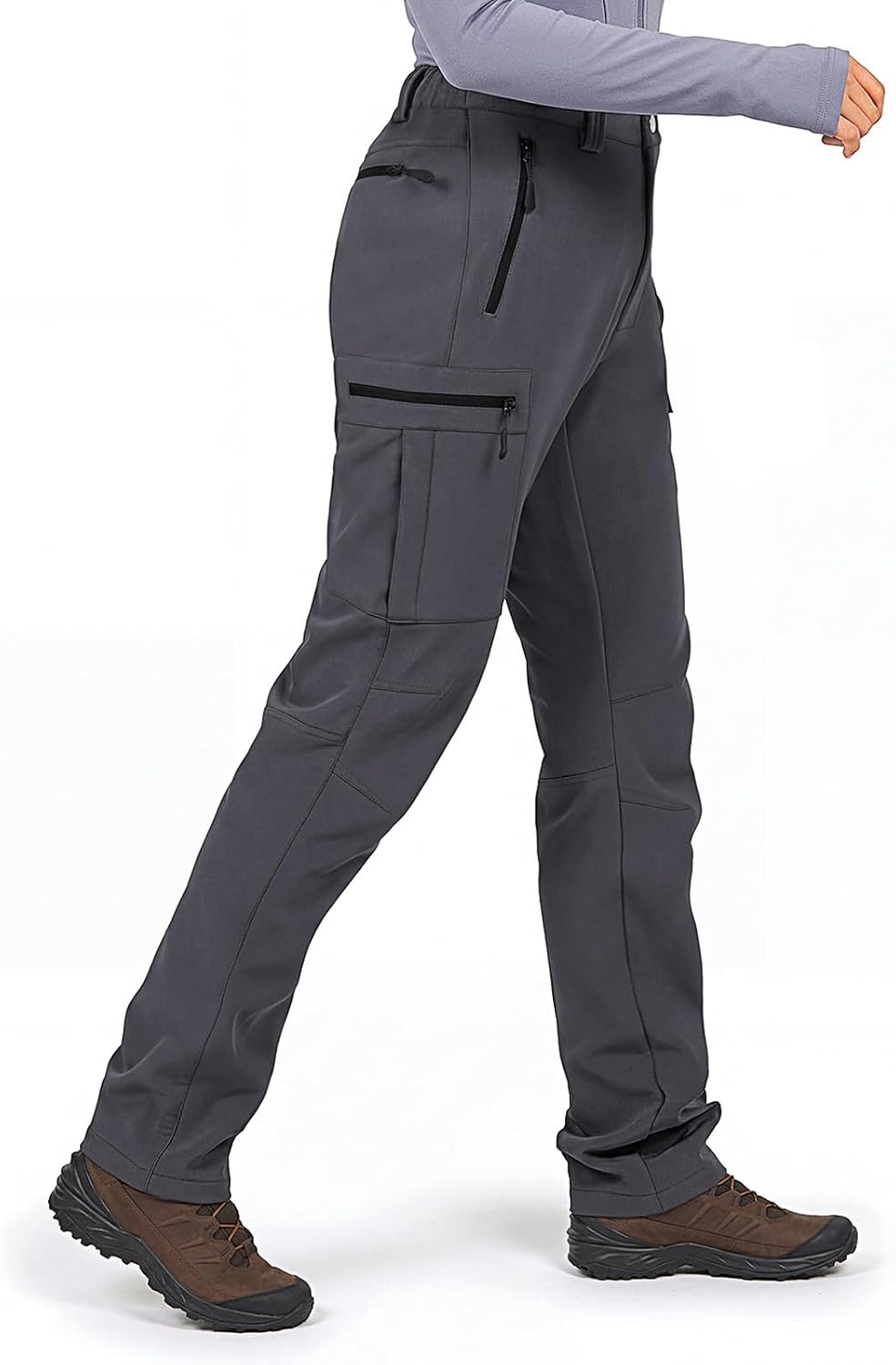
Best for: winter walking and cold, windy days
This is the only genuinely insulated pair on the list. The listing describes a fleece lining behind a face fabric with a water-repellent coating intended to cut wind and shed rain or snow. That combination does something no three-season pant can: it keeps working when you stop moving in cold wind, which is when most people get caught out.
It is heavier and far warmer than everything above it, so it is a seasonal pant rather than a year-round one. Where the lighter picks need a separate layer in winter, this handles cold on its own. The listing also notes a shaped knee panel, which matters more in a stiffer fabric than it does in a light one.
Key features
- Fleece lining for insulation against cold
- Water-repellent coating on the outer face
- Shaped knee panel for flexibility
- Zip and slant pockets including a back zip pocket
Pros
- Genuinely warm in cold wind
- Sheds snow and light rain
- Knee shaping keeps it mobile for a lined pant
Cons
- Far too warm for three-season walking
- Heavier and bulkier to pack than the rest
Skip it if: you want one pair for year-round use rather than a winter pant.
Check Price on AmazonMoosehill Women’s Hiking Cargo Pants Lightweight Quick Dry

Best for: carrying small essentials without a daypack
Pocket count is usually marketing noise, but this listing describes a thought-through arrangement rather than a scattering: eight pockets including two large cargo side pockets and one dedicated zipped security pocket. For short walks where you would rather not carry a pack at all, that is a genuine use case.
The construction claims line up with what matters elsewhere on this list, with four-way stretch fabric and articulated knee panels. Against the Libin above it is a straighter cut with more storage; against the budget picks below it adds double-stitched reinforcement, which is where cheap cargo pants usually give way first.
Key features
- Eight pockets including two cargo and one zip security pocket
- Four-way stretch fabric
- Articulated knee construction
- Water-resistant finish with quick-drying nylon
Pros
- Storage good enough to skip a small pack
- Articulated knees and stretch move well
- Reinforced stitching at stress points
Cons
- Loaded cargo pockets can sit awkwardly under a hipbelt
- Half-elastic waistband will not suit every shape
Skip it if: you always walk with a pack and want a cleaner, lighter cut.
Check Price on Amazonbaleaf Men’s Hiking Pants Lightweight Cargo Water Resistant

Best for: warm-weather walking where weight and airflow matter
A light cargo pant for summer hill days and travel. The listing pairs a lightweight water-resistant fabric with a four-pocket arrangement, which is enough storage for a phone, a map and a bar without the bulk of a full cargo cut. In hot weather, lighter fabric beats almost any other feature.
Against the Postropaky higher up the list it gives up some weather resistance in exchange for breathability and a lower price. Against the Rrosseyz budget pick below it, the fabric quality and the finishing are both noticeably better. This is the one to choose if your walking season is mostly warm and your pack is already heavy enough.
Key features
- Lightweight woven fabric for warm conditions
- Water-resistant finish for light showers
- Four-pocket cargo arrangement
- Stretch content for freedom of movement
Pros
- Light and breathable in heat
- Enough storage without bulk
- Good value for the finishing quality
Cons
- Light fabric offers limited wind resistance
- Not warm enough for shoulder season alone
Skip it if: you need a pant that works into cold and windy conditions.
Check Price on AmazonRdruko Women’s Hiking Cargo Pants Water-Resistant UPF 50+

Best for: exposed desert, alpine and coastal trails
On exposed ground a UPF rating stops being a marketing line and starts being useful. This pair is listed at UPF 50+ with a water-resistant quick-dry fabric and zippered pockets, which covers the specific combination you want above the treeline or on open coast: sun coverage you do not have to reapply, and fabric that dries after a crossing.
Under forest canopy the UPF rating matters far less, and one of the lighter picks above would serve better. Where this earns its place is on the trails that burn you, and it does so without the heavier hand of a sun shirt fabric. Pocket security is better than most at this level.
Key features
- UPF 50+ rated fabric
- Water-resistant treated finish
- Quick-drying construction
- Zippered pockets for secure storage
Pros
- Real sun coverage on exposed ground
- Dries quickly after wet crossings
- Zip pockets keep essentials secure
Cons
- UPF rating is wasted on shaded forest trails
- Cut runs narrower than some will expect
Skip it if: your walking is mostly under tree cover where sun exposure is limited.
Check Price on AmazonHiauspor Women’s Convertible Lightweight Hiking Pants

Best for: trying zip-off legs without committing much
Convertible pants divide people, and this is a sensible way to find out which side you fall on. The listing describes a lightweight convertible build that zips to shorts, covering the hot-climate use case without the outlay of a premium pair. For a first zip-off, or for a travel pant that doubles as both, it does the job.
Set against the Gash Hao convertible near the top of this list, the fabric and detailing are simpler and the review base is much smaller, which is why it sits here rather than higher. If you already know you want zip-offs and will use them hard, buy the better pair. If you are experimenting, start here.
Key features
- Legs zip off to convert to shorts
- Lightweight quick-drying fabric
- Multiple pockets for essentials
- Treated for light water resistance
Pros
- Low-risk way to try the convertible format
- Light enough for hot weather
- Packs down small as a spare
Cons
- Smaller review base than most picks here
- Simpler detailing than premium convertibles
Skip it if: you want a convertible pant you will wear hard for years.
Check Price on AmazonRrosseyz Women’s Cargo Hiking Pants with Four Pockets

Best for: a first pair, or a spare to keep in the car
The cheapest pair here and an honest entry point. The listing describes four pockets including two zipped, an adjustable drawstring waist, stretch cuffs at the ankle and a sun-protective treatment on a soft water-resistant stretch fabric. For someone replacing jeans on the trail, this is a large upgrade for very little outlay.
The finishing is simpler than the picks above and the fabric is lighter in hand, so it will not take the abrasion that a premium pair will. As a first hiking pant, a spare in the car, or a travel pair you do not mind losing, it covers the basics that actually matter: synthetic, stretchy and quick drying.
Key features
- Four pockets including two zipped
- Adjustable drawstring waist
- Stretch cuffs at the ankle
- Sun-protective treatment on a water-resistant fabric
Pros
- Covers the fundamentals at a low entry point
- Drawstring and cuffs help it fit a range of shapes
- Light and quick drying
Cons
- Simpler finishing than the pricier picks
- Lighter fabric limits abrasion resistance
Skip it if: you hike often and want a pair that will last several seasons.
Check Price on AmazonWhat the Fabric Actually Does
Almost all hiking pants are woven nylon or polyester with a few percent elastane. Nylon is more abrasion resistant, which matters if you push through scrub or sit on rock. Polyester resists UV slightly better and holds colour longer. Both dry far faster than cotton because the fibres themselves absorb very little water; what you are drying is the water held between threads, not inside them.
That is the mechanism behind every quick-dry claim. Cotton fibres swell with water and hold it against your skin, which is why wet denim stays cold for hours and why a soaked cotton layer actively pulls heat out of you. Synthetic fabric sheds most of its water with a wring and the rest to body heat and wind.
Elastane content is the comfort variable. Three to five percent gives enough give for a high step. Eight to twelve percent reads as a stretch woven and moves almost like a legging while keeping a woven surface. More stretch usually means slightly less abrasion resistance and a little more weight.
Softshell, Convertible and Rain Pants Are Three Different Things
These three get lumped together in buying guides and they solve different problems. Buying the wrong category is the most expensive mistake in this corner of the gear market, because each one is genuinely bad at the others job.
| Category | What it is | Best conditions | Where it fails |
|---|---|---|---|
| Standard hiking pant | Light woven nylon or polyester with stretch and a DWR finish | Three-season walking, warm to cool, dry to showery | Sustained rain, sitting still in cold wind |
| Softshell pant | Heavier woven face with a brushed backer, wind resistant, some stretch | Cold, windy, scrambling and shoulder season | Hot weather, packing light, heavy rain |
| Convertible zip-off | Standard pant fabric with a zip above the knee | Hot climates with big temperature swings | Comfort at the zip, long-term durability, looking tidy |
| Rain pant | A waterproof shell layer, usually with a membrane | Sustained rain, worn over another layer | Breathability, walking in them all day, abrasion |
Fit Is Where Comfort Is Won or Lost
The seam that decides whether a pair chafes is the crotch. A gusseted crotch replaces the four-seam cross with a diamond panel, which removes the pressure point exactly where your leg lifts. Once you have walked in a gusseted pair, an ungusseted one feels like it is holding you back, because it is.
Articulated knees are the second structural feature worth paying for. The knee panel is cut with a forward bend built in, so the fabric does not pull tight across the kneecap on a steep step. Both features cost the maker a little more to sew and almost nothing in weight.
Do
- Try a deep lunge and a high step in the changing room, not just a walk
- Size by hip and thigh measurement, not by your jeans waist size
- Check the inseam length options; many brands offer short, regular and tall
- Look for a waistband that works with a hipbelt rather than stacking buckles
- Buy the cut that fits your widest measurement and have the waist taken in
Don’t
- Do not buy cotton or denim for hiking, in any weight
- Do not assume a drawcord waist fixes a pair that is wrong at the hip
- Do not pick a pocket layout that puts bulk under a pack hipbelt
- Do not rely on zip-off legs staying comfortable on a long descent
- Do not size up to get stretch; buy fabric that stretches instead
Features Worth Paying For, and Features That Are Noise
Pocket count is the feature most heavily marketed and least correlated with a good pant. What matters is pocket placement relative to a pack hipbelt. A thigh pocket you can reach with the belt done up is useful; a rear pocket you sit on with a full water bottle is not.
- Worth it: gusseted crotch, articulated knees, zip or deep thigh pocket, roll-up leg tabs
- Worth it: a waistband that lies flat under a hipbelt, and belt loops you can actually use
- Situational: UPF rating, useful on exposed desert and alpine trails, irrelevant in forest
- Situational: ankle cinches, good in tick country and for keeping scree out
- Mostly noise: very high pocket counts, heavy branding, anything described as tactical
- Mostly noise: waterproof claims on a non-membrane fabric
Trousers are only one part of a working kit. If you are still assembling the rest, see what to pack for tent camping and our look at hiking backpack brands, since a hipbelt and a waistband have to coexist.
Keeping a Pair Alive
Most hiking pants are retired long before the fabric fails, usually because the water repellency stopped working and the owner assumed the pant was finished. DWR is a surface treatment that gets masked by body oils, sunscreen and detergent residue. It can almost always be revived.
- Empty and close. Empty every pocket and close all zips and hook-and-loop tabs so they do not abrade the fabric in the drum.
- Skip the detergent aisle. Use a technical wash rather than standard detergent. Ordinary detergent leaves surfactant residue that attracts water and kills the DWR.
- Warm, gentle cycle. Wash warm on a gentle cycle with no fabric softener and no bleach, which both coat or degrade the finish.
- Rinse twice. Run a second rinse to clear residue, the single most common reason pants stop beading after a wash.
- Tumble low. Tumble dry on low or press with a warm iron through a cloth. Gentle heat re-activates a DWR that has gone dormant.
- Reproof if needed. If water still soaks in rather than beading, apply a spray-on or wash-in DWR treatment and heat-set it per the instructions.
Repair beats replacement for most damage. A crotch blowout is a straightforward sewing job, and an abrasion hole on the seat or knee takes a self-adhesive fabric patch applied inside and out. A pant with a patched knee and a working DWR outperforms a new pair that fits badly.
Choosing by Trip Rather Than by Rating
The useful question is not which pant is best but which pant matches the walking you actually do. Most people own one pair and ask it to cover everything, which is fine as long as you choose for your most common conditions rather than your most extreme ones.
| Your typical trip | Fabric to look for | Features that matter | What to skip |
|---|---|---|---|
| Summer day hikes, forest and hills | Light nylon, 120 to 150 gsm, some stretch | Gusset, breathable weave, roll-up tabs | Softshell weight, heavy cargo pockets |
| Hot, exposed, desert or coastal | Light nylon with a UPF rating | Sun coverage, ankle cinch, convertible legs | Dark colours, dense weave |
| Shoulder season, wind and rock | Softshell, 200 gsm and up | Wind resistance, articulated knee, durability | Zip-off legs, minimal weight builds |
| Multi-day backpacking | Mid-weight nylon with stretch | Hipbelt-friendly waist and pockets, fast drying | Anything you cannot wash in a sink |
| Wet climates year round | Mid-weight nylon plus a separate rain shell | Quick drying, DWR you maintain | Pants sold as waterproof without a membrane |
Honest Limits
These are research-based picks drawn from listing specifications and from what buyers widely report. We have not run these pants through a controlled field test, and no article can tell you how a given cut sits on your hips. Fit in this category varies more between brands than almost anywhere else in outdoor clothing, so the size chart on the listing matters more than any recommendation here.
There are also limits to what trousers can do. They will not keep you warm when you stop moving in cold wind, they will not keep you dry in sustained rain without a shell over them, and no fabric treatment survives indefinitely. Treat a DWR finish as something you maintain two or three times a season rather than a permanent property of the garment.
Finally, specifications change without notice. Brands revise fabric, cut and feature sets between production runs while keeping the same product name, so check the current listing details before buying rather than trusting a model name you remember.
Stay Safe Out There
Clothing is part of your safety margin, not a substitute for judgement. Check the forecast before you set out, tell someone your route and expected return, and carry an insulating layer even on a warm day, because the temperature on an exposed ridge bears little relation to the car park.
Wet cotton is the specific hazard worth naming. It stops insulating when it soaks through and actively accelerates heat loss, which is how a mild day turns into hypothermia on a windy summit. Shivering you cannot stop, clumsiness and confusion all mean you should get out of the wind, add dry insulation and start descending.
If conditions turn beyond what your kit covers, turn back. Rangers would far rather answer a question at the visitor centre than coordinate a rescue, so ask about current trail and weather conditions before you commit to a long route.
Deciding what else to carry is its own question: here is our take on whether a hiking backpack is worth it compared with the daypack you already own. For current conditions and local rules, the National Park Service publishes guidance that changes with the season, so check before you go.
Disclaimer: this article is general outdoor information, not medical or safety advice. Conditions change, gear fails, and you are responsible for your own decisions on the trail. Check local rules, ask a ranger when you are unsure, and seek professional medical help for any injury or cold-related symptoms that concern you.
Frequently Asked Questions
What are the best hiking pants for most people?
Lightweight woven nylon with a few percent elastane, a gusseted crotch and articulated knees. That combination dries quickly, moves on steep ground and sheds a light shower, which covers the large majority of three-season walking.
Are hiking pants really better than leggings or joggers?
For abrasion, pockets and wind resistance, yes. Leggings are comfortable and move well but offer little protection against scrub, rock and wind. Several hiking pants are now cut as joggers, which is a reasonable middle ground.
Can I hike in jeans?
You can, but it is the worst common choice. Denim is heavy, abrades your skin once damp, holds water for hours and stops insulating when wet. On a cold, wet day that combination is a genuine hazard rather than just discomfort.
Are convertible zip-off pants worth it?
In hot climates with big daily temperature swings, yes. Elsewhere they add a zip that can chafe, a seam that wears, and a slightly less comfortable fit, in exchange for versatility you may rarely use. Try them before committing.
What does DWR mean on hiking pants?
Durable water repellent, a surface finish that makes water bead and roll off. It is not waterproofing. It sheds drizzle, wets out in sustained rain, degrades with washing and wear, and needs reapplying a few times a season.
How should hiking pants fit?
Loose enough to lunge and high-step without the fabric pulling at the knee or crotch, snug enough that the legs do not flap. Fit at the hip and thigh matters most; waist size alone tells you very little about whether a pair will chafe.
Do I need a UPF rating?
On exposed desert, alpine and coastal trails it is genuinely useful. Under forest canopy it matters much less. Note that most densely woven synthetic fabric already blocks a good deal of UV whether or not it carries a rating.
How do I stop my hiking pants from soaking through?
First wash them properly with a technical wash and tumble dry on low, which revives a dormant DWR. If water still soaks in rather than beading, reproof with a spray-on or wash-in treatment. For sustained rain, add a rain shell on top.
How many pairs do I need for a multi-day trip?
One pair worn plus a dry sleep layer is enough for most trips. Hiking pants wash in a sink and dry overnight, so a second hiking pair is usually dead weight unless you expect to be wet for days on end.
Mens or womens cut, and does it matter?
It matters mainly at the hip-to-waist ratio and the rise. Buy whichever cut matches your proportions rather than the label, and check the size chart, because this category varies more between brands than almost any other.
The Bottom Line
Hiking pants are a solved problem once you ignore the marketing. Woven nylon with a little stretch, a gusseted crotch and articulated knees handles the overwhelming majority of walking, and the remaining decisions are about fabric weight and whether you want zip-off legs. Softshell is a genuine upgrade for cold, windy, rocky ground, and a rain shell is a separate layer you carry rather than a pant you buy instead.
Fit is the part no specification sheet can settle for you. Measure your hips and thighs, check the brand size chart rather than assuming your usual size, and try a deep lunge before you commit. Then maintain the DWR a couple of times a season and the same pair will outlast several cheaper replacements.
The Verdict
Top pick: Columbia Men’s Flex ROC Pant
The Columbia Flex ROC wins because it gets the boring things right: a stretch woven fabric that moves, a clean cut, and a size and inseam range wide enough that most people can actually get a good fit without ordering three pairs and returning two.
Pick the Postropaky instead if your walking is mostly damp and you want a stronger water-repellent finish, or the Gash Hao convertible if you walk hot, exposed trails where mornings are cold and afternoons are not.
Check Price on Amazon