
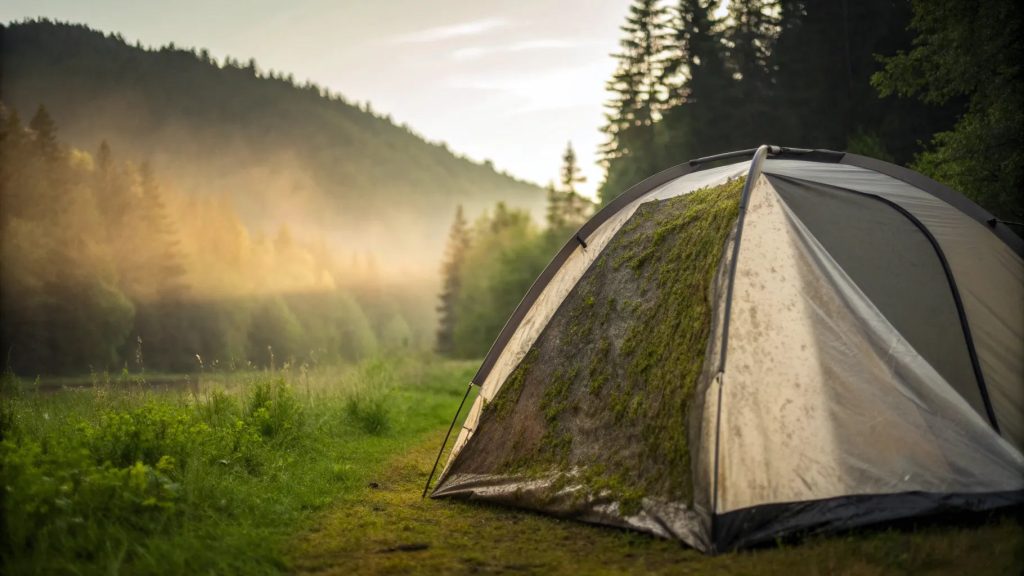
You open the stuff sack in spring, and the smell hits before you see anything. Black or grey speckling across the fly, a musty odour that clings to everything, and the sinking feeling that an expensive tent has just become a write-off. It is one of the most common ways tents die, and it is almost entirely preventable.
You can remove mildew from a camping tent, but you need to be clear about what you are removing. Cleaning kills the mildew and lifts most of the surface staining, which deals with the smell and the appearance. What cleaning cannot do is undo the damage the mildew has already caused to the polyurethane coating underneath, because the organism feeds on that coating and breaks it down. A tent can come out looking acceptable and still leak, which is why heavy infestations are often beyond saving even after a perfect clean.
In short: yes for the stain and the smell, no for the coating damage underneath, and the difference decides whether the tent is worth saving.
The practical guidance here follows what tent and fabric manufacturers publish, which is consistent: avoid chlorine bleach on tent fabric, avoid machine washing, use a technical cleaner intended for outdoor fabrics, and dry the tent completely before storage. Household cleaning advice written for bathroom tiles does not transfer to a coated nylon fly.
Below: why mildew grows on tents, how to tell staining from coating failure, the step-by-step cleaning method, what to avoid, how to prevent it entirely, and the honest point at which a tent is not worth the effort.
Key Takeaways
- Mildew on a tent is two problems: the stain and smell, which clean off, and the coating damage, which does not.
- The organism feeds on the polyurethane coating, so heavy growth means the waterproofing is already compromised.
- Never use chlorine bleach on tent fabric. It degrades nylon and polyester and strips coatings.
- Never machine wash or tumble dry a tent, because agitation destroys seam tape and coatings.
- Clean by hand with a technical cleaner, in a bathtub or outdoors, using a soft sponge.
- Dry completely before storage. Packing a tent damp is how almost every case starts.
- A tent that still smells after two proper cleans usually has growth inside the coating layer.
What You Need to Clean and Protect a Tent
Tent cleaning needs products formulated for coated technical fabric rather than household cleaners. The items below cover cleaning, stain removal, re-waterproofing and seam repair, which is the usual sequence after a mildew problem.
Test any cleaner or stain remover on a small hidden section of the tent first, such as the inside of a stuff sack hem, and let it dry fully before treating a visible panel.


Why Mildew Grows on Tents in the First Place
Mildew is a surface fungus, and it needs three things: moisture, warmth and something organic to feed on. A tent packed away damp supplies all three at once, which is why the overwhelming majority of cases start with a single rushed pack-up at the end of a wet trip.
The food source is the part people miss. The polyurethane coating that makes a fly waterproof is an organic polymer, and mildew will happily digest it. That is the mechanism behind the characteristic damage: as the growth spreads, it breaks the coating down from the surface inward, leaving it sticky, flaking or simply porous.
Dirt makes it worse, because body oils, food residue and organic debris on the fabric give the fungus an easier initial foothold. A clean tent packed slightly damp is at less risk than a dirty one, although neither is a situation you want to be in.
Staining Versus Coating Damage
This is the assessment that determines whether cleaning is worth your afternoon. Staining is cosmetic: the fabric is discoloured but structurally fine, and the waterproof coating is intact. Coating damage is functional, and no amount of cleaning restores it.
The test is tactile rather than visual. Run your fingers over the inside of the fly. A healthy polyurethane coating feels smooth and slightly slick. A damaged one feels tacky or sticky, or you can see it flaking away in patches. Sticky is the word most people use, and it is the clearest sign that the tent has a limited future.
| What you find | What it means | Worth cleaning? |
|---|---|---|
| Light speckling, coating smooth, slight smell | Early surface mildew | Yes, clean promptly and it should be fine |
| Heavy staining, coating still smooth | Established growth, coating intact | Yes, expect some permanent discolouration |
| Coating feels tacky or sticky inside | Polyurethane breaking down | Clean if you like, but expect leaks |
| Coating flaking off in sheets | Coating has failed | No, the fly is finished |
| Smell persists after two full cleans | Growth inside the coating layer | No, replace the tent |
| Fabric tears easily between finger and thumb | Fibres degraded, often with UV damage | No, it is unsafe in weather |
Discolouration often survives even a successful clean, and that is worth accepting rather than attacking with something stronger. A faint grey shadow on a fly that is otherwise sound and waterproof is a cosmetic issue. Chasing it with bleach turns a cosmetic issue into a structural one.
The Cleaning Method That Does Not Wreck the Tent
The entire approach is gentler than people expect. Technical fabric cleaner, a soft sponge, cool or lukewarm water and patience. The things that feel efficient, such as a washing machine, a pressure washer or a stiff brush, are the things that destroy seam tape and coatings.
- Pitch it or hang it outside. Set the tent up in shade, or hang it over a line. Working on a pitched tent gives you access to every panel and lets air move through it from the start.
- Brush off the dry growth first. Use a soft brush to remove loose spores and surface growth before any water goes on. Wetting it first turns the deposit into a smear that drives into the weave.
- Wash with a technical cleaner. Dilute a technical outdoor fabric cleaner per its instructions and work it in with a soft sponge, panel by panel. Never use detergent, bleach or a washing machine.
- Treat remaining stains carefully. For marks that survive washing, use a mildew stain remover formulated for fabric. Test on a hidden section first and keep contact time short.
- Rinse thoroughly. Rinse every panel with clean water until no cleaner remains. Residue attracts moisture and dirt, which sets up the next bout of growth.
- Dry completely, out of direct sun. Air dry fully, including seams, webbing and the stuff sack. UV degrades coatings, so use shade and airflow rather than strong sunlight.
- Reproof and check seams. Apply a spray-on waterproofing treatment if water no longer beads, and reseal any seam where the tape has lifted.
- Test before you trust it. Pitch it and run a hose over it before the next trip. Finding a leak in the garden is far better than finding it at midnight on a hillside.
What Not to Use, and Why
Most of the damage done to tents during mildew removal comes from using something designed for a different material. Chlorine bleach is the worst offender. It attacks nylon and polyester fibres directly, strips polyurethane coatings, and weakens seam tape, which means it trades a visible stain for invisible structural failure.
Washing machines are the second common mistake. The agitation, the spin cycle and the mechanical stress on seams will lift tape and crack coatings even on a gentle setting. Tumble dryers add heat to that, which is worse again. Hand washing is not a quaint preference here, it is the only safe option.
Do
- Use a cleaner formulated for technical outdoor fabric
- Work by hand with a soft sponge and lukewarm water
- Test any stain remover on a hidden section first
- Rinse until no cleaner residue remains anywhere
- Dry fully in shade with good airflow
- Reproof and reseal seams after a heavy clean
Don’t
- Do not use chlorine bleach on any tent fabric
- Do not put a tent in a washing machine or tumble dryer
- Do not use a pressure washer or a stiff brush
- Do not dry a tent in strong direct sunlight
- Do not use household detergent, which strips treatments
- Do not repack until every seam and the stuff sack are bone dry
| Product | Safe on tent fabric? | Why |
|---|---|---|
| Technical outdoor fabric cleaner | Yes | Formulated for coated fabric, leaves no residue |
| Fabric-specific mildew stain remover | With a patch test | Lifts staining but contact time should be short |
| Mild soap and lukewarm water | Yes, for light soiling | Gentle, though less effective on established growth |
| Household laundry detergent | No | Strips water-repellent treatment, residue attracts dirt |
| Chlorine bleach | No, never | Attacks fibres, strips coatings, weakens seam tape |
| Pressure washer or stiff brush | No | Mechanical damage to coating and seam tape |
| Washing machine or tumble dryer | No | Agitation and heat lift tape and crack coatings |
Preventing It Completely
Prevention is almost embarrassingly simple, which is what makes mildew so frustrating as a failure mode. Never store a tent damp. That one rule prevents the overwhelming majority of cases, and everything else is a refinement of it.
In practice that means pitching the tent again at home after a wet trip, even if it is only for a few hours in a garage or spare room. Packing a wet tent at the campsite is often unavoidable, and that is fine. Leaving it packed for a week afterwards is where the damage happens.
Store it loosely rather than compressed. A tent crammed into its stuff sack for months holds creases that trap residual moisture and stress the coating in the same spots. A pillowcase or a loose bag in a cool, dry cupboard is far better than the sack it came in.
If the tent turns out to be beyond saving, our guides to family camping tents worth considering and tents built for winter camping cover the replacement decision, and must-have tent camping items covers the rest of the kit.
When to Stop and Replace It
There is a point where cleaning is sunk cost. If the coating is flaking away in sheets, if the fabric tears between finger and thumb, or if a musty smell survives two thorough cleans and a full dry, the tent has growth inside the coating layer and it is not coming out.
The waterproofing question is the practical one. A tent that looks acceptable but leaks in the first real rain has cost you a miserable night rather than saving you money. Testing with a hose in the garden before committing to a trip is the cheapest insurance available.
Partial replacement is sometimes an option worth considering. Flies take the worst of both the weather and the mildew, while inners often survive in good condition. Some manufacturers sell replacement flysheets, and for a decent tent that can be far cheaper than starting again.
Honest Limits
Results vary with how long the growth has been established, what the fabric and coating are, and how badly the tent was soiled before storage. Light speckling caught within weeks usually cleans up well. Growth that has sat through a whole winter in a sealed sack often will not, regardless of method.
We have not tested these products against mildew on tent fabric under controlled conditions. The recommendations reflect what the products are formulated for and what manufacturers publish about caring for coated technical fabrics, not laboratory comparison.
Always check your own tent manufacturer guidance before cleaning. Some fabrics and coatings, particularly silicone-impregnated nylon, respond differently from standard polyurethane-coated polyester, and the maker of your specific tent is a better authority than any general article.
Stay Safe Out There
Treat the health side seriously. Dried mildew releases spores when disturbed, so brush dry growth outdoors, wear gloves, and consider a mask. Anyone with asthma, allergies or a known mould sensitivity should let someone else handle a badly affected tent, or skip it entirely.
Never mix cleaning products. Combining bleach with ammonia-based or acidic cleaners produces toxic gases, and the fact that you are working outdoors does not make that safe. Use one product at a time, rinse thoroughly between treatments, and read the label before you open the bottle.
On the trail, the safety angle is about trusting repaired gear. A tent you have cleaned and reproofed should be tested at home before it goes anywhere committing. Discovering that a fly no longer sheds water is an inconvenience in the garden and a genuine problem in exposed terrain at night in cold weather.
Conditions and local rules change through the season wherever you camp. The National Park Service publishes guidance that is updated as conditions do, and checking before a trip is always worth the two minutes.
Disclaimer: this article is general information, not medical or manufacturer advice. Cleaning results vary by fabric and coating, and you are responsible for what you apply to your own equipment. Follow your tent maker guidance and product instructions, and seek professional medical help for any respiratory symptoms that concern you.
Frequently Asked Questions
Can you get mildew out of a camping tent?
Yes, in most cases. Cleaning kills the growth and removes the smell and much of the staining. What it cannot do is reverse damage already done to the waterproof coating, so a heavily affected tent may come out looking fine and still leak.
Will bleach remove mildew from a tent?
Do not use it. Chlorine bleach attacks nylon and polyester fibres, strips polyurethane coatings and weakens seam tape. It may lift the stain, but it trades a cosmetic problem for structural failure you will discover in the next rainstorm.
Can I put my tent in the washing machine?
No. The agitation and spin cycle lift seam tape and crack coatings even on gentle settings, and a tumble dryer adds heat damage on top. Hand washing with a soft sponge is the only safe method for a coated tent.
How do I know if the coating is ruined?
Feel the inside of the fly. A healthy polyurethane coating is smooth and slightly slick. If it feels tacky or sticky, or you can see it flaking, the coating is breaking down and the tent will likely leak however well you clean it.
What cleaner should I use on a tent?
A technical cleaner formulated for outdoor fabrics, such as a dedicated tech wash. Household detergent strips water-repellent treatments and leaves residue that attracts moisture and dirt, which sets up the next round of growth.
Why does my tent still smell after cleaning?
Usually because growth has got into or under the coating layer where surface cleaning cannot reach. If a musty smell survives two thorough cleans and a complete dry, the tent is generally not recoverable.
Is tent mildew dangerous to health?
Dried growth releases spores when disturbed, which can trigger problems for people with asthma, allergies or mould sensitivity. Brush it outdoors, wear gloves, consider a mask, and let someone else handle a badly affected tent if you are susceptible.
How do I stop mildew coming back?
Never store the tent damp. Pitch it at home after a wet trip until it is completely dry, including seams and the stuff sack, then store it loosely rather than compressed in a cool, dry place.
Should I reproof the tent after cleaning?
If water no longer beads on the fly, yes. A thorough clean can remove the remaining durable water repellent along with the dirt, so a spray-on treatment restores the surface behaviour. Reseal any seam where the tape has lifted.
Is it cheaper to replace the fly than the tent?
Often, yes. The flysheet takes the worst of both weather and mildew while the inner frequently survives intact. Some manufacturers sell replacement flysheets, which for a good tent can cost far less than buying a new one.
The Bottom Line
Mildew on a tent is recoverable more often than people assume, provided you catch it reasonably early and clean it properly. Brush the dry growth off first, wash by hand with a technical cleaner and a soft sponge, rinse completely, and dry fully in shade. Avoid bleach and washing machines entirely, because both solve the visible problem by creating an invisible one.
The real decision is made before you start, by feeling the inside of the fly. Smooth coating means a cleaning job worth doing. Tacky or flaking coating means the mildew has already eaten the waterproofing, and no cleaner reverses that. And since the whole problem traces back to one rushed pack-up, the lasting fix is simply this: never put a tent away damp, pitch it at home until it is dry, and store it loose.