
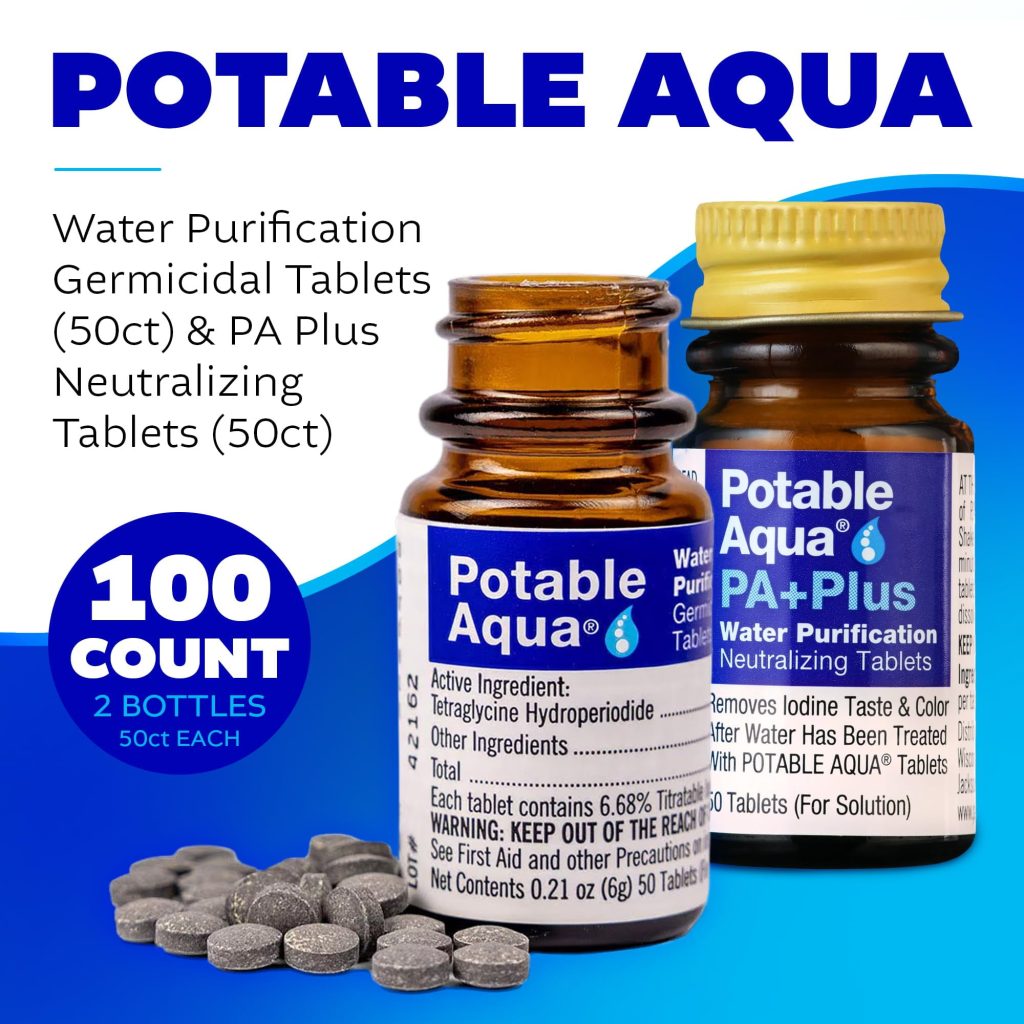
Water purification tablets are cheap, light and genuinely useful, and they are also surprisingly inconsistent to find in person. One pharmacy stocks them next to the travel vaccines, another has never heard of them. An outdoor shop has three brands, the supermarket down the road has none. Knowing where to look saves a frustrating afternoon before a trip.
You can get water purification tablets from outdoor and camping retailers, larger pharmacies with a travel health section, army surplus and emergency preparedness suppliers, and online marketplaces, which carry the widest selection by a considerable margin. Outdoor shops are the most reliable physical option because the product fits their core range. Pharmacies stock them seasonally and often only in travel-focused branches. Supermarkets and general stores rarely carry them at all, which is the gap that catches people out the day before a trip and sends them hunting around town for something they could have ordered a week earlier.
In short: outdoor retailers in person, online for choice, pharmacies as a travel-section gamble.
Before buying anywhere, check the active ingredient on the packet rather than the brand name. The CDC notes that chemical disinfection performs poorly in cold or cloudy water, and different active ingredients cover different organisms, so the ingredient line determines whether the product suits the water you are actually treating.
Below: where to buy in person and online, what to check on the packet, how pricing and pack sizes compare, the shelf life question that matters when buying ahead, and the places people look that almost never stock them.
Key Takeaways
- Outdoor and camping retailers are the most reliable physical source, because the product fits their range.
- Online marketplaces carry the widest selection, including brands no shop stocks locally.
- Pharmacies stock them seasonally, usually only in branches with a travel health section.
- Supermarkets and general stores rarely carry them, so do not rely on one the night before.
- Check the active ingredient, not the brand. It decides which organisms are covered.
- Check the expiry date in store, since stock can sit on a shelf for a long time.
- Buy individually wrapped doses for an emergency kit, as they keep far better than an opened bottle.
Tablets and Treatment Options to Compare
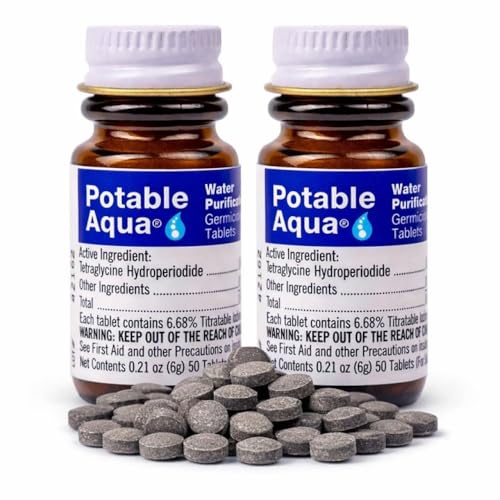
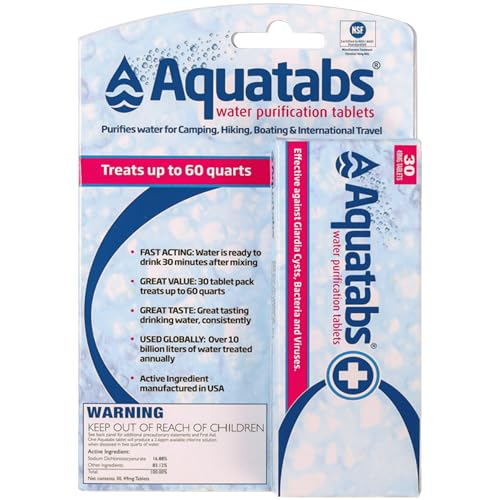
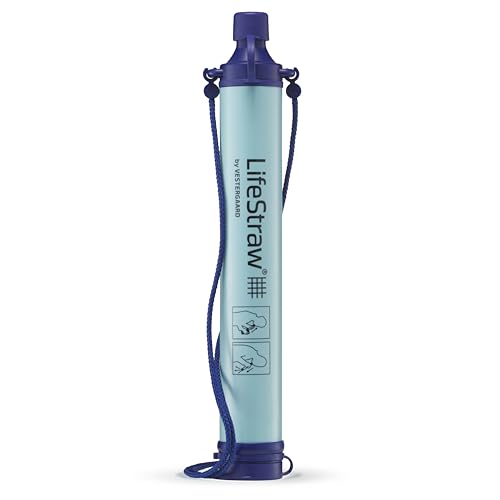
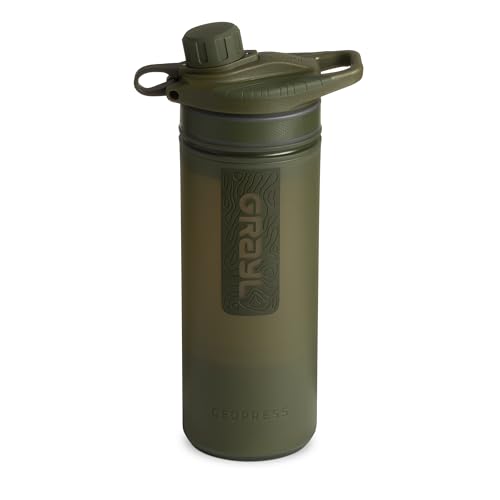
Online is where the selection is, and the products below cover the common tablet chemistries plus the filters that handle what tablets cannot. Comparing them side by side is easier here than in a shop with two options on a shelf.
If you are buying for an emergency kit rather than an imminent trip, prioritise individually wrapped doses and check the expiry date, because an opened bottle degrades far faster than a sealed one.


Where to Buy in Person
Outdoor and camping retailers are the most dependable physical source. Tablets sit naturally alongside filters, stoves and bottles, so stock tends to be consistent and staff can usually tell you what the difference between two products is. Independent outdoor shops often stock a wider range than the chains.
Pharmacies are the next most likely, but inconsistently. Branches with a travel health service stock them alongside antimalarials and travel vaccines, often behind the counter rather than on open shelves. Smaller neighbourhood pharmacies frequently carry none at all, so phoning ahead saves a wasted trip.
Army surplus and emergency preparedness suppliers are the third category, and they often have the best availability for bulk quantities and long shelf life products. Their stock is oriented toward storage rather than hiking, which suits a kit you intend to leave untouched for years.
| Source | Reliability | Selection | Notes |
|---|---|---|---|
| Outdoor and camping retailer | High | Good, usually two or three brands | Staff can explain the differences |
| Pharmacy with travel health | Medium | Limited, often one brand | Sometimes behind the counter; phone ahead |
| Army surplus and prepper supplier | Medium to high | Good for bulk and long storage | Check expiry dates carefully |
| Online marketplace | High | Widest by far | Compare the active ingredient, not the price |
| Supermarket or general store | Low | Rarely any | Do not rely on this the night before |
| Hardware or DIY store | Low | Rarely any | Pool chemicals are not a substitute |
Buying Online
Online is where the selection lives. Every common chemistry is available, usually in several pack sizes, and you can read the full ingredient and dosing information before committing rather than squinting at a box in a shop. For anyone comparing options properly, this is the practical route.
The trade is that you cannot check the expiry date before ordering, and stock age varies between sellers. Buying from a listing with high turnover generally means fresher stock, and checking the date on arrival is worth doing while a return is still straightforward.
Pack size is where online pricing gets interesting and occasionally misleading. A larger pack is usually cheaper per tablet, but only if you will use it before it degrades. For occasional camping, a smaller pack that stays sealed beats a bulk bottle that is half used and two years old.
If you have not yet decided which product you want, we compare the options in which water purification tablets to carry.
What to Check Before You Pay
The brand name on the front tells you very little. The line that matters is the active ingredient, because that determines which organisms are covered, how long you wait, how the water tastes and whether the product is suitable for everyone in your group.
- Decide what you are treating. Backcountry stream water, questionable tap water abroad and an emergency home supply are different problems. The water decides which chemistry you need.
- Choose the active ingredient first. Chlorine dioxide covers the widest range including Cryptosporidium. Iodine and chlorine-releasing tablets are cheaper and faster but do not reliably cover it.
- Check the dose per volume. Tablets are rated per litre or per quart, and strengths vary. Work out how many litres you need to treat and buy accordingly rather than counting tablets.
- Read the contact time. Note both the standard wait and any longer figure for Cryptosporidium. If you need water quickly, that figure may rule a product out for your use.
- Check the expiry date on the pack. Look at the actual bottle rather than trusting that stock turns over. Tablets sitting in a shop for two years have already used part of their life.
- Prefer foil-wrapped doses for storage. For a kit you hope never to open, individually sealed doses keep far longer than a bottle that lets air in every time it is used.
- Check the health warnings. Iodine products are not suitable during pregnancy, for thyroid conditions, or for prolonged continuous use. Confirm this before buying for someone else.
- Buy a pre-filter or filter too. Tablets do not work well in cloudy water. A cloth pre-filter or a hollow fibre filter covers the gap and is worth buying at the same time.
For what those ingredient names mean in practice, see what is actually in a water purification tablet.
Shelf Life and Buying Ahead
Tablets are an unusually good product to buy ahead, because unopened they last years and they weigh almost nothing. That is what makes them a staple of emergency kits. The qualification is that the clock speeds up dramatically once a bottle is opened and air starts reaching the tablets.
This changes what you should buy depending on use. For an active camping season where you will work through a bottle, a standard container is fine and cheaper per dose. For a kit in a car or a cupboard, individually foil-wrapped doses are worth the premium because each one stays sealed until needed.
| Purpose | What to buy | Why |
|---|---|---|
| Regular camping through a season | Standard bottle, mid-size pack | Cheaper per dose and you will use it before it degrades |
| Emergency kit at home | Foil-wrapped individual doses | Each dose stays sealed for years until used |
| Car or glovebox | Foil-wrapped, smaller quantity | Heat accelerates breakdown, so plan to replace regularly |
| Group trip or large volumes | High-dose tablets rated per larger volume | Dosing by litre is simpler than counting small tablets |
| International travel | Chlorine dioxide, with a filter | Virus coverage matters more where sanitation is poor |
Do and Do Not When Buying
Do
- Phone a pharmacy ahead rather than driving there hopefully
- Read the active ingredient before the brand or the price
- Check the expiry date on the actual pack, in store or on arrival
- Buy foil-wrapped doses for anything stored long term
- Buy a pre-filter or filter at the same time for cloudy water
- Match the dose rating to the volume you actually need to treat
Don’t
- Do not rely on a supermarket the night before a trip
- Do not substitute pool chemicals or unlabelled bleach products
- Do not buy chlorine dioxide products sold as health supplements
- Do not buy iodine tablets for someone who is pregnant or has thyroid problems
- Do not assume a bigger pack is better value if it will expire first
- Do not treat the brand name as a guide to what the tablet covers
Where People Look and Should Not Bother
Supermarkets are the most common wasted trip. Even large ones with a camping aisle in summer rarely carry purification tablets, because the product does not fit general grocery buying patterns. If one does stock them, treat it as a bonus rather than a plan.
Hardware and DIY stores are the second. They carry pool and spa chemicals, which look superficially related and are not. Those products are formulated for a different purpose, dosed differently, and may include stabilisers that have no business in drinking water.
Petrol stations and convenience stores near trailheads occasionally surprise you, particularly in areas with heavy hiking traffic, but it is not something to build a plan around. The reliable approach is to buy before you travel rather than hoping for a shop near the trail.
Water treatment is one item on a longer checklist worth working through before you leave: see what to pack for tent camping.
Honest Limits
Retail availability varies by country and region, and this article describes general patterns rather than what is on a shelf near you. Outdoor retail in particular differs enormously between places with a strong hiking culture and places without one.
Stock also moves seasonally. Pharmacies and general retailers that carry tablets at all tend to stock them in spring and summer, which means a winter search is harder regardless of where you look. Online availability is far more consistent through the year.
We have not tested these products or verified efficacy claims. This article covers where to buy and what to check on the packet; for how the chemistry works and what each active ingredient covers, the linked guides go into more detail.
Stay Safe Out There
Having tablets is not the same as treating water correctly. Dose by measured volume, wait the full contact time even when you are thirsty, and remember that cold water needs longer and cloudy water needs filtering first. Most reported failures are user error rather than product failure.
Treat all backcountry surface water regardless of how clean it looks, and choose flowing sources upstream of trails, campsites and grazing where you can. Source selection does more for your safety than the specific brand of tablet you managed to find.
Symptoms of waterborne illness typically appear days to weeks after a trip, which makes the cause easy to miss. Persistent diarrhoea, cramping, nausea or fatigue afterwards is worth mentioning to a doctor along with the fact that you drank from backcountry sources.
Public health guidance on drinking water is published by the CDC and the EPA, and both are worth reading before relying on chemical treatment for an extended trip.
Disclaimer: this article is general information, not medical advice. Treatment effectiveness depends on water conditions, dose and timing, and you are responsible for the water you drink. Follow the instructions on the product, check current public health guidance, and seek professional medical help for any symptoms that concern you.
Frequently Asked Questions
Where can I buy water purification tablets?
Outdoor and camping retailers are the most reliable in person, followed by pharmacies with a travel health section and army surplus or emergency preparedness suppliers. Online marketplaces carry by far the widest selection.
Do pharmacies sell water purification tablets?
Some do, usually branches with a travel health service, and often behind the counter rather than on open shelves. Smaller neighbourhood pharmacies frequently carry none, so phone ahead rather than making a wasted trip.
Do supermarkets sell them?
Rarely. Even large stores with a seasonal camping aisle usually do not stock them, because the product does not fit general grocery buying. Treat a supermarket find as a bonus rather than a plan for the night before a trip.
What should I check on the packet?
The active ingredient first, because that determines which organisms are covered. Then the dose per litre or quart, the contact time including any longer figure for Cryptosporidium, the expiry date, and the health warnings.
Which active ingredient should I choose?
Chlorine dioxide covers the widest range including Cryptosporidium, at the cost of a long contact time for that organism. Iodine and chlorine-releasing tablets are cheaper and faster but do not reliably cover Cryptosporidium.
Is it cheaper to buy online?
Usually, and the selection is far wider. The trade is that you cannot check the expiry date before ordering, so buy from a high-turnover listing and check the date on arrival while returning is still straightforward.
How long do unopened tablets last?
Several years in most cases, stored cool and dry, which is what makes them a good emergency kit item. Once a bottle is opened, air reaches the tablets and the active degrades much faster, so replace opened bottles annually.
Should I buy a big pack or a small one?
Depends on use. A larger pack is cheaper per tablet if you will work through it in a season. For a kit you hope never to open, individually foil-wrapped doses are better value because each one stays sealed.
Can I use pool chlorine or bleach instead?
Pool and spa products, no. They are dosed for a different purpose and may contain additives not meant for drinking. Plain unscented household bleach appears in official emergency guidance at specific dilutions, but follow those doses exactly.
Do I need anything else alongside tablets?
A way to handle cloudy water. Chemicals work poorly when particles shield microorganisms, so a cloth pre-filter at minimum, or a hollow fibre filter if you want to drink immediately without waiting out a contact time.
The Bottom Line
The practical answer is that outdoor retailers are the reliable shop and online is the reliable selection. Pharmacies with travel health sections are worth a phone call, army surplus and preparedness suppliers are good for bulk and long storage, and supermarkets will usually disappoint you on the evening before a trip. Buying before you travel beats hoping for a shop near the trailhead.
Once you are looking at packets, ignore the brand and read the active ingredient, because that single line decides what the tablet covers, how long you wait and whether it suits everyone in your group. Check the expiry date, prefer foil-wrapped doses for anything stored long term, and buy a pre-filter at the same time, because tablets and cloudy water do not get along.