
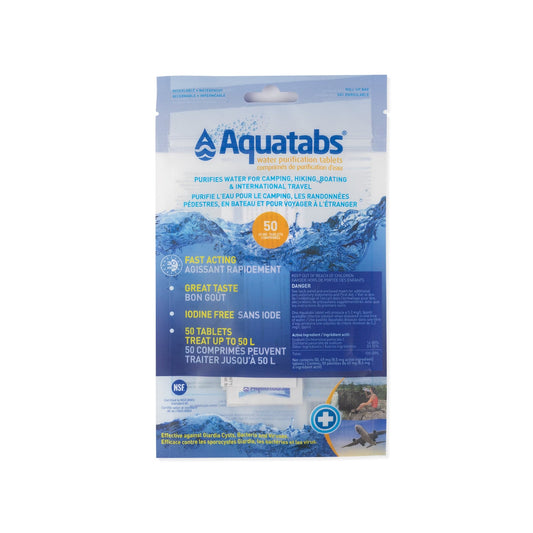
Water purification tablets are the lightest insurance you can carry. A strip weighs almost nothing, costs very little, survives being forgotten in a pack for a year, and turns questionable water into something you can drink. They are also widely misunderstood, because different tablets use different chemistry and the differences decide whether they work against what is actually in the water.
The best water purification tablets for most campers are chlorine dioxide tablets, because they are effective against bacteria, viruses and the protozoan cysts that iodine struggles with, and they leave less taste behind. The trade is time: chlorine dioxide needs up to four hours against Cryptosporidium, compared with around thirty minutes for most other targets. Iodine tablets work faster and cost less, but they are not reliably effective against Cryptosporidium and are not suitable for pregnant women, for people with thyroid conditions, or for long-term continuous use over many weeks.
In short: carry chlorine dioxide for general use, iodine as a cheap fast backup, and a filter if the water is cloudy.
The CDC is clear that all backcountry surface water should be treated before drinking, however clean it looks, and that chemical disinfection is less effective in cold or cloudy water. The EPA takes the same line on turbidity: particles shield microorganisms from disinfectants, which is why filtering or settling cloudy water first is not optional.
Below: how each chemistry works, what each one misses, how tablets compare with filters and boiling, how to use them correctly, shelf life, and the situations where tablets are the wrong tool.
Key Takeaways
- Chlorine dioxide is the most broadly effective tablet chemistry, covering bacteria, viruses and protozoan cysts including Cryptosporidium.
- Iodine is cheap and fast but unreliable against Cryptosporidium, and is not for pregnant women or people with thyroid conditions.
- Contact time is not optional. Cutting it short is the most common reason chemical treatment fails.
- Cold water slows disinfection substantially, so double the wait time near freezing.
- Cloudy water shields microorganisms from chemicals. Filter or let it settle before treating.
- Tablets do not remove chemical pollution, heavy metals or agricultural runoff of any kind.
- Treat all backcountry water, however clear it looks and however remote the source.
Water Treatment Options Worth Carrying
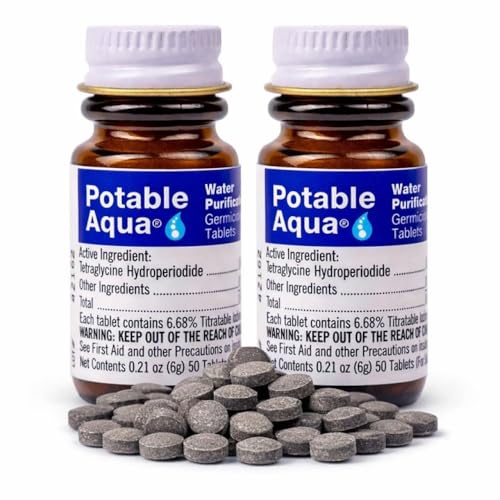
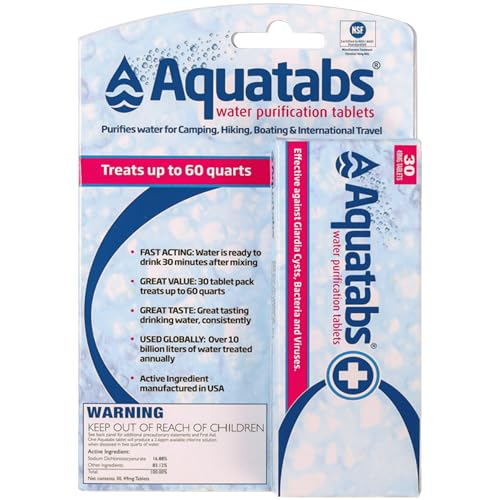
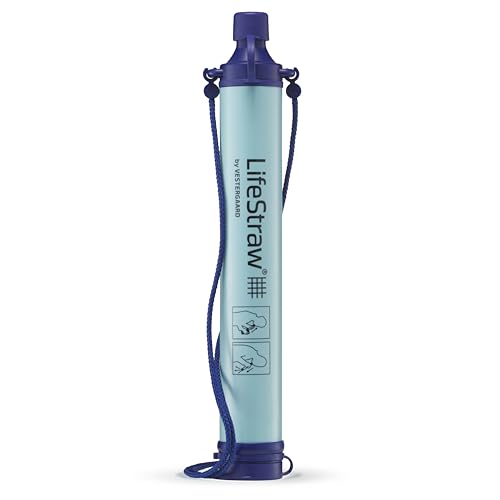
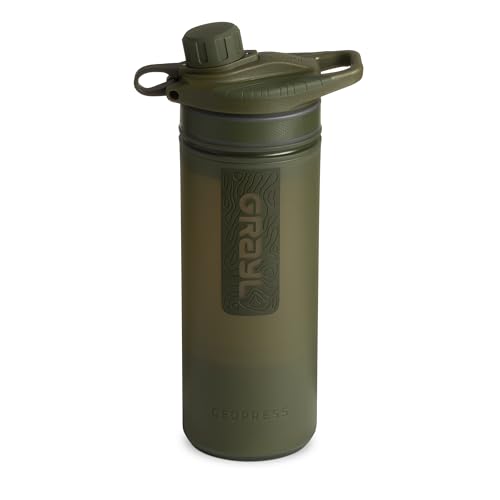
The tablets below are the genuinely established options on Amazon, alongside three filters for the situations where chemistry alone is the wrong tool. We have excluded the chlorine dioxide kits sold as health supplements, which are a different and unsafe product category despite sharing a chemical name.
Match the treatment to the water. Chemicals suit clear water and long shelf life; filters suit cloudy water and immediate drinking; carrying one of each covers almost every situation you will meet.


The Three Chemistries, and What Each One Misses
Almost every tablet on the market uses one of three active chemistries, and the differences are not marketing. Each one attacks microorganisms differently, and each has a specific gap that matters depending on where your water comes from.
Iodine works quickly against bacteria and viruses and has been the backpacking standard for decades. Its weakness is Cryptosporidium, a protozoan parasite with a tough outer shell that iodine does not reliably penetrate at field concentrations. It also has health limits: it is not suitable during pregnancy, for people with thyroid disorders, or for continuous use over long periods.
Chlorine dioxide is a different molecule from chlorine despite the name, and it is the broadest-spectrum option available in tablet form. It handles bacteria, viruses and protozoan cysts including Cryptosporidium, which is why it has largely displaced iodine for general backcountry use. It needs far longer for that last target, which is the price of the coverage.
Sodium dichloroisocyanurate, the active ingredient in several common tablets, releases chlorine into the water. It is effective against bacteria and viruses, fast acting and inexpensive, and it is the standard for treating large volumes. Like iodine, it is not reliably effective against Cryptosporidium.
Chemical Treatment Compared With Filters and Boiling
The most common confusion in this area is between a filter and a purifier, and listings do very little to clarify it. A filter removes things physically, by straining water through pores of a given size. A purifier inactivates things chemically. They fail in opposite directions, which is why many people carry both.
A typical hollow-fibre filter with a 0.1 micron pore size catches bacteria and protozoa but not viruses, which are smaller than the pores. In most of North America and Europe that is an acceptable risk; in regions where water is contaminated with human sewage it is not. Tablets have the opposite profile: excellent against viruses, slow or unreliable against the toughest cysts.
| Method | Bacteria | Viruses | Protozoa and Crypto | Main drawback |
|---|---|---|---|---|
| Chlorine dioxide tablets | Yes | Yes | Yes, but up to 4 hours | Long wait for full coverage |
| Iodine tablets | Yes | Yes | Not reliable for Crypto | Health limits, taste, Crypto gap |
| Chlorine-releasing tablets | Yes | Yes | Not reliable for Crypto | Crypto gap, taste |
| Hollow-fibre filter | Yes | No | Yes | Viruses pass through, clogs in silty water |
| Purifier bottle with press | Yes | Yes | Yes | Heavier and more expensive than tablets |
| Boiling | Yes | Yes | Yes | Fuel, time, and no help with turbidity |
Contact Time, Cold Water and Cloudy Water
Chemical disinfection is a reaction, and reactions take time and slow down in the cold. The contact times on the packet assume water at around room temperature. Near freezing, which is exactly when you are most likely to be melting snow or drinking from a mountain stream, the same dose needs considerably longer.
The practical rule is to double the stated time if the water is close to freezing, and to treat the packet instructions as a minimum rather than a target. Most reported failures of chemical treatment come down to impatience rather than to the chemistry not working.
Turbidity is the other variable. Suspended particles physically shield microorganisms from the disinfectant, so a cloudy sample can hide live organisms even after a correct dose and a full wait. Pre-filtering through a bandana or a commercial pre-filter, or simply letting the water stand so sediment settles, solves this.
- Choose the clearest source you can. Take water from moving water above any obvious activity, rather than from a still pool or downstream of a campsite or livestock.
- Remove the sediment first. Pour through a bandana, a coffee filter or a pre-filter, or let it stand until particles settle. Chemicals cannot reach microbes hiding inside suspended particles.
- Measure the volume properly. Dosing is per litre or per quart. Guessing at volume is guessing at dose, and underdosing is the same as not treating the water at all.
- Add the tablet and seal. Drop it in, close the bottle and shake to dissolve. Follow any two-part instructions exactly, including the wait between parts.
- Flush the threads. After a few minutes, loosen the cap and let treated water run over the bottle threads, then retighten. Untreated water trapped there will recontaminate your drink.
- Wait the full contact time. Thirty minutes for most targets, up to four hours for Cryptosporidium with chlorine dioxide. Double the time if the water is near freezing.
- Neutralise the taste if you want. With iodine systems, add the second taste-neutralising tablet only after the full contact time has elapsed, never before.
Shelf Life and Storage
Unopened, most tablets last several years, which is what makes them ideal for an emergency kit you hope never to use. Once the seal is broken the clock speeds up considerably, because the active ingredients react with air and moisture. Iodine tablets in particular degrade once the bottle has been opened and should be replaced within a season or so of regular use.
Individually foil-wrapped tablets avoid this problem entirely, since each dose stays sealed until you use it. That is worth the slightly higher price for anything living in a first aid kit or a glovebox rather than being used up over a summer.
| Situation | What to expect | What to do |
|---|---|---|
| Unopened bottle in a cool dry place | Several years of shelf life | Check the printed expiry each season |
| Bottle opened and used occasionally | Degrades faster once air gets in | Replace annually, keep the lid tight |
| Foil-wrapped individual doses | Each dose stays sealed until used | Best choice for emergency kits |
| Left in a hot car all summer | Heat accelerates breakdown | Replace rather than gamble |
| Tablets discoloured or crumbling | Chemistry has degraded | Discard and replace |
Do and Do Not With Chemical Treatment
Do
- Treat every backcountry water source, however clear and remote it looks
- Pre-filter or settle cloudy water before adding any tablet
- Wait the full contact time, and double it in near-freezing water
- Flush the bottle threads and cap with treated water before drinking
- Carry a filter as well if you expect silty or glacial water
- Check the expiry date at the start of each season
Don’t
- Do not use iodine during pregnancy, with thyroid conditions, or continuously for weeks
- Do not add a taste neutraliser before the contact time has finished
- Do not assume a tablet removes chemical pollution, metals or farm runoff
- Do not rely on a 0.1 micron filter alone where viruses are a concern
- Do not collect water downstream of campsites, trails or grazing
- Do not use chlorine dioxide products sold as health supplements
If you want the chemistry in more detail, we cover what is actually in a water purification tablet and how chlorination works in water treatment in separate guides.
When Tablets Are the Wrong Tool
Tablets are not always the answer, and knowing when to reach for something else is as useful as knowing how to dose them. Silty, glacial or heavily tannic water is the clearest case: the turbidity defeats the chemistry, and you need physical filtration before anything else will work reliably.
Thirst is another. If you need to drink now, a four hour wait for full Cryptosporidium coverage is not a practical answer. A squeeze or straw filter gives you water immediately, which is why many people carry a filter for daytime drinking and tablets as backup or for overnight batches.
Finally, taste matters more than people admit. If treated water tastes bad enough that you drink less of it, the treatment has created a dehydration problem while solving a microbial one. Chlorine dioxide is noticeably milder than iodine, and a taste neutraliser or a drink mix added after the contact time solves most of the rest.
Water treatment is one line on a longer list: see what to pack for tent camping for the rest.
Honest Limits
These picks come from current listings and from what buyers widely report, not from laboratory testing. We have not cultured treated samples or verified kill rates, and we have not repeated any manufacturer efficacy claim that the listing could not support with a recognised standard.
Guidance in this area is also genuinely contested at the margins. Contact times vary between agencies and manufacturers, and the right answer depends on water temperature, turbidity and which organisms are plausibly present where you are. When the packet and a public health source disagree, follow the more cautious of the two.
There is a category limit worth repeating as well. No tablet, filter or amount of boiling addresses chemical contamination. If you are near active or former mining, intensive agriculture or industry, no treatment in this article makes that water safe, and the only answer is a different source.
Stay Safe Out There
Source selection does more for your safety than any product. Take water from flowing sources rather than standing pools, upstream of trails, campsites and grazing land, and away from obvious human activity. A good source lightly treated beats a poor source treated heavily.
Symptoms of waterborne illness usually appear days to weeks after exposure, which makes them easy to attribute to something else. Persistent diarrhoea, cramping, nausea and fatigue after a backcountry trip are worth mentioning to a doctor along with the fact that you drank from untreated or marginally treated sources.
Public health guidance on backcountry water is published by the CDC, and the EPA publishes emergency disinfection guidance worth reading before a long trip. Local rules and conditions vary, so check with the managing agency when you are unsure.
Disclaimer: this article is general outdoor information, not medical advice. Treatment effectiveness depends on conditions, and you are responsible for the water you drink. Follow the dosing instructions on the product, check current public health guidance, and seek professional medical help for any symptoms that concern you.
Frequently Asked Questions
What are the best water purification tablets overall?
Chlorine dioxide tablets, for most campers. They cover bacteria, viruses and protozoan cysts including Cryptosporidium, and leave less taste than iodine. The cost is patience, since full coverage against Cryptosporidium can take up to four hours.
Do purification tablets kill Giardia and Cryptosporidium?
Chlorine dioxide handles both, though Cryptosporidium needs a much longer contact time. Iodine and chlorine-releasing tablets deal with Giardia but are not reliably effective against Cryptosporidium, which has a notably tough outer shell.
How long do I need to wait before drinking?
Around thirty minutes for most targets, and up to four hours for Cryptosporidium with chlorine dioxide. Double those times if the water is near freezing, because cold slows the reaction substantially.
Are iodine tablets safe?
For short-term use by most healthy adults, yes. They are not suitable during pregnancy, for people with thyroid disorders or iodine allergies, or for continuous use over long periods. Chlorine dioxide avoids those restrictions.
Do tablets work in cloudy or muddy water?
Poorly. Suspended particles shield microorganisms from the disinfectant, so a correct dose can still leave live organisms. Filter the water through cloth or a pre-filter, or let it settle, before adding any tablet.
Tablets or a filter, which should I carry?
Ideally both. Filters handle cloudy water and let you drink immediately but miss viruses. Tablets handle viruses and weigh almost nothing but need time and clear water. Together they cover nearly every situation you will encounter.
Do purification tablets remove chemicals or heavy metals?
No. Tablets, filters and boiling all target living organisms. Pesticides, fertiliser runoff, heavy metals and mine drainage pass straight through. Near farmland or old industry, choosing a different source is the only real answer.
How long do water purification tablets last?
Several years unopened, much less once the bottle has been opened and air reaches the tablets. Individually foil-wrapped doses keep best. Write the date you opened a bottle on the label and replace it annually with regular use.
Why does treated water taste bad, and can I fix it?
Iodine in particular leaves a strong taste. A taste-neutralising second tablet, added only after the full contact time, removes most of it. Chlorine dioxide is milder to begin with. A drink mix added afterwards also works.
Can I treat water for a whole group with one tablet?
Only if you dose by volume. Tablets are rated per litre or per quart, so a large container needs proportionally more. Aquatabs are commonly used for larger volumes, but read the packet, because dosing differs between products.
The Bottom Line
Water purification tablets earn their place in a pack by being almost weightless and almost indestructible. Chlorine dioxide is the broadest-spectrum option and the sensible default, iodine is the cheap fast backup with real health caveats, and chlorine-releasing tablets suit treating large volumes. What none of them does is work instantly, work in cloudy water, or remove chemical pollution.
Use them properly and they are extremely reliable. Pick the clearest source you can, clear the sediment first, dose by measured volume, flush the bottle threads, and wait the full time even when you are thirsty. Carry a filter alongside them for silty water and for drinking on the move, and the combination covers nearly everything a backcountry trip will put in front of you.