
Chlorination is the reason tap water is safe in most of the developed world, and it is also what is happening inside your water bottle when you drop in a treatment tablet on the trail. The same chemistry runs at both scales, which is why understanding it tells you something useful whether you are reading a municipal water report or waiting thirty minutes beside a stream.
Chlorination is the process of adding chlorine or a chlorine-releasing compound to water to inactivate disease-causing microorganisms. In water, chlorine forms hypochlorous acid, a small uncharged molecule that passes through microbial cell walls and destroys the proteins and enzymes inside. It is fast against bacteria and viruses, cheap, and it leaves a residual that keeps working as the water sits. It is not reliably effective against Cryptosporidium, it works more slowly in cold water, and suspended particles can shield organisms from it entirely, which is why clear water matters as much as the dose.
In short: chlorine becomes hypochlorous acid, which gets inside microbes and wrecks them, given enough time and clear water.
The CDC is clear that chemical disinfection becomes less effective in cold or cloudy water, and the EPA makes the same point about turbidity, since particles physically shield microorganisms from the disinfectant. Both also treat chlorination as a reliable method when applied correctly, which is the distinction that matters in the field.
Below: the chemistry in plain terms, what chlorination does and does not kill, why pH and temperature change the outcome, how municipal treatment differs from a tablet in a bottle, and the practical limits worth knowing before you rely on it.
Key Takeaways
- Chlorination means adding chlorine or a chlorine-releasing compound to inactivate microorganisms in water.
- The active species is hypochlorous acid, which is uncharged and can pass through microbial cell walls.
- It is fast and reliable against bacteria and viruses, and effective against Giardia given time.
- It is not reliably effective against Cryptosporidium, which has a tough protective shell.
- Cold water slows the reaction substantially, so contact time must be extended.
- Cloudy water shields organisms from the chlorine, so sediment must be removed first.
- A chlorine residual is a feature, not a flaw: it keeps protecting water after treatment.
Chlorination and Treatment Products
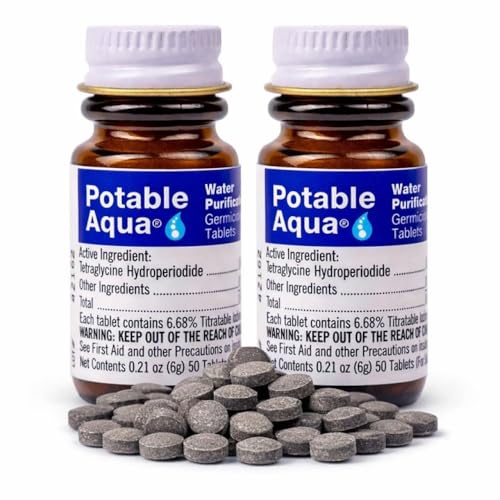
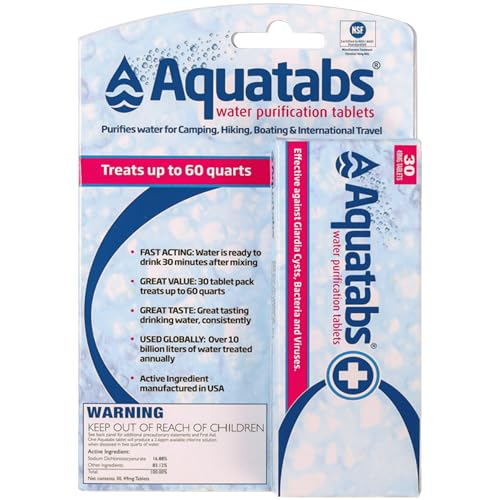
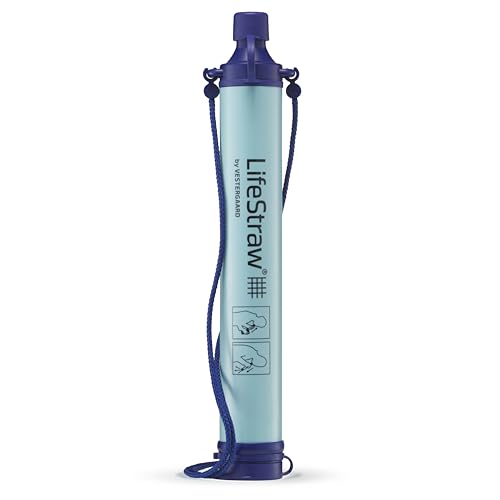
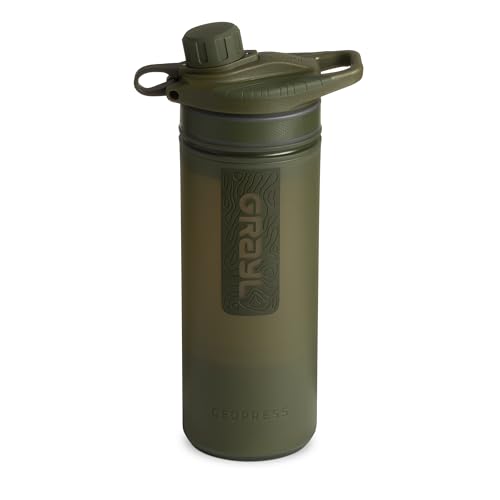
The products below cover chlorine-releasing tablets, the iodine alternative, and the filters that handle what chlorination cannot. Together they represent the practical options for treating backcountry water.
A filter is the natural partner to chlorination rather than a competitor, because it removes the sediment and the Cryptosporidium that chlorine struggles with.


The Chemistry, Without the Jargon
When chlorine enters water it does not stay as chlorine. It reacts to form hypochlorous acid and hypochlorite ion, and the balance between those two is what determines how effective the treatment is. Hypochlorous acid is the one doing nearly all the work.
The reason is physical. Hypochlorous acid is a small, electrically neutral molecule, so it can pass straight through the cell membrane of a bacterium. The hypochlorite ion carries a negative charge, which the equally negative cell surface repels, so it is far less effective at getting inside.
Once inside, hypochlorous acid oxidises proteins and enzymes, disrupting the machinery the organism needs to function and reproduce. This is why chlorination is described as inactivating microorganisms rather than filtering them: the organism stays in the water, but it is no longer capable of making you ill.
In tablets, the chlorine is usually delivered as sodium dichloroisocyanurate, which releases hypochlorous acid gradually as it dissolves. Municipal plants may use chlorine gas, sodium hypochlorite solution or calcium hypochlorite, but the active species in the water ends up the same.
What Chlorination Kills, and What It Misses
Chlorination has a well-defined range. Bacteria such as E. coli, Salmonella and Campylobacter are dealt with quickly, because they have no specialised defence against oxidation. Most viruses are similarly vulnerable, which is why chlorination is the backbone of municipal supply safety.
Protozoa are where it gets more complicated. Giardia cysts are more resistant than bacteria but are inactivated by chlorine given adequate concentration and time. Cryptosporidium is in a different category: its oocyst wall is robust enough that practical field doses of chlorine do not reliably penetrate it.
| Target | Effective? | Notes |
|---|---|---|
| Bacteria | Yes, rapidly | The easiest target; minutes in clear water |
| Viruses | Yes | Reliable at standard field doses |
| Giardia | Yes, with adequate time | More resistant than bacteria, still covered |
| Cryptosporidium | Not reliably | Tough oocyst wall; use chlorine dioxide or a filter |
| Sediment and turbidity | No | Chlorine does not remove particles; they must be filtered out |
| Chemicals and heavy metals | No | Passes straight through; a different source is the answer |
Why Time, Temperature and pH Change Everything
Disinfection is a reaction, and reactions have rates. Water treatment professionals describe this as CT, the product of concentration and time. A low dose held for a long period can achieve the same result as a high dose held briefly, which is why contact time is not an optional suggestion on the packet.
Temperature is the variable most often ignored in the field. Chemical reactions slow as temperature falls, so the same dose in near-freezing meltwater needs substantially longer than in water at room temperature. Doubling the stated time in very cold water is a sensible working rule.
pH matters because it governs the balance between hypochlorous acid and hypochlorite ion. As water becomes more alkaline, more of the chlorine exists as the less effective hypochlorite ion, so disinfection slows. This is a bigger concern in municipal treatment than on the trail, but it explains why plants monitor pH as closely as chlorine dose.
Municipal Chlorination Versus a Tablet in a Bottle
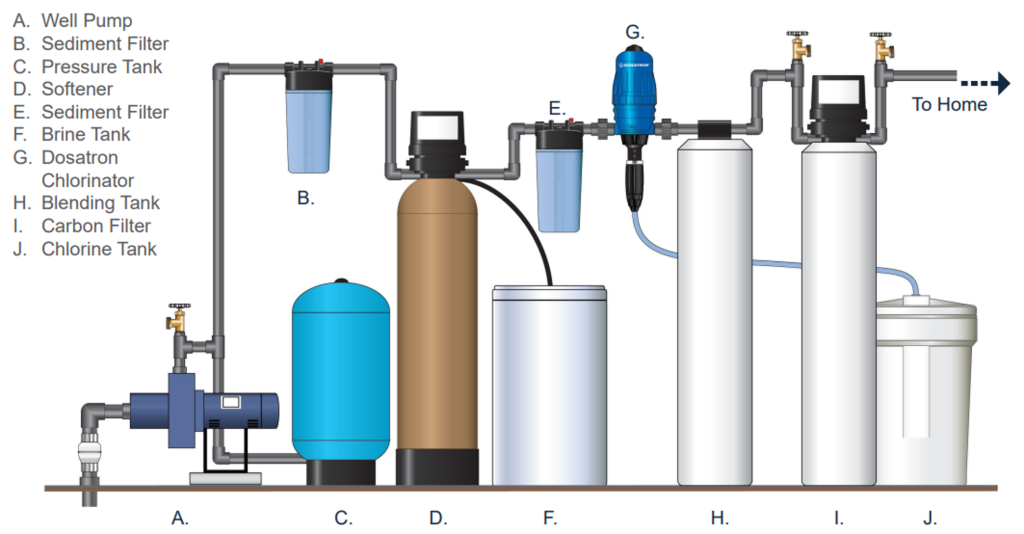
The chemistry is identical; the control is not. A municipal plant measures source water quality continuously, removes turbidity through coagulation and filtration before any chlorine is added, doses precisely, monitors residual chlorine through the distribution network, and tests the result.
In the field you have a fixed-dose tablet, an estimate of volume, unknown turbidity, unknown temperature and no way to test the outcome. That is not an argument against field chlorination, which works well, but it explains why the instructions are conservative and why cutting corners has consequences.
The residual is also doing different work in each case. In a distribution network, residual chlorine protects water against recontamination on its way to the tap. In your bottle, it protects against the untreated water still sitting on the threads and cap, which is why flushing them matters.
For the chemistry inside the tablet itself, see what is actually in a water purification tablet, and for the buying decision, which water purification tablets to carry. Treatment is one line on a longer kit list: see what to pack for tent camping.
Chlorinating Water in the Field
The sequence below is what turns the chemistry into drinkable water. The two steps people skip are clearing the sediment and waiting the full time, and those are precisely the two that determine whether the treatment works.
- Pick the clearest source available. Take water from flowing sources upstream of trails, camps and grazing. Chlorination works far better on water that was reasonably clean to begin with.
- Remove the sediment. Pour through a cloth, coffee filter or pre-filter, or let the water stand until particles settle out. Suspended material shields microorganisms from the chlorine.
- Measure the water volume. Dose is specified per litre or per quart. Guessing the volume means guessing the dose, and underdosing produces water that looks treated but is not.
- Add the chlorine source and seal. Drop in the tablet or add the measured liquid dose, close the container and shake until fully dissolved and mixed.
- Flush the threads and cap. Loosen the cap after a minute or two and let treated water run over the threads and lip, then retighten. Untreated water trapped there recontaminates your drink.
- Wait the full contact time. Thirty minutes is the common figure for clear water at moderate temperature. Double it if the water is near freezing, and longer again if it is not perfectly clear.
- Check for a faint chlorine smell. A slight smell indicates residual chlorine is still present, which means the dose has not been entirely consumed. No smell at all can mean the demand exceeded the dose.
| Water condition | Adjustment to contact time | Why |
|---|---|---|
| Clear, moderate temperature | Standard time on the packet | The reference condition the dose was set for |
| Clear, near freezing | Roughly double it | Reaction rates fall sharply as temperature drops |
| Slightly cloudy | Extend, and pre-filter if you can | Particles consume chlorine and shield organisms |
| Visibly turbid or silty | Filter or settle first, then treat | Chemical treatment alone is unreliable here |
| Cryptosporidium suspected | Chlorination will not cover it | Use chlorine dioxide or a cyst-rated filter |
Taste, Byproducts and Other Objections
The taste people associate with chlorination is partly the residual chlorine itself and partly chloramines, formed when chlorine reacts with nitrogen compounds in the water. Letting treated water stand uncapped for a while allows some of it to dissipate, at the cost of losing the residual protection.
Disinfection byproducts are a genuine topic in municipal water, where chlorine reacting with organic matter can form trihalomethanes and related compounds, which is why treatment plants remove organic material before chlorinating. For occasional field use, the risk balance is not close: untreated backcountry water is the far larger hazard.
Do
- Pre-filter or settle cloudy water before adding any chlorine source
- Dose by measured volume rather than by eye
- Extend contact time substantially in cold water
- Flush the bottle threads and cap with treated water before drinking
- Carry a filter alongside tablets for Cryptosporidium and sediment
- Treat a batch overnight when you have the option
Don’t
- Do not rely on chlorination alone where Cryptosporidium is likely
- Do not assume chlorine removes chemicals, metals or farm runoff
- Do not drink early because the water looks and smells fine
- Do not use scented or thickened household bleach products for water treatment
- Do not mix chlorine products with other treatment chemicals in one container
- Do not ignore a complete absence of chlorine smell after treatment
Honest Limits
Contact times and doses differ between manufacturers and between public health sources, because the correct answer depends on temperature, turbidity, pH and which organisms are plausibly present. Where a product label and a public health source disagree, follow the more cautious of the two.
This article explains the mechanism rather than certifying any product. We have not tested effectiveness, measured residuals or verified manufacturer claims, and nothing here should be read as confirmation that a particular tablet achieves a particular kill rate in your water.
There is also a boundary worth restating. Chlorination addresses living organisms in reasonably clear water. It does nothing about chemical contamination, and it does nothing about turbidity. Where either is the problem, no amount of chlorine is the answer.
Stay Safe Out There
Treat all backcountry surface water, however clear it looks. Visual clarity says nothing about microbial content, and the upstream source of a problem is usually something you cannot see from where you are filling your bottle.
Choose your source carefully, because it does more for your safety than any treatment method. Flowing water upstream of trails, campsites and grazing land, away from obvious human activity, starts you from a much better position than a still pool downstream of a popular camp.
Symptoms of waterborne illness typically appear days to weeks after exposure, which makes the cause easy to miss. Persistent diarrhoea, cramping, nausea or fatigue after a trip is worth raising with a doctor, along with the fact that you were drinking from treated or untreated backcountry sources.
Guidance is published by the CDC, and the EPA covers emergency disinfection including chlorination doses. Both are worth reading before relying on chemical treatment for an extended trip.
Disclaimer: this article is general information, not medical advice. Disinfection effectiveness depends on water conditions, dose and timing, and you are responsible for the water you drink. Follow product instructions, check current public health guidance, and seek professional medical help for any symptoms that concern you.
Frequently Asked Questions
What is chlorination in water purification?
Adding chlorine or a chlorine-releasing compound to water to inactivate disease-causing microorganisms. In water the chlorine forms hypochlorous acid, which passes through microbial cell walls and destroys the proteins and enzymes inside.
What is hypochlorous acid?
The active disinfecting species formed when chlorine dissolves in water. It is small and electrically neutral, so it passes through microbial cell membranes, unlike the negatively charged hypochlorite ion that the cell surface repels.
How long does chlorination take?
Around thirty minutes for clear water at moderate temperature is the common field figure. Cold water slows the reaction substantially, so double the time near freezing, and extend it further if the water is not perfectly clear.
Does chlorination kill Giardia and Cryptosporidium?
Giardia yes, given adequate concentration and time. Cryptosporidium not reliably, because its oocyst wall resists chlorine at practical field doses. For Cryptosporidium, use chlorine dioxide or a filter rated to remove cysts.
Is chlorine the same as chlorine dioxide?
No, despite the names. They are different molecules with different behaviour. Chlorine dioxide penetrates Cryptosporidium oocysts and chlorine does not, which is why chlorine dioxide products list much longer contact times for that organism.
Why does cold water need longer?
Because disinfection is a chemical reaction and reaction rates fall as temperature drops. The same concentration of chlorine simply takes longer to achieve the same effect, which is why doubling the stated time in near-freezing water is sensible.
Why does cloudy water matter?
Suspended particles physically shield microorganisms from the disinfectant and also consume chlorine themselves. A correct dose in turbid water can leave live organisms, which is why filtering or settling the water first is not optional.
Is the chlorine taste harmful?
The taste comes from residual chlorine and from chloramines formed with nitrogen compounds in the water. The residual is a feature, since it keeps protecting the water. Letting it stand uncapped reduces the taste but also removes that protection.
Can I use household bleach to chlorinate water?
Plain unscented household bleach is used in emergency guidance at specific dilutions, but scented, thickened or additive-containing products are not suitable. Follow published emergency disinfection doses exactly rather than estimating.
Does chlorination remove chemicals or heavy metals?
No. Chlorination targets living organisms only. Pesticides, fertiliser runoff, heavy metals and fuel residues pass straight through unaffected. Where those are a concern, the answer is a different source or a treatment stage designed for them.
The Bottom Line
Chlorination is one of the most consequential public health technologies ever deployed, and the version in your water bottle runs on exactly the same chemistry as the version protecting a city. Chlorine becomes hypochlorous acid, that small neutral molecule slips through microbial cell walls, and the proteins inside are oxidised beyond use. Fast against bacteria and viruses, effective against Giardia with time, and leaving a residual that keeps working.
What makes it work in practice is respecting the conditions. Clear the sediment first, dose by measured volume, and wait the full contact time, doubling it when the water is near freezing. Accept that Cryptosporidium and chemical contamination are outside its range, carry a filter to cover the first and choose a better source to avoid the second, and chlorination will do its job reliably.