
This question usually comes from a sensible place. If you can turn seawater into drinking water, and the ocean is effectively unlimited, it can feel as though desalination creates water out of nowhere. It does not, and understanding why tells you something useful about every water treatment method, not just the ones involving salt.
No, purifying salt water does not give you more water. Desalination separates a volume of saline water into two streams: a smaller volume of fresh water you can drink, and a concentrated brine stream carrying the salt that was removed. Every litre of seawater you process produces considerably less than a litre of drinking water, with the rest leaving as waste. What desalination does is convert water you cannot drink into a smaller quantity of water you can, which is valuable precisely because the input is effectively unlimited rather than because the process is generous.
In short: it converts undrinkable water into less drinkable water, which is still a very good trade.
The EPA recognises reverse osmosis, the dominant desalination technology, as effective for dissolved contaminants including salts, and the same literature notes the wastewater stream it produces. Both halves of that are relevant: it works, and it discards a lot.
Below: where the water actually goes, how the two main desalination methods differ, what recovery rates look like in practice, why it matters for camping and emergencies, and the far simpler point about drinking seawater directly.
Key Takeaways
- Desalination splits one stream into two: fresh product water and concentrated brine.
- You always end up with less drinkable water than the saline volume you started with.
- Reverse osmosis forces water through a membrane that rejects dissolved salt.
- Distillation evaporates water and condenses it, leaving salt behind.
- Both methods need substantial energy, which is the real constraint rather than the water.
- Never drink seawater, because processing the salt costs you more water than you gain.
- For camping, desalination is almost never practical; carrying or finding fresh water is.
Water Treatment, and Where Desalination Sits
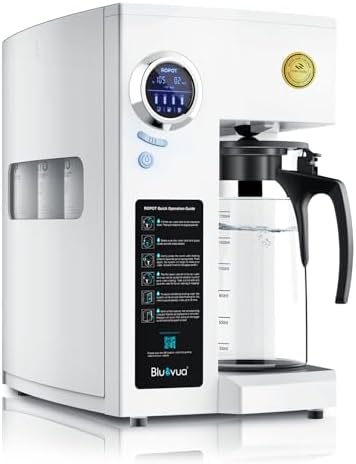
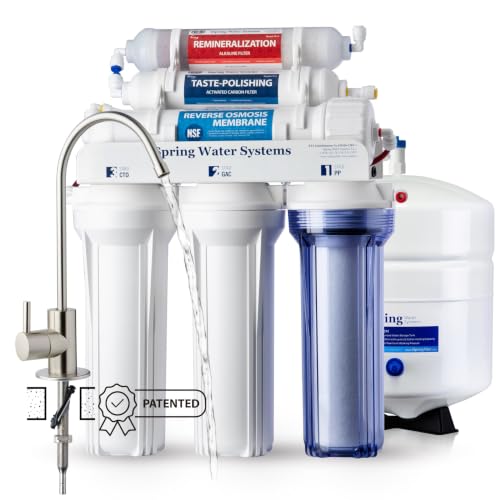
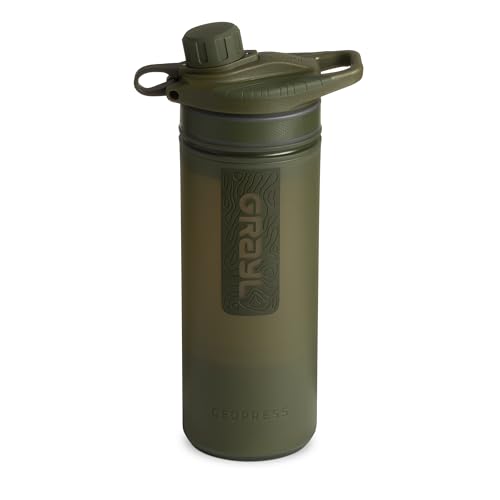
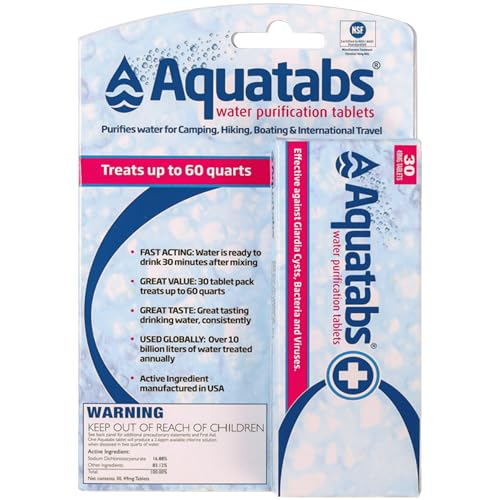
Desalination equipment is household or marine rather than something you carry, and the backcountry options below handle a completely different problem. The contrast is the useful part.
If salt is the issue, nothing in a normal camping kit will help. If microorganisms are the issue, which is the usual case, the filters and tablets below are the right tools.


Where the Water Actually Goes
Picture a volume of seawater entering a desalination system. It leaves as two separate streams. The first is the permeate or product water, which is fresh and drinkable. The second is the concentrate or brine, which contains all the salt that was removed plus the water needed to carry it away.
That second stream is the answer to the question. Salt cannot simply be set aside as a dry pile; in any practical system it leaves dissolved in water, which means a portion of your input volume departs with it. The fresh output is always smaller than the input.
This is what makes desalination different from filtering a muddy stream. A filter traps sediment physically and lets essentially all the water through, so the yield is close to a hundred percent. Separating a dissolved substance requires taking liquid with it, and that is a structural feature of the process rather than an inefficiency to engineer away.
| Method | What is removed | Where it goes | Water yield |
|---|---|---|---|
| Sediment or hollow fibre filter | Particles and microorganisms | Trapped in the filter medium | Nearly all of the input |
| Chemical disinfection | Nothing physically | Organisms stay, inactivated | All of the input |
| Boiling | Nothing physically | Organisms stay, inactivated | All, minus a little steam |
| Activated carbon | Dissolved organics | Adsorbed onto the carbon | Nearly all of the input |
| Reverse osmosis | Dissolved salts and more | Carried away in brine | A fraction of the input |
| Distillation | Everything non-volatile | Left behind as residue | A fraction, limited by energy |
The Two Ways to Desalinate
Reverse osmosis dominates modern desalination. A semi-permeable membrane lets water molecules through but blocks dissolved salt ions, and pressure applied to the saline side forces water across against its natural tendency. Fresh water emerges on the far side and the salt stays behind, concentrated.
The pressure requirement is severe for seawater specifically. Fresh water sources need modest pressure, often just mains supply, while seawater has a far higher osmotic pressure to overcome. That is why marine watermakers and desalination plants use high-pressure pumps and consume meaningful amounts of energy.
Distillation is the older approach and the more intuitive one. Heat the water until it evaporates, leaving salt behind, then condense the vapour back into liquid on a cool surface. A solar still does this with sunlight and a sheet of plastic; a shipboard evaporator does it with engine heat.
Both face the same arithmetic. Distillation yields only the water you manage to evaporate and successfully recondense, which in a simple solar still is a small fraction of what you put in. Reverse osmosis yields only the permeate. Neither creates water.
The membrane process is covered in more detail in how reverse osmosis works.
Recovery Rates in Practice
The industry term for yield is recovery rate: the proportion of input water that becomes product water. It varies with the salinity of the source, the system design, the membrane condition and the pressure available, and it is always well short of complete.
Highly saline sources give lower recovery than brackish ones, because there is more salt to carry away in the reject stream. A household reverse osmosis unit treating municipal tap water achieves a much better ratio than a seawater system, simply because the input was nearly fresh already.
Membrane condition matters as well. A fouled or scaled membrane passes less water for the same pressure, which lowers recovery and raises energy use per litre produced. That is why pre-filtration stages exist and why service intervals are published rather than optional.
Why This Matters for Camping
The practical conclusion for anyone camping is that desalination is almost never the answer. The equipment is heavy, it needs pressure or heat, and it produces a fraction of what you feed it. For a weekend on the coast, carrying fresh water beats every version of this comfortably.
The exception is marine and liferaft contexts, where there is no alternative at all. Hand-operated emergency desalinators exist for exactly that situation, and they are slow, physically demanding and expensive, which again tells you how much work separating salt from water really is.
- Identify what is being removed. Dissolved salt behaves completely differently from sediment or microorganisms, and that determines whether any water is lost in the process at all.
- Ask where the removed material goes. Filters trap particles and keep the water. Desalination has to carry dissolved salt away in a liquid stream, which means losing water with it.
- Look for a stated recovery rate. Reverse osmosis systems publish how much of the input becomes product water. That figure tells you the yield directly.
- Account for the energy, not just the water. Desalination needs pressure or heat. On a trip the binding constraint is usually fuel or power rather than the volume of source water.
- Compare against simply carrying water. For short trips, carrying fresh water almost always beats processing saline water, because the equipment weighs more than the water it would make.
- Consider collection instead. Rainwater and condensation collection produce fresh water with no salt problem at all, and need no energy input beyond setting them up.
- Treat fresh water for pathogens separately. Water that is fresh but not clean is the normal camping problem, and a filter plus tablets solves it for a few ounces.
Solar Stills and Survival Expectations
Solar stills appear in survival manuals and deserve an honest assessment. The principle is sound: evaporation leaves salt behind, condensation gives you fresh water. The yields are the problem, and they are routinely overstated in popular accounts.
A simple pit still or a plastic-sheet still over seawater produces a modest amount of water over a full day of strong sun, and the effort of digging and setting it up costs you sweat and therefore water. In marginal conditions that trade can be negative rather than merely poor.
| Source | Yield | Effort | Verdict |
|---|---|---|---|
| Carried fresh water | Exactly what you brought | None, beyond the weight | Always the best plan |
| Rainwater collection | Potentially large, in bursts | Low once set up | The highest value improvisation |
| Found fresh water, treated | Depends on the source | Low with a filter or tablets | Excellent where it exists |
| Solar still over seawater | Small, slow, weather dependent | High | Last resort, often net negative |
| Manual emergency desalinator | Usable but slow | Physically demanding | Purpose-built for liferafts |
| Drinking seawater | Negative | None | Never; it accelerates dehydration |
The Wider Point About Treatment
This question exposes a useful distinction between methods that remove things physically and methods that only inactivate them. Filters, carbon and membranes all take something out of the water, and each handles the removed material differently.
A hollow fibre filter traps bacteria and sediment in the medium itself, so almost all the water passes through. Carbon adsorbs dissolved molecules onto its surface, again keeping the water. Only membranes separating dissolved ions need to flush the removed material away in liquid, which is why only they lose volume.
Do
- Carry fresh water on coastal trips rather than planning to make it
- Set up rainwater collection if you are staying put near the sea
- Treat found fresh water for pathogens with a filter or tablets
- Check the recovery rate if you are buying a reverse osmosis system
- Pre-filter water before any membrane to protect it from fouling
- Plan water supply as a logistics problem rather than a technology one
Don’t
- Do not drink seawater under any circumstances
- Do not drink the brine or reject stream from any system
- Do not expect a solar still to supply meaningful daily needs
- Do not assume a camping filter removes salt, because none do
- Do not rely on desalination equipment you have never operated
- Do not count on rain that has not been forecast
For the methods that actually belong in a pack, see which water purification method to choose and the three steps of water purification.
Honest Limits
Recovery rates vary so widely between systems, sources and conditions that no single figure is meaningful, which is why none appear here. A household unit on municipal water and a seawater plant are both reverse osmosis and have very different yields.
Solar still performance depends on sunlight, temperature, humidity, surface area and construction quality, and published figures range widely. The consistent finding across them is that yields are small relative to daily fluid needs, which is the practical point rather than any specific number.
We have also not tested any of these systems. This article explains the principle of why yield is always less than input; it is not an assessment of how any particular product performs on any particular water.
Stay Safe Out There
Water planning is a logistics exercise, not a technology one. Know where your water is coming from before you set out, carry more than you expect to need, and treat the ability to find or make more as a margin rather than as the plan.
Dehydration impairs judgement before it becomes physically obvious, which is what makes it dangerous on a trip. Dark urine, headache, dizziness and unusual fatigue are worth acting on early by resting in shade and drinking, rather than pushing on and hoping to reach water.
In a genuine survival situation, prioritise shade, rest and reducing water loss over elaborate schemes to produce water. Sweating through the construction of a still that yields almost nothing is a common and costly mistake, and signalling for help is almost always the better use of that energy.
Guidance on drinking water and treatment is published by the EPA and the CDC, both of which cover emergency situations as well as routine treatment.
Disclaimer: this article is general information, not medical or survival advice. Conditions vary and you are responsible for your own water planning and safety. Follow official guidance, carry adequate water, and seek professional medical help for any symptoms of dehydration or heat illness that concern you.
Frequently Asked Questions
Does purifying salt water result in more water?
No. Desalination splits saline water into a smaller stream of fresh product water and a concentrated brine stream carrying the salt away. You always finish with less drinkable water than the volume you started with.
Where does the rest of the water go?
Into the brine or concentrate stream. Salt cannot be removed as a dry solid in any practical system, so it leaves dissolved in water, and that water goes with it rather than reaching your glass.
Why does filtering not lose water the same way?
Because a filter traps particles and microorganisms physically in the medium, so nearly all the water passes through. Only processes separating dissolved substances need to flush the removed material away in liquid.
What is a recovery rate?
The proportion of input water that becomes drinkable product water in a reverse osmosis system. It varies with source salinity, system design and membrane condition, and it is always well short of all the input.
How does reverse osmosis remove salt?
A semi-permeable membrane blocks dissolved salt ions while letting water molecules through, and applied pressure forces water across against its natural tendency. Seawater needs far higher pressure than fresh or brackish water.
Can I desalinate water while camping?
Not practically. The equipment is heavy, needs significant pressure or heat, and yields a fraction of the input. Carrying fresh water or collecting rainwater beats it comfortably for any normal trip.
Do solar stills work?
The principle works but the yields are small and slow, and heavily dependent on sun, temperature and construction. The effort of building one costs you sweat, which in marginal conditions can make the exchange net negative.
Can I drink seawater in an emergency?
No. Your kidneys require more fresh water to excrete the salt than the seawater supplied, so drinking it accelerates dehydration. The same applies to brine from an improvised still and to urine.
Will my camping filter remove salt?
No. Hollow fibre filters strain out particles and microorganisms, and dissolved salt is far too small to be caught. Only reverse osmosis or distillation separates dissolved salt from water.
Is rainwater better than desalination for camping?
Much better where rain is available. A tarp funnelling into a container collects more fresh water in a single shower than a solar still produces in a long hot day, and it needs no energy input at all.
The Bottom Line
Desalination does not create water, it converts it. A volume of seawater becomes a smaller volume of drinkable water plus a brine stream that carries the salt away, and that second stream is why the answer is always less rather than more. The reason it is worth doing anyway is that the input is effectively unlimited, so a poor yield on an infinite source still beats a good yield on nothing.
For camping the practical conclusion is simpler. Desalination equipment is heavy, hungry for pressure or heat, and productive only at scale, which means carrying fresh water or collecting rain beats it on any normal trip. Keep your filter and tablets for the actual problem, which is fresh water that is not clean, and never drink seawater, because processing the salt costs you more water than the drink supplies.