
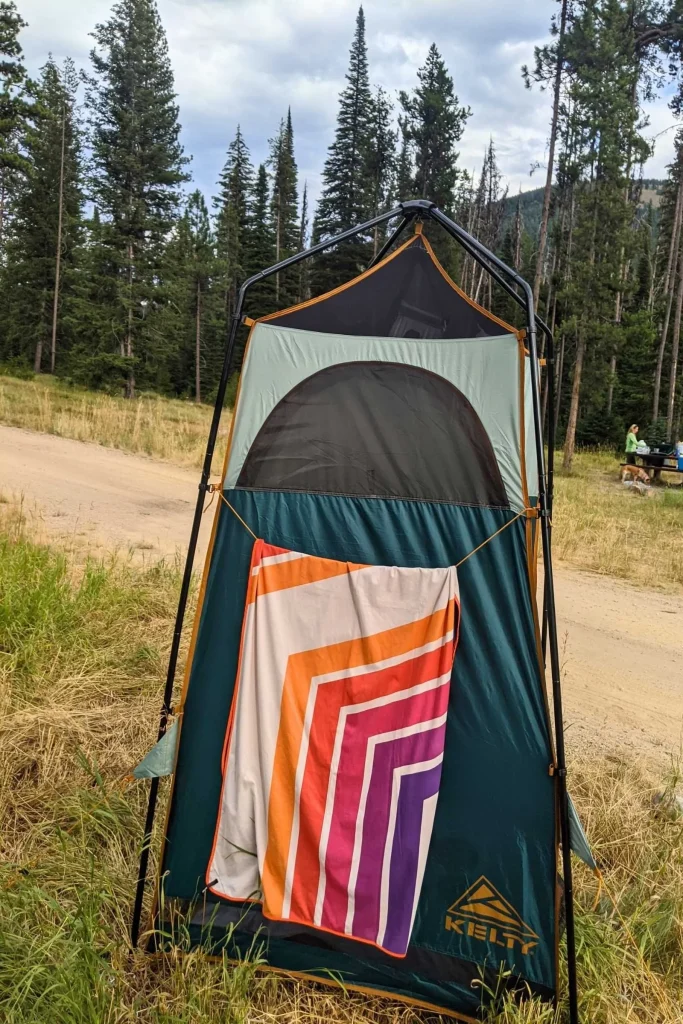
A shower tent, or privacy pod, is one of those purchases that seems obviously sensible and then raises a question nobody can answer at the till. Will the campground let you put it up? The answer is usually yes, with qualifications that have more to do with where the water goes than with the tent itself.
Most campgrounds allow shower tents, because they are treated as additional structures on your site rather than as a separate category. The usual conditions are that it counts toward the limit on tents or structures per site, it must stand on your own pitch rather than spilling into a neighbouring one or onto vegetation, and greywater cannot simply drain onto the ground. Dispersed camping on public land is more permissive about the structure and stricter about the water, and some parks prohibit outdoor showering entirely. Ask the specific campground, because the answer turns on local rules rather than on anything national.
In short: usually yes as an extra structure on your own pitch, with greywater the part that actually has rules.
The greywater issue is the one worth taking seriously. Leave No Trace guidance asks campers to carry water at least 200 feet from streams and lakes for washing and to scatter strained dishwater, and the same logic applies to shower runoff. Soap and food residue concentrate wildlife attention and affect water quality.
Below: why shower tents are normally permitted, the conditions that attach, what to do about the water, how the rules differ for dispersed camping, and how to use one without annoying your neighbours.
Key Takeaways
- Shower tents are normally treated as an extra structure on your pitch, not a separate category.
- They usually count toward the campground limit on tents or structures per site.
- Placement matters: on your own pitch, on the pad or disturbed ground, not on vegetation.
- Greywater is the real regulated issue, not the tent.
- Dispersed camping is more relaxed about the structure and stricter about the water.
- Use biodegradable soap sparingly, and use it well away from streams and lakes.
- Where a campground has shower blocks, some prohibit private outdoor showering entirely.
Shower and Privacy Tents Worth Knowing
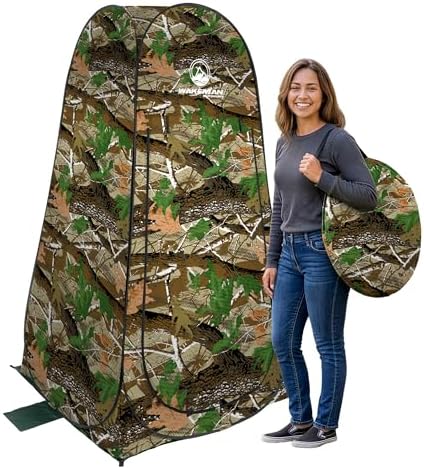
Shower tents, changing tents and toilet pods are largely the same product sold under different names, and most of them serve all three purposes. Pop-up designs dominate because setting up a second structure should take seconds rather than minutes.
Check the packed size before buying. A pop-up pod folds into a disc that is wider than people expect, which matters more for car space than the weight does.



Why They Are Usually Allowed
Campgrounds regulate what occupies a site rather than what each item is called. A privacy pod is a small fabric structure, which puts it in the same category as a screen house, a gazebo or a second tent, and all of those are normally permitted within the site limits.
That framing explains both why they are allowed and the main condition. If a site permits two tents or structures and you pitch a sleeping tent plus a privacy pod, you have used your allowance. A group hoping to add a shower tent on top of two sleeping tents may find they are over the limit.
The second condition is placement. Sites have boundaries and a designated pad or disturbed area, and structures are expected to stay within them. A pod pitched on vegetation beside the pad causes the same resource damage as a tent would, and parks manage campsite footprint closely.
| Setting | Structure allowed? | Showering allowed? | Main condition |
|---|---|---|---|
| Private campground | Usually yes | Usually yes | Site structure limit and greywater |
| State park campground | Usually yes | Varies by park | Some require use of shower blocks |
| National park campground | Usually yes | Varies by park | Structure limit, placement on the pad |
| Dispersed on forest or BLM land | Yes | Yes, with Leave No Trace | Water handling, distance from streams |
| Group site | Usually yes | Usually yes | Specific limits set for the site |
| Beach or day use area | Often not overnight | Varies | Day use rules, changing versus showering |
Greywater Is the Actual Rule
Almost every genuine restriction around shower tents is about the water rather than the fabric. Greywater from washing carries soap, skin oils, food residue and sometimes sunscreen and insect repellent, and where that ends up matters to water quality and to wildlife behaviour.
Developed campgrounds usually have utility sinks or designated greywater disposal points, and a number prohibit dumping wash water on sites specifically because it creates smells, attracts animals and kills grass. That is the rule most likely to catch out someone showering at their pitch.
The mechanism behind the Leave No Trace guidance is straightforward. Soap needs soil microbes to break it down, so scattering strained wash water at least 200 feet from streams and lakes puts it where it can degrade. Pouring it into or beside water skips that step entirely.
Dispersed Camping and Backcountry Use
On national forest and BLM land the structure question largely disappears, because there is no site boundary and no structure count. Pitching a privacy pod alongside your tent is unremarkable, and nobody is counting.
What tightens instead is everything about water. Leave No Trace practice asks campers to camp 100 feet from water, to carry wash water at least 200 feet from streams and lakes, and to scatter it rather than pouring it in one place. Those apply with more force where there is no infrastructure to absorb mistakes.
There is also a practical consideration. Water you have carried in is expensive in effort, and a shower consumes a lot of it. Solar shower bags and pressurised sprayers make a few litres go much further than tipping a bottle over your head, which matters when every litre was carried.
The wider rules for camping outside developed campgrounds are covered in where to tent camp for free.
Asking the Campground
Because the answer varies, asking is the reliable route and it takes one short phone call. The useful framing is to ask about both the structure and the activity, since those are separate permissions and a campground can allow one without the other.
- Check the structure limit for your site. Campgrounds cap tents or structures per site, often at one or two. Ask whether a privacy pod counts toward that limit, because it frequently does.
- Confirm outdoor showering is permitted. Some campgrounds with shower blocks prohibit private showering on sites entirely. That is a separate rule from whether the structure is allowed.
- Site it on your own pitch. Put it on the pad or already disturbed ground within your site boundary. Spilling into a neighbouring pitch or onto vegetation is what draws a visit from the host.
- Plan where the water goes before you use it. Decide in advance whether you are catching greywater in a basin, using a drain point, or whether showering there is appropriate at all.
- Use minimal biodegradable soap. Less soap is better than more, and biodegradable soap is still soap. It needs soil to break down, so it does not belong in or near a water body regardless of the label.
- Scatter greywater well away from water. Where scattering is permitted, carry it at least 200 feet from streams and lakes and disperse it widely rather than pouring it in one spot.
- Take it down when you are done. A pop-up pod left standing all week takes up site space and looks permanent. Collapsing it between uses avoids both problems.
- Dry it before packing. A damp privacy tent packed into its disc goes mouldy quickly, and the fabric is usually thinner than a camping tent to begin with.
Other Uses That Cause Fewer Questions
Most privacy pods are sold for three jobs, and only one of them involves water. Used as a changing room, the structure question is the only one that applies, and campgrounds almost never object. The same goes for a space to use a portable toilet.
That distinction is worth knowing because it changes the conversation. Asking whether you can put up a changing tent is a much simpler question than asking whether you can shower on your site, and for many people changing privacy was the actual need anyway.
| Use | Usually permitted? | What governs it |
|---|---|---|
| Changing room | Almost always | Structure limit and placement only |
| Portable toilet enclosure | Usually | Structure limit, plus waste disposal rules |
| Showering | Often, with conditions | Greywater handling and local showering rules |
| Gear or dog washing | Varies | Greywater, plus rules on washing on sites |
| Storage or shade | Usually | Structure limit only |
Portable toilet use brings its own waste rules, which are stricter and non-negotiable. Human waste from a portable toilet goes to a dump station or an approved disposal point, never into a cathole, a campground bin or the ground.
Being a Good Neighbour About It
Campground friction around privacy pods is rarely about rules. It comes from siting, from a pod left standing across a walkway all week, or from greywater draining toward the next pitch. All three are easy to avoid.
Pop-up pods are also light and catch wind like a sail. One that has blown across the campground is both an irritation and a hazard, and pegging it properly takes thirty seconds even though it stands up without help.
Do
- Ask whether a privacy pod counts toward your site structure limit
- Pitch it within your own site, on the pad or disturbed ground
- Peg it down, because pop-up pods blow away readily
- Catch greywater in a basin where disposal points exist
- Use biodegradable soap sparingly, well away from water
- Collapse it between uses to free up site space
Don’t
- Do not assume a privacy pod does not count as a tent
- Do not pitch it on vegetation or over the site boundary
- Do not drain greywater onto the ground at a developed campground
- Do not wash or rinse in a stream or lake, with any soap
- Do not block paths or site access with it
- Do not empty portable toilet waste anywhere but an approved disposal point
Site structure and occupancy limits work the same way for other extra tents, which we cover in using a tent on an RV site in a national park, and the general kit list is in what to pack for tent camping.
Honest Limits
There is no national rule on this, and campground policies differ widely between private sites, state parks, national parks and public land. The patterns described here are common ones rather than guarantees, and an individual campground can take a different view.
Greywater rules in particular vary with local water protection regulations, which differ by state and by watershed. Some areas are considerably stricter than the general Leave No Trace guidance, especially near drinking water catchments.
We have also not tested these products. The recommendations reflect what each is designed for and what buyers widely report, rather than controlled comparison, and privacy pod durability in particular varies a great deal at this price point.
Stay Safe Out There
Peg the pod down properly even on a calm day. Pop-up structures are light, present a large surface and lift readily in a gust, and one travelling across a campground with spring-steel hoops in it can genuinely injure someone.
Mind the ground inside it. Wet feet on a plastic groundsheet over uneven terrain is a slip risk, particularly for older campers and children, and a small mat or a rinsed-off pair of sandals removes most of that.
Campground rules on structures, washing and waste disposal vary by site and season. The National Park Service camping pages cover the units it manages, and private and state campgrounds publish their own.
Disclaimer: this article is general information, not legal or safety advice. Campground policies and local water regulations vary and change, and you are responsible for complying with those in force where you camp. Confirm with the campground directly and seek professional medical help for any injury that concerns you.
Frequently Asked Questions
Do campgrounds allow shower tents?
Most do. They are usually treated as an additional structure on your site rather than a separate category, so the conditions are the site structure limit, placement within your own pitch, and what you do with the greywater.
Does a shower tent count as a second tent?
Frequently yes, and this is the detail most likely to cause a problem. Campgrounds cap tents or structures per site, often at one or two, and a privacy pod commonly counts toward that allowance.
Can I shower at my campsite?
It depends on the campground. Some permit it with greywater conditions, and some with shower blocks prohibit private showering on sites entirely. The structure and the activity are separate permissions, so ask about both.
What do I do with the greywater?
Use a designated greywater disposal point or utility sink where one exists. Where scattering is permitted, strain it, carry it at least 200 feet from streams and lakes, and disperse it widely rather than pouring it in one place.
Is biodegradable soap safe to use anywhere?
No. Biodegradable soap still affects aquatic life and needs soil microbes to break down. Never wash or rinse in a stream or lake, use it sparingly, and dispose of the water well away from any water body.
Are shower tents allowed when dispersed camping?
Generally yes, since there is no site boundary or structure count. What tightens is water handling: camp 100 feet from water, carry wash water at least 200 feet from streams and lakes, and scatter rather than pour it.
Can I use one as a toilet enclosure?
Yes, and that use rarely raises objections about the structure. The waste rules are stricter though: portable toilet contents go to a dump station or approved disposal point, never into a cathole or a campground bin.
Do I need to peg a pop-up privacy tent down?
Yes, every time. They stand up without pegs but are light, catch wind like a sail and blow across campgrounds readily. A pod with spring-steel hoops travelling at speed can injure someone.
How much water does a camp shower use?
Far less than a home shower if you use a solar shower bag or a pressurised sprayer, which deliver a controlled flow. Tipping a bottle over your head wastes most of it, which matters when you carried the water in.
What if the campground says no?
Ask whether using it as a changing room rather than a shower is acceptable, since that removes the greywater question entirely. Many campgrounds that restrict showering have no objection to a changing enclosure.
The Bottom Line
Shower tents are allowed at most campgrounds, because they are treated as one more structure on your pitch rather than as something unusual. The conditions that attach are predictable: it counts toward your site structure limit, it goes on your own pitch and on the pad rather than on vegetation, and it needs pegging down even though it stands up by itself.
The part that actually has rules is the water. Soap, skin oils and food residue in greywater attract wildlife and affect water quality, so use a designated disposal point where one exists, and where you are scattering it, strain it and carry it at least 200 feet from any stream or lake. If the showering question gets a no, ask about using it as a changing room instead, which removes the greywater issue and is what many people wanted anyway.