
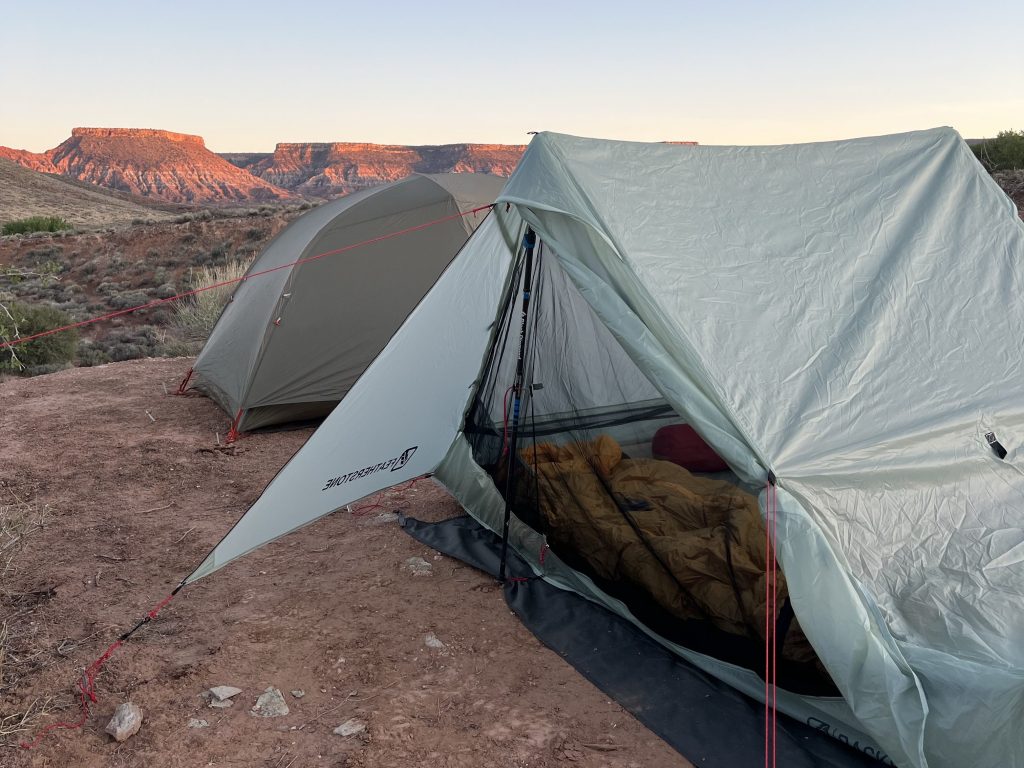
This question usually arrives late in a booking, when the tent loop is full and the RV sites are not. It feels like a loophole, and in many parks it genuinely is a workable option. In others it is explicitly prohibited, and the difference is decided at the individual park rather than nationally.
You can usually pitch a tent on an RV or standard site in a National Park Service campground, because most sites are designated by vehicle capability rather than by shelter type. Typical conditions apply: a limit on the number of tents per site, often one or two, a requirement that tents go on the designated pad or disturbed area rather than on vegetation, and the same occupancy and vehicle limits as any other camper. The important caveat is that rules are set per park and sometimes per campground, so the only reliable answer comes from the park you are visiting.
In short: usually yes on a standard or RV site, with tent-count and placement limits, but check that specific park.
The National Park Service publishes campground information by park rather than as a single national rulebook, which is precisely why general advice has limits here. Site types, occupancy limits and what is permitted on a pad differ between units, and reservation systems list those conditions per campground.
Below: how NPS site types actually work, what conditions normally attach, when the answer is no, how to confirm before booking, and whether pitching on an RV site is even a good idea.
Key Takeaways
- Most NPS sites are classified by vehicle capability rather than by shelter type.
- Pitching a tent on a standard or RV site is commonly permitted, with conditions.
- Expect limits on tents per site, often one or two, plus an occupancy limit per site.
- Tents usually must go on the pad or an already disturbed area, not on vegetation.
- Electric and full-hookup sites sometimes prohibit tents outright.
- Rules are set per park and per campground, not nationally.
- Confirm with the park before booking, because site fees are often non-refundable.
Gear That Suits a Hard Pad
Pitching on an RV site usually means gravel or compacted ground rather than soft earth, which changes what works. Standard pegs bend, thin mats puncture, and a freestanding tent becomes considerably more useful.
If you expect to pitch on gravel regularly, a set of stronger stakes and a footprint are the two additions that make the most difference.
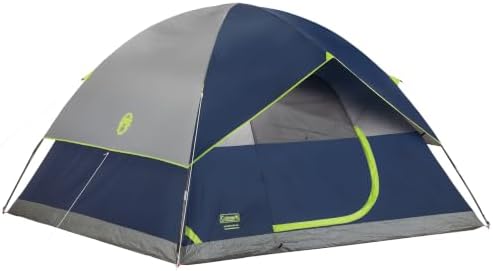


How NPS Site Types Actually Work
The common assumption is that campgrounds separate tents from RVs by shelter type. Mostly they do not. Sites are classified by what a vehicle needs: whether there is a hardstand pad, how long a vehicle can be, and whether hookups are provided.
That means a site labelled RV or standard is usually describing capability rather than exclusivity. It can take a vehicle of a given size, and a tent pitched on the same pad is often perfectly acceptable. The restriction runs the other way far more often: tent-only sites exclude vehicles because they lack a pad.
Walk-in and hike-in sites are the clearest case of genuine exclusivity, because no vehicle can reach them at all. Electric and full-hookup sites are the other end, and they are where tent prohibitions most commonly appear, usually because the campground wants those premium sites available to the vehicles that need them.
| Site type | Tent usually allowed? | Typical conditions |
|---|---|---|
| Tent-only or walk-in | Yes, that is the point | No vehicle on the pitch |
| Standard site | Usually yes | Tent limit, on the pad or disturbed area |
| RV site without hookups | Usually yes | Same limits as a standard site |
| Electric site | Sometimes | Varies; some parks prohibit tents here |
| Full hookup site | Often not | Frequently reserved for vehicles |
| Group site | Usually yes | Specific tent and occupancy limits apply |
The Conditions That Usually Apply
Where tents are permitted on a standard or RV site, three conditions come up repeatedly. The first is a limit on the number of tents, commonly one or two per site. That matters for groups trying to put four tents on one booking to save money.
The second is occupancy. Sites have a maximum number of people regardless of how they are sleeping, often six, and that is enforced independently of the tent count. Two tents and eight people is a problem even where two tents are allowed.
The third is placement, and it is the one that catches people out. Tents usually have to go on the pad or on already disturbed ground rather than on vegetation, because a tent pitched on plants kills them and expands the campsite footprint over time. That is a resource protection rule rather than a preference.
When the Answer Is No
Full hookup sites are the most common prohibition. Where a campground has a small number of sites with water, electricity and sewer, those are usually reserved for vehicles that can use them, and a tent occupying one is considered a waste of a scarce resource.
Some parks prohibit tents on electric sites for the same reason, and a few restrict tent pitching anywhere outside designated tent pads for resource protection, particularly in fragile environments like desert or alpine campgrounds where vegetation recovers slowly.
Seasonal restrictions also appear. A campground might permit tents on RV sites in the quiet season and restrict them in peak summer when tent loops are busy and demand for every site type is high. That kind of rule is rarely published prominently, which is why phoning is worth the two minutes.
Confirming Before You Book
The sequence below takes a few minutes and removes almost all of the risk. The key point is to look at the specific campground rather than the park in general, because conditions vary between campgrounds within the same park.
- Find the campground page for that park. Go to the National Park Service page for the specific park and campground rather than a general camping page. Conditions are published per campground.
- Read the site type description. Look at how the site is classified. Standard and RV sites usually permit tents; electric and full-hookup sites sometimes do not.
- Check the tent limit and occupancy limit. Most campgrounds cap the number of tents per site and the number of people. Both are enforced, and both can be lower than you expect.
- Look for placement wording. Phrases like on the pad only, or within the disturbed area, tell you where the tent is permitted to go. Vegetation is usually out of bounds.
- Phone the campground if it is unclear. A short call to the park or the concessionaire settles it. Policies are often unwritten at the level of detail you need.
- Check the reservation notes at booking. Reservation systems list site-specific conditions in the detail pages. Read those before paying, since fees are frequently non-refundable.
- Confirm vehicle and parking limits too. Sites cap the number of vehicles as well as tents. Arriving with a second car can be as much of a problem as an extra tent.
- Note food storage requirements. Many parks require food in lockers or hard-sided vehicles. A tent is never approved food storage anywhere with wildlife activity.
The mirror image of this question, a vehicle on a tent site, has a rather different answer: see whether a camper van can use tent-only sites.
Is It Actually a Good Idea?
Permitted and pleasant are different questions. An RV loop is usually a harder, more open, noisier environment than a tent loop: gravel pads, generator hours, engines starting early, less shade and less vegetation between sites.
The gravel is the practical issue. Standard aluminium pegs bend or refuse to penetrate compacted gravel, thin inflatable mats puncture more readily, and the ground is less forgiving to sleep on. A freestanding tent helps considerably because it stands without tension while you work out the anchoring.
Against that, RV sites are often larger, more level and better drained than tent pitches, which matters in wet weather. And when the tent loop is full and the alternative is not camping at all, the comparison is not with a perfect tent site, it is with driving home.
| Factor | RV or standard site | Tent loop |
|---|---|---|
| Availability | Often the only thing left | Books out first |
| Ground surface | Gravel or compacted pad | Soil, usually softer |
| Pegging | Difficult; needs strong stakes | Straightforward |
| Level ground and drainage | Usually better | Varies by pitch |
| Noise | Generators, engines, early starts | Generally quieter |
| Shade and privacy | Often sparse | Usually better |
| Cost | Sometimes more than a tent site | Usually the cheapest option |
Combining a Tent and an RV on One Site
A common version of this question comes from families travelling with an RV who want the children in a tent alongside it. That is widely permitted and is exactly the scenario the tent limit per site is written for.
The constraints are the ones already described: the tent count, the occupancy limit, and placement on the pad or disturbed ground. A tent pitched on vegetation beside an RV is the version that gets a visit from the camp host, because it expands the site footprint.
Do
- Check the specific campground rather than assuming a park-wide rule
- Confirm tent, occupancy and vehicle limits before booking
- Pitch on the pad or already disturbed ground
- Carry stronger stakes for gravel pads
- Follow posted food storage rules, which never permit food in a tent
- Respect generator hours and quiet hours in RV loops
Don’t
- Do not assume a tent is allowed on a full hookup site
- Do not pitch on vegetation beside the pad
- Do not exceed the tent or occupancy limit to save on fees
- Do not rely on an unofficial answer from a booking site
- Do not expect a tent loop experience on an RV loop
- Do not store food in the tent anywhere with wildlife activity
For the broader trade-offs between the two styles, see how tent camping compares with an RV, and what to pack for tent camping covers the kit either way.
Honest Limits
The National Park Service does not operate a single national rulebook for this, which is the central limitation of any general article on the subject. Each park sets its own campground regulations, and concessionaire-run campgrounds within parks add their own operating rules on top.
Conditions also change seasonally and between years as parks respond to demand, resource damage and staffing. A rule that applied last summer may not apply this one, which is why the park page and a phone call beat any article including this.
This also covers National Park Service campgrounds specifically. National forests, BLM land, state parks and private campgrounds all have different structures, and a rule that holds at an NPS campground tells you nothing reliable about a state park down the road.
Stay Safe Out There
Food storage is the rule most worth taking seriously in national parks, and it is enforced because it keeps wildlife alive. Many parks require all food, rubbish and scented items to be stored in provided lockers or in a hard-sided vehicle. A tent is never approved storage anywhere.
Generator hours and quiet hours exist in RV loops for a reason, and pitching a tent there means accepting them in both directions: you are more exposed to noise than you would be on a tent loop, and equally bound by the same rules.
Park-specific rules, closures and fire restrictions are published by the National Park Service camping pages and updated as conditions change. Check the page for your park before you travel.
Disclaimer: this article is general information, not official National Park Service guidance. Rules vary by park and campground and change over time, and you are responsible for complying with those in force where you camp. Confirm with the park directly, follow posted rules and host instructions, and seek professional medical help for any injury that concerns you.
Frequently Asked Questions
Can I use a tent on an RV site in a national park?
Usually yes. Most NPS sites are classified by vehicle capability rather than shelter type, so a tent on a standard or RV site is commonly permitted, subject to tent-count, occupancy and placement rules set by that park.
How many tents can I put on one site?
Commonly one or two, though it varies by campground. There is normally a separate occupancy limit for people as well, often around six, and both are enforced independently of each other.
Can I pitch a tent on a full hookup site?
Often not. Full hookup sites are usually reserved for vehicles that can use the connections, since they are a scarce resource. Electric sites vary, with some parks permitting tents and others prohibiting them.
Where exactly am I allowed to pitch on the site?
Normally on the pad or on already disturbed ground. Pitching on vegetation is usually prohibited because it kills plants and gradually expands the campsite footprint, which parks manage carefully.
Can I pitch a tent next to my RV on the same site?
Commonly yes, and it is a frequent arrangement for families. The tent counts toward the site tent limit, everyone counts toward the occupancy limit, and the tent still has to go on the pad or disturbed area.
Do all national parks have the same rules?
No, and that is the central point. The National Park Service publishes campground information per park, and rules differ between parks and sometimes between campgrounds within one park. Always check the specific campground.
Is it comfortable to tent on an RV site?
Less so than a tent loop. Gravel pads are hard to peg and hard to sleep on, and RV loops are noisier with generators and early engines. In exchange sites are often larger, more level and better drained.
What stakes work on a gravel pad?
Heavy-duty steel pegs, which penetrate compacted gravel where standard aluminium ones bend. A freestanding tent also helps considerably, because it holds its shape while you work out the anchoring.
What if the tent loop is full?
Booking a standard or RV site is a reasonable fallback at most parks, provided you confirm tents are permitted there first. It is usually better than not camping, even if it is not the quiet pitch you wanted.
Can I store food in my tent at a national park campground?
No. Many parks require all food, rubbish and scented items in provided lockers or a hard-sided vehicle, and a tent is never approved storage. That rule is enforced because habituated wildlife is frequently destroyed.
The Bottom Line
In most National Park Service campgrounds a tent on a standard or RV site is permitted, because sites are classified by what a vehicle needs rather than by what you sleep in. Expect conditions: a limit of one or two tents per site, a separate occupancy limit, and a requirement to pitch on the pad or already disturbed ground rather than on vegetation. Full hookup sites are the most common exception.
The real answer, though, is that there is no national answer. Each park sets its own campground rules and concessionaires add their own, and those change seasonally. Read the campground page for the specific park, check the site notes at booking, and phone if anything is ambiguous, because reservation fees rarely come back. Then bring stronger stakes than usual, because gravel pads do not care about aluminium pegs.