
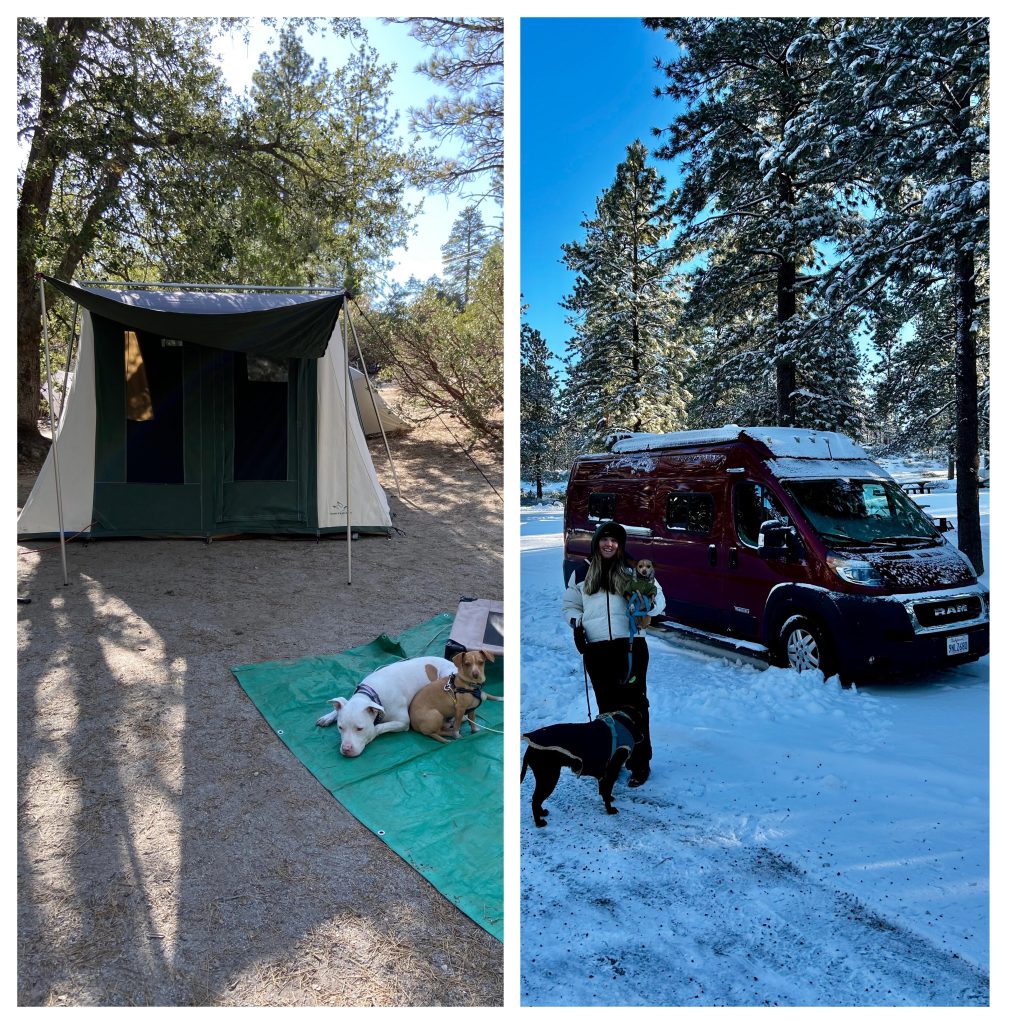
This question comes up constantly in van owner forums, usually with some frustration attached. Tent-only sites are often the cheapest, quietest and best-positioned pitches in a campground, and being excluded from them while a motorhome takes the spacious hookup loop feels arbitrary. It is not arbitrary, though the reasoning is rarely explained on the booking page.
A camper van generally cannot use a tent-only site, because the restriction is about vehicles on the pitch rather than about what you sleep in. Tent-only loops usually have no vehicle pad, soft ground that compacts and ruts under weight, narrow access roads, and spacing designed around tents rather than parked vehicles. Some campgrounds do permit a van if it parks in a designated lot and you carry gear to the pitch, and a few treat small vans differently from larger rigs. The only reliable answer comes from the specific campground, because the policy varies enormously and the booking page rarely explains it.
In short: usually not, because the restriction is about parking a vehicle on the pitch, not about tents.
Where this matters most is on public land. The Forest Service and other agencies set site standards for a reason, including protecting vegetation and soil in areas not built for vehicle traffic, and those standards are enforced by campground hosts and concessionaires rather than being advisory.
Below: what tent-only actually restricts, the practical reasons behind it, the cases where a van is allowed, how to ask before you book, and the alternatives when the answer is no.
Key Takeaways
- Tent-only restricts vehicles on the pitch, not sleeping arrangements.
- Tent pitches often have no hardstanding, so a van compacts soil and damages vegetation.
- Access roads to tent loops are frequently too narrow or too soft for a van.
- Some campgrounds allow a van if it stays in a parking area and you walk gear in.
- Walk-in and hike-in sites are almost always genuinely vehicle-free.
- Policies vary enormously, so the campground itself is the only reliable authority.
- Turning up and hoping risks being turned away after paying a non-refundable fee.
Gear for Carrying In and Camping Light
If the campground allows a van in the parking area but not on the pitch, you are effectively walk-in camping. That changes what you want: things you can carry in one or two trips rather than unload from a side door.
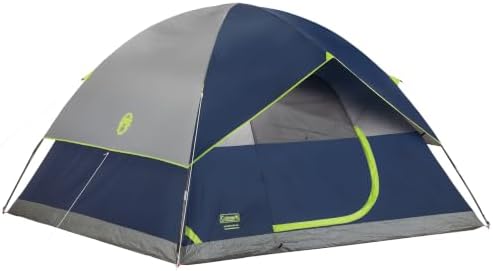
A tent is the obvious requirement if you are pitching rather than sleeping in the van, and a packable one matters more than a spacious one when the pitch is a few hundred yards from the car.


What Tent-Only Actually Means
The label is misleading because it describes the shelter rather than the restriction. What campgrounds are actually controlling is vehicles on the pitch, and the tent-only label is shorthand for a site that was not built to have a vehicle parked on it.
In practice that means a few specific things. There is usually no hardstanding or gravel pad, just soil and vegetation. The access road may be narrower than the main loop, with tighter turns and overhanging branches. Sites are spaced for tents, so pitches are smaller and closer together than vehicle sites.
Walk-in and hike-in sites are a separate and stricter category. Those are reached on foot from a parking area, sometimes several hundred yards away, and no vehicle access exists at all. For those, the question of whether a van is permitted does not arise, because there is nowhere to put it.
| Site type | Vehicle on pitch? | Van allowed? |
|---|---|---|
| Standard drive-in site | Yes, on a pad | Yes, within any posted length limit |
| Tent site on a vehicle loop | Often a small pad or parking spur | Sometimes; ask about length and pad |
| Tent-only loop | No pad, soft ground | Usually not; ask about parking nearby |
| Walk-in site | No access at all | No, but park in the lot and carry gear |
| Hike-in or backcountry site | No access at all | No, and the walk is usually substantial |
| Dispersed camping on forest road | Yes, at established pullouts | Yes, subject to road conditions and local rules |
The Reasons Behind the Restriction
Ground damage is the main one and the least obvious to visitors. A loaded van concentrates several tons onto four contact patches, which compacts soil, crushes root systems and creates ruts that channel water. A tent and two people do not do that, which is why the two uses are separated.
Soil compaction is slower to recover than people assume. Compacted ground drains poorly, which kills vegetation, which exposes more soil to erosion. A tent loop that starts admitting vehicles degrades over a few seasons in ways that take far longer to repair.
Access is the second reason and is purely practical. Tent loop roads are often narrower, with tighter turns and lower branches, because they were built for foot traffic and occasional maintenance vehicles. A van that fits the site may not be able to reach it without damage to the van or the trees.
Character is the third, and it is the one that sounds like snobbery but is actually what tent campers are paying for. Tent loops are usually quieter, with no generators, no slide-outs and no engines running at seven in the morning. Campgrounds separate the uses because both groups prefer it that way.
When a Van Is Actually Allowed
There are real exceptions, and they are worth knowing because the answer is more often maybe than no. The most common is the parking compromise: park in a designated lot or overflow area and carry your gear to the pitch. Many campgrounds permit this even where driving onto the site is prohibited.
Size-based distinctions are the second. Some campgrounds differentiate between a converted van under a certain length and a larger coachbuilt motorhome, because the practical problems scale with the vehicle. A published maximum vehicle length per site is a strong clue that the restriction is about dimensions rather than category.
Season matters too. Campgrounds that enforce strictly in peak summer sometimes relax in the shoulder season when loops are mostly empty and the ground is less vulnerable. That is discretionary rather than a rule, which means asking rather than assuming.
- Read the site description properly. Look for the words walk-in, hike-in, tent pad, or no vehicle access. Those phrases usually mean the restriction is absolute rather than discretionary.
- Check for a stated vehicle length limit. Many listings publish a maximum vehicle length per site. A van under that limit may be acceptable even on a loop described as tent-oriented.
- Phone the campground rather than emailing. Policies on this are often unwritten and depend on the specific loop. A two minute call to the office or concessionaire gets a clearer answer than any web page.
- Describe the van accurately. Say the length, whether it is a converted van or a coachbuilt motorhome, and whether you would sleep inside it or pitch a tent. Those details change the answer.
- Ask about the parking compromise. Ask directly whether you can park in a lot and carry gear to the pitch. Many campgrounds allow this even where driving onto the site is prohibited.
- Get the answer in writing if it matters. If a booking fee is non-refundable, ask for an email confirming the arrangement. Front desk staff change and so do interpretations.
- Have a fallback booked or identified. Identify a standard site at the same campground or a nearby alternative, so being turned away is an inconvenience rather than a crisis.
Asking Without Wasting a Booking Fee
The failure mode here is expensive. Reservation fees are frequently non-refundable, and arriving to find your vehicle is not permitted on the site you booked means paying twice or driving on. A phone call before booking prevents almost all of it.
Be specific when you ask, because vague questions get vague answers. The staff member needs to know the vehicle length, whether it is a van conversion or a motorhome, and what you would actually do on site. Someone sleeping in a tent with a van parked nearby is a different proposition from someone sleeping in the van.
Do
- Phone the campground before booking a tent-only site
- State the vehicle length and type accurately
- Ask specifically about parking elsewhere and walking gear in
- Check the listing for a published vehicle length limit
- Get confirmation in writing if the fee is non-refundable
- Have a fallback site identified before you travel
Don’t
- Do not assume a small van counts as a tent
- Do not drive onto a tent pitch to see if anyone objects
- Do not park across an access road or on vegetation
- Do not run a generator or engine on a tent loop
- Do not argue with a host enforcing a site standard they did not write
- Do not book a walk-in site expecting vehicle access
Alternatives When the Answer Is No
Standard sites at the same campground are the obvious first fallback, and often the practical one. They cost more and are usually busier, but the pitch is designed for what you are driving and the booking is straightforward.
Dispersed camping on national forest and BLM land is the second and often better option for a van, because established pullouts along forest roads are designed around vehicle access by definition. The stay limits and Leave No Trace obligations apply, and forest road conditions decide what is reachable.
The third option is to treat the van as transport rather than accommodation. Park where permitted, carry a tent and sleeping kit to the walk-in pitch, and camp exactly as a tent camper would. That opens the quiet sites you wanted in the first place, at the cost of carrying gear.
For the public land route, see where to tent camp for free. If you are weighing up the whole approach, our comparison of how tent camping compares with an RV covers the trade-offs between vehicle and tent camping more broadly.
If You Are Carrying Gear In
Where the parking compromise is allowed, you are effectively walk-in camping with a very comfortable gear store a few hundred yards away. That is a better position than most tent campers are in, and it changes what is worth taking rather than how much.
Pack for two trips rather than one. Trying to carry everything at once is how people drop things, turn ankles on uneven ground and decide the site was not worth it. Two unhurried trips with a headlamp on is faster in practice than one overloaded one.
| Trip | What to take | Why |
|---|---|---|
| First trip | Tent, pegs, sleeping bag and mat | Get shelter up before anything else, especially if weather is coming |
| First trip | Headlamp and a water bottle | You need both immediately and will not want to walk back for them |
| Second trip | Stove, food, chair, lantern | Comfort and cooking can wait until the tent is standing |
| Leave in the van | Spare clothing, bulky food, recovery gear | No reason to carry what you will only use at the vehicle |
| Last thing at night | Food and scented items back to the van | Keeps wildlife away from the pitch where you are sleeping |
For the wider kit list, see what to pack for tent camping.
Honest Limits
Policy on this varies more than almost any other campground rule, and there is no national standard to point to. Two adjacent campgrounds under the same agency can take opposite positions, and individual hosts interpret the same written rule differently.
That means nothing in this article overrides what a specific campground tells you. The patterns described here are common ones rather than guarantees, and a phone call to the site you want is worth more than any general guidance including this.
We have also framed this around United States public and private campgrounds. Other countries structure campsite categories differently, and the tent-only concept does not translate directly everywhere.
Stay Safe Out There
If you end up walking gear from a parking area, do the trips in daylight where you can. Carrying an awkward load along an unfamiliar path in the dark is how people turn an ankle, and a headlamp should be the first thing out of the van rather than the last.
Park considerately wherever you end up. Blocking an access road or a passing place on a narrow campground loop creates a genuine problem for emergency vehicles, and parking on soft verges is exactly the damage the tent-only rule exists to prevent.
Campground rules, quiet hours and vehicle restrictions vary by site and season. The National Park Service publishes guidance that is updated as conditions change, and the managing agency for your campground is the authority on its own site standards.
Disclaimer: this article is general information, not legal or safety advice. Campground policies vary and change, and you are responsible for decisions made on your trip. Confirm with the campground directly, follow posted rules and host instructions, and seek professional medical help for any injury that concerns you.
Frequently Asked Questions
Can a camper van use a tent-only site?
Usually not, because the restriction is about vehicles on the pitch rather than what you sleep in. Tent-only sites typically have no vehicle pad, soft ground and narrow access. Some campgrounds allow parking nearby and carrying gear in.
Why are vans banned from tent sites?
Mainly ground damage. A loaded van compacts soil and crushes roots in a way a tent does not, and that damage compounds over seasons. Access roads to tent loops are also often too narrow, and the loops are kept quieter deliberately.
Does it matter how small my van is?
Often yes. Some campgrounds distinguish between a short van conversion and a larger coachbuilt motorhome, and a published maximum vehicle length per site suggests the rule is about dimensions rather than vehicle category.
Can I park nearby and pitch a tent on the site?
Frequently yes, and this is the most common workaround. Many campgrounds permit parking in a lot or overflow area and carrying gear to the pitch, even where driving onto the site itself is prohibited. Ask specifically.
What is the difference between tent-only and walk-in?
Tent-only means no vehicle on the pitch, though parking may exist nearby. Walk-in means the site is reached on foot from a parking area with no vehicle access at all, sometimes several hundred yards away.
Will I be turned away if I just show up?
Possibly, and reservation fees are often non-refundable. Campground hosts enforce site standards set by the land manager, so a van arriving at a tent-only loop can legitimately be refused. Phone ahead rather than risking it.
Are tent-only sites actually better?
Often quieter and better positioned, which is why van owners want them. No generators, no engines at dawn and smaller, more sheltered pitches. That character is precisely what the vehicle restriction preserves.
Where can I take a van instead?
Standard drive-in sites at the same campground, or dispersed camping on national forest and BLM land where established pullouts are designed around vehicle access. Stay limits and Leave No Trace rules apply on public land.
Can I sleep in the van on a tent site if I also pitch a tent?
That depends entirely on the campground, and the answer often hinges on whether the vehicle is parked on the pitch. Ask directly, describing exactly what you intend to do, rather than assuming either way.
Do these rules apply outside the United States?
The specifics do not transfer. Other countries structure campsite categories differently and the tent-only concept is not universal. Check the local campground and whatever national access rules apply where you are travelling.
The Bottom Line
Tent-only is a vehicle restriction wearing a misleading name. The campground is not making a judgement about how you camp, it is protecting pitches that have no hardstanding, access roads built for foot traffic, and a quieter loop that tent campers chose deliberately. A loaded van compacts soil in a way a tent never will, and that damage takes seasons to undo.
The useful move is to phone and ask specifically, because the answer is more often maybe than no. Many campgrounds will let you park in a lot and carry gear to the pitch, some distinguish a short van from a large motorhome, and mixed loops with small gravel spurs rarely show up in a tent-only filter. Failing that, dispersed camping on forest land suits a van better than any campground tent loop ever will.