
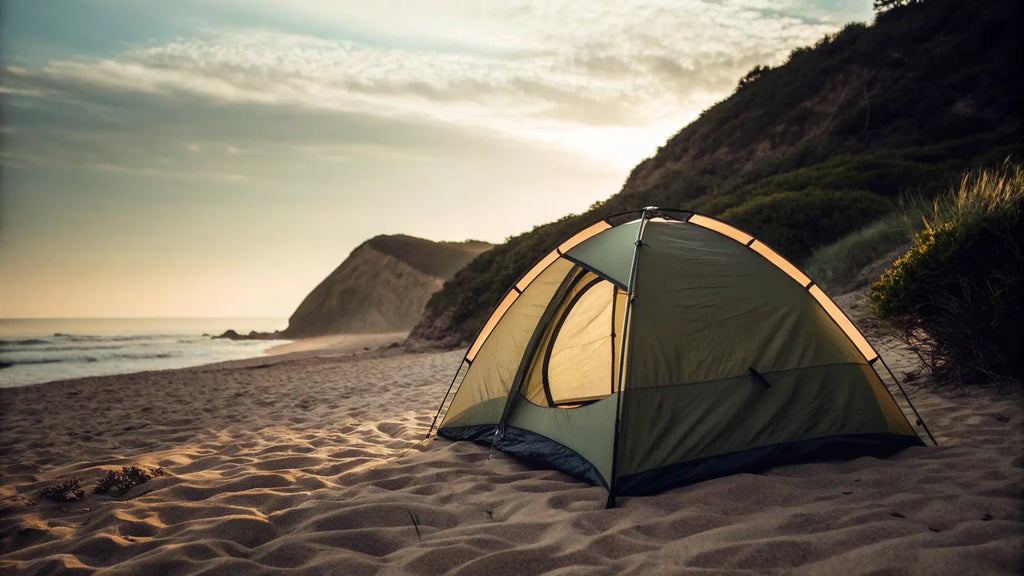
This is a gear question rather than a legal one, and the two get tangled constantly. Whether you are allowed to camp overnight on a particular beach is a separate matter decided by whoever manages it. Whether the tent in your garage will cope with being pitched on sand for a day or a weekend is a question about fabric, stakes and wind, and the answer is more interesting.
Yes, you can use a regular camping tent on the beach, but it will be working outside what it was designed for. Tent pegs do not hold in sand, so you need sand stakes, screw anchors or buried deadmen. Open coast gives wind nothing to slow it down, which stresses poles and guy points far more than an inland pitch. Salt holds moisture in fabric and corrodes zips and pole ferrules, and reflected UV off sand hits the fly from both directions. None of that stops a tent working; all of it shortens its life if you ignore it.
In short: yes, with proper sand anchors and a fresh water rinse afterwards, though a beach shelter suits daytime shade better.
A camping tent and a beach shelter are built for different jobs. A camping tent is an enclosed sleeping space built to shed rain and hold heat; a beach shelter is an open sun shade built for airflow and UV blocking. Using either in the other role works badly, and knowing which problem you are solving decides which to take.
Below: what actually fails on a beach, how to anchor a tent in sand, what salt and sun do over repeated trips, when a dedicated beach shelter is the better choice, and the maintenance that keeps a tent usable afterwards.
Key Takeaways
- Standard tent pegs pull straight out of sand. Sand stakes, screw anchors or deadmen are essential.
- Open coast means sustained wind with nothing blocking it, which stresses poles and guy points.
- Salt is hygroscopic, so it holds moisture in fabric long after the tent looks dry.
- Salt corrodes zip teeth, sliders and pole ferrules, and sand grinds them as you open the door.
- Sand reflects UV upward, so the fly takes light from above and below.
- A camping tent traps heat; a beach shelter is built for airflow and shade.
- Rinse everything in fresh water and dry it fully, or mildew follows.
Anchoring and Shade for Sand
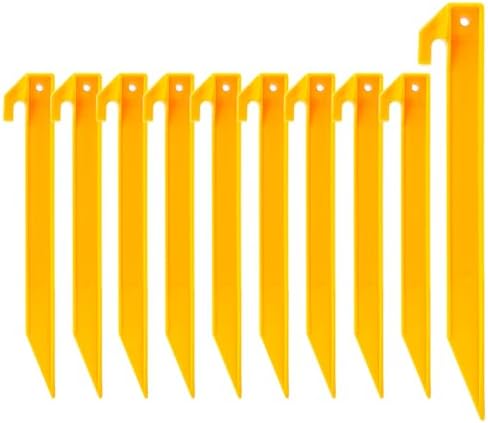
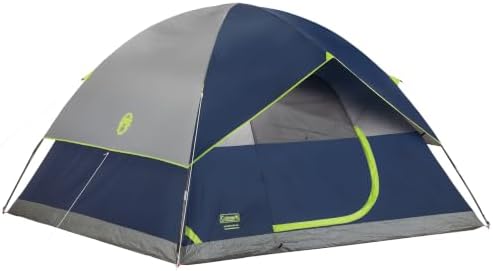
Two things make or break a beach pitch: whether your anchors hold and whether you have shade that is built for sun rather than for rain. The items below cover both.
Anchoring is where to spend. A shelter that lifts in an onshore gust is a lost day at best, and a hazard to everyone downwind at worst.



What Actually Fails on a Beach
A camping tent on sand does not fail dramatically. It fails in four slow, specific ways, and knowing which they are tells you exactly what to prepare for. Anchoring goes first, usually within the first strong gust.
Standard tent pegs work by friction against soil structure. Sand has almost no structure, so a thin peg driven vertically pulls straight out under tension. This is not a marginal failure; it is complete, and it happens at the worst moment rather than gradually.
Wind is the second, and it is about exposure rather than strength. A fifteen mile per hour wind inland is filtered by trees, buildings and terrain. The same wind on open coast arrives undiminished, sustained, and from a consistent direction, which flexes poles repeatedly and loads guy points far more heavily than an inland pitch ever does.
| What fails | Why | Prevention |
|---|---|---|
| Anchoring | Thin pegs have nothing to grip in sand | Sand stakes, screw anchors or buried deadmen |
| Poles and guy points | Sustained unobstructed wind flexes them | Low end into the wind, every guy line used |
| Zips | Sand grinds the teeth, salt corrodes the slider | Brush before entry, clear teeth, rinse at home |
| Fabric and coatings | Reflected UV from sand, plus salt holding moisture | Shade where possible, rinse and dry fully |
| Comfort | A camping tent retains heat by design | Open everything up, or use a beach shelter instead |
Anchoring in Sand
Three approaches work, and they all solve the same problem differently: giving the anchor something substantial to pull against. Wide plastic sand stakes present far more surface area than a thin peg, which is enough in firmer sand.
Screw-in anchors thread into the sand so that tension engages the full buried length rather than just the tip. They are the most reliable option in loose dry sand and the heaviest to carry, which is a reasonable trade for a drive-in beach.
Deadman anchors are the free option and work extremely well. Fill a stuff sack with sand, tie the guy line around its middle, bury it about a foot down, and pack sand over the top. The weight of sand above is what resists the pull, and it is considerable.
- Pick firmer sand above the wrack line. Slightly damp compacted sand holds anchors far better than loose dry sand, and pitching above the seaweed and debris line keeps you clear of the tide.
- Swap every peg for a sand anchor. Leave the standard pegs in the bag. Use wide sand stakes, screw-in anchors, or deadmen made from stuff sacks filled with sand and buried horizontally.
- Orient the low end into the wind. Put the narrowest, lowest end of the tent toward the prevailing onshore wind and keep the door on the sheltered side to stop sand blowing inside.
- Guy out every point. Use all of them, not just the ones that seem necessary in a calm afternoon. Open coast has nothing to break the wind and conditions change quickly.
- Keep sand out of the zips. Brush feet and gear before entering, and clear zip teeth with a gloved finger rather than forcing a gritty slider, which is how zips fail permanently.
- Open it up during the day. Roll back the fly or open doors and vents fully. A closed camping tent in sun becomes unusable quickly because it is built to retain heat, not shed it.
- Shake out thoroughly before packing. Turn the inner upside down and shake sand out before it travels home with you and grinds through the fabric on the next trip.
- Rinse in fresh water and dry fully. Rinse fabric, zips, poles and stakes with fresh water at home, then dry completely before storage. Salt holds moisture and moisture means mildew.
What Salt and Sun Do Over Time
Salt is hygroscopic, which means it attracts and holds water from the air. Salt left in tent fabric keeps that fabric very slightly damp long after it looks and feels dry, and a slightly damp tent packed into a bag is the exact condition mildew needs.
On hardware the problem is corrosion. Salt attacks zip teeth and sliders, aluminium pole ferrules and any steel component, and the damage accumulates across trips rather than appearing after one. A zip that feels stiff after a beach weekend is telling you something.
UV exposure is higher at the coast than inland for a reason that catches people out: sand reflects a substantial proportion of incoming light back upward. The fly takes UV from the sky and from the ground, which degrades polyurethane coatings and weakens fabric faster than the same hours inland.
Camping Tent or Beach Shelter
These solve different problems and the confusion between them causes most of the disappointment. A camping tent is an enclosed, insulated space designed to shed rain and retain warmth. A beach shelter is an open canopy designed to block UV and let air move through freely.
Put a camping tent on a sunny beach with the fly on and it becomes an oven within an hour, because every design choice in it works toward keeping heat in. Put a beach shelter up for an overnight stay and you get sun protection and no shelter from wind-driven rain or insects.
| What you need | Camping tent | Beach shelter | Verdict |
|---|---|---|---|
| Daytime shade in summer | Overheats badly with the fly on | Designed for it, with airflow | Beach shelter |
| Sleeping overnight | Enclosed, insect-proof, holds warmth | Open to wind, insects and spray | Camping tent |
| Wind resistance | Good if properly anchored and oriented | Varies; many are light and lift easily | Camping tent |
| Rain protection | Designed for it | Minimal | Camping tent |
| Packed size and setup speed | Bulkier, slower | Light and often pops up in seconds | Beach shelter |
| Privacy for changing | Good | Depends on the design | Camping tent |
The practical answer for a full beach camping trip is often both: a shelter for the day and a tent for the night. For a day at the beach, the tent stays at home. For an overnight on a permitted beach, the tent is the one that matters and the shelter is a luxury.
Whether you may camp overnight at all is a separate question with a separate answer: see where you can legally tent camp on the beach.
Pitching and Living in It
Orientation does more than anchoring does for wind resistance. Present the lowest, narrowest end to the prevailing onshore wind and the tent sheds it; present a broad side and the same wind loads the whole structure. On a beach the wind direction is usually obvious and consistent.
Sand management is the daily reality. Sand gets into everything, and the two places it causes lasting harm are zip teeth and the groundsheet, where it grinds under weight. A brush or towel at the door and a habit of shaking footwear out makes a real difference over a weekend.
Do
- Use sand stakes, screw anchors or buried deadmen for every guy point
- Pitch above the wrack line, well clear of the tide
- Point the lowest end into the prevailing wind
- Open doors, vents and fly fully during the day
- Brush sand off feet and gear before entering
- Rinse everything in fresh water and dry fully at home
Don’t
- Do not rely on standard tent pegs in sand
- Do not leave a tent unanchored, even briefly
- Do not force a gritty zip, which destroys the slider
- Do not pitch on or dig into dunes or their vegetation
- Do not leave the fly closed in direct sun and expect it to be usable
- Do not pack a salty tent away damp
If salt and damp have already got into a tent, see getting mildew out of a tent, and family camping tents worth considering covers replacement if it is past saving.
Which Tents Cope Best
If you have a choice of tents, some characteristics suit sand considerably better than others. A freestanding design is the clearest advantage, because the structure stands without tension and can be weighted with bags and gear while you sort out the anchoring.
A low profile helps more than floor area. Tall cabin tents present an enormous surface to onshore wind, while a low dome or a tunnel pitched end-on sheds it. For a beach, the tent that feels cramped at a woodland site is often the one that survives the night.
Generous mesh and multiple doors matter for the heat problem, since a tent you can open on two sides gets cross ventilation that a single-door design cannot. And a light-coloured fly reflects more solar energy than a dark one, which is noticeable in direct sun on open sand.
Honest Limits
How a tent copes depends on the specific beach and conditions. A sheltered cove on a still day asks almost nothing of a tent; an exposed Atlantic beach in an onshore blow is a genuine test that some tents will fail regardless of how well they are anchored.
Anchoring performance also varies with sand type and moisture content more than with the product. Screw anchors that hold firmly in damp compacted sand perform less well in deep dry sand, and no listing can predict that for the beach you are going to.
This article covers whether a tent will work rather than whether you are allowed to pitch it. Overnight camping is prohibited on most public beaches and permitted only at designated sites elsewhere, and that is a question for the managing agency rather than for a gear guide.
Stay Safe Out There
Check tide times before choosing a pitch, and pitch well above the wrack line with margin. The visible tide line reflects the last high tide, which may be lower than tonight, and a spring tide combined with onshore wind pushes water considerably further up than the prediction alone suggests.
Watch the weather rather than the forecast you read this morning. Open coast gives you a long view and nothing to slow weather down, so squalls arrive fast. Lightning is an immediate reason to leave the beach entirely for a hard-sided vehicle or building rather than sheltering in a tent.
Sun exposure is higher than it feels, because sand and water reflect UV back at you and sea breeze masks the heat. Shade, water and covering up matter more here than inland, and heat exhaustion creeps up on people who are enjoying a breeze.
Beach rules, closures and seasonal wildlife restrictions vary by location. The National Park Service camping pages cover the units it manages, and local authorities set their own rules elsewhere.
Disclaimer: this article is general outdoor information, not safety or legal advice. Conditions, tides and local rules vary and change, and you are responsible for decisions made on your trip. Check with the managing agency, read local tide tables, and seek professional medical help for any injury or heat-related symptom that concerns you.
Frequently Asked Questions
Can you use a regular camping tent on the beach?
Yes, but it is working outside its design. Standard pegs will not hold in sand, open coast wind stresses poles and guy points, and salt and reflected UV age the fabric and hardware faster than inland use.
Why do tent pegs not work in sand?
Pegs resist being pulled out by friction against soil structure, and sand has almost none. A thin peg driven vertically pulls straight out under tension, which is why wide sand stakes, screw anchors or buried deadmen are needed instead.
What is a deadman anchor?
Something buried horizontally and loaded from its middle, so the weight of sand above resists the pull. A stuff sack filled with sand, tied to the guy line and buried about a foot down, works extremely well and costs nothing.
Will a camping tent be too hot on the beach?
With the fly on in direct sun, yes, quickly. A camping tent is built to retain heat and shed rain. Open every door, vent and the fly during the day, or use a dedicated beach shelter designed for airflow and shade.
What does salt do to a tent?
Salt is hygroscopic, so it holds moisture in the fabric long after the tent looks dry, which invites mildew in storage. It also corrodes zip teeth, sliders and pole ferrules. Rinse everything in fresh water afterwards.
Does sand damage a tent?
Over time, yes. It grinds in zip teeth, which is how zips fail, and it abrades the groundsheet underfoot. Brush off before entering, clear zips rather than forcing them, and shake the inner out thoroughly before packing.
Should I take a beach shelter instead?
For a day at the beach, yes. Beach shelters are built for UV blocking and airflow, which is what daytime use needs. For an overnight stay you want the enclosed tent, because a shelter gives no protection from wind-driven rain or insects.
Which camping tents work best on sand?
Freestanding designs with a low profile and good cross ventilation. Freestanding lets you weight the tent while anchoring, low profile sheds onshore wind, and two doors give airflow a tall single-door cabin tent cannot match.
How do I clean a tent after a beach trip?
Shake out all the sand, then rinse the fabric, zips, poles and stakes with fresh water. Dry everything completely before storage, including seams and the stuff sack. Do not use detergent or a washing machine on tent fabric.
Can I camp overnight on any beach?
No, that is a separate question with a separate answer. Most public beaches prohibit overnight camping under local ordinances, with permitted beach camping confined to designated sites in national seashores, state parks and private campgrounds.
The Bottom Line
A regular camping tent works on a beach, with the caveat that almost nothing about a beach matches what the tent was designed for. The pegs it came with are useless in sand, so bring screw anchors, wide sand stakes or make deadmen from sand-filled stuff sacks. Orient the low end into the wind, guy out everything, and accept that open coast asks more of poles and guy points than any woodland pitch.
Then plan for the aftermath. Salt holds moisture in the fabric and corrodes zips and ferrules, sand grinds the zip teeth, and UV reflected off the sand hits the fly from below as well as above. Rinse everything in fresh water, dry it completely, and take the older tent rather than the good one. For daytime use in summer, leave the camping tent at home entirely and bring a shelter built for shade and airflow.