
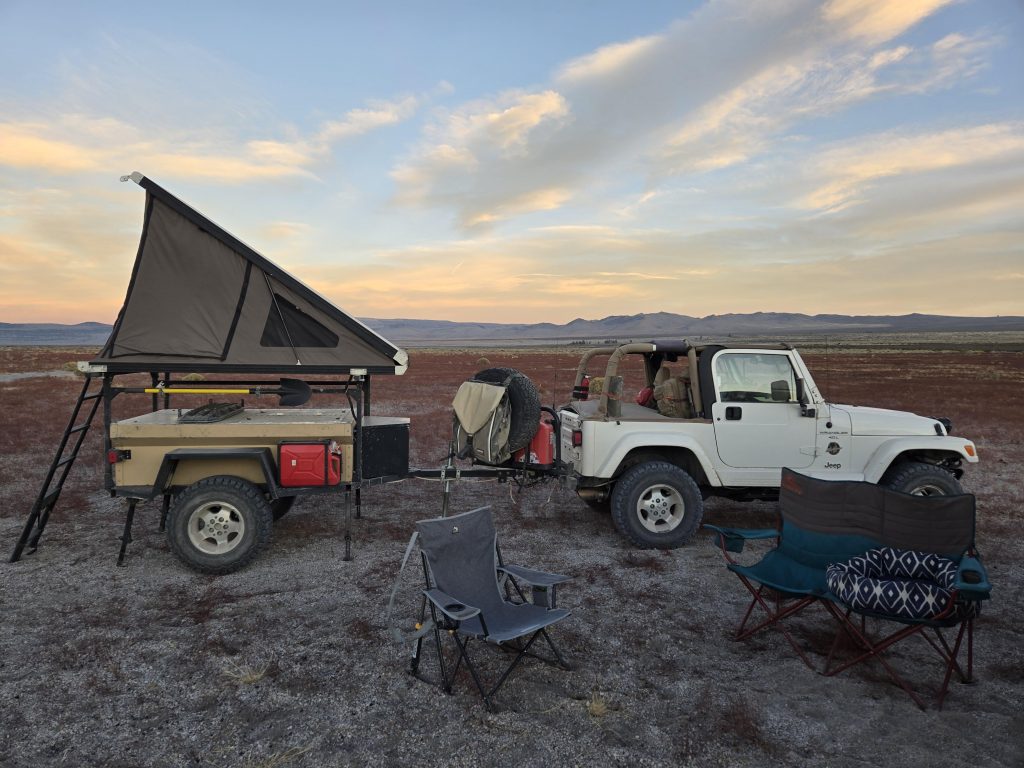
Mounting a rooftop tent on a camper trailer is one of those ideas that sounds obviously sensible until you start looking at numbers. You get sleeping space without giving up the trailer interior, the tent lives permanently rigged, and you free up your vehicle roof. The question is whether the structure underneath can take it, and that is a load-rating question rather than an enthusiasm question.
Yes, you can put a rooftop tent on a camper trailer, provided the rack and the trailer roof or frame are rated for the load. The number that matters is dynamic capacity, which is what the structure can carry while moving, and it is typically far lower than static capacity, which is what it holds when parked. A rooftop tent weighing 100 to 200 pounds plus two occupants is a static load most racks handle easily and a dynamic load that many cannot. Most successful installations mount to a purpose-built trailer rack or a reinforced frame rather than to a thin camper roof panel.
In short: yes, if the dynamic rating covers the tent weight and the structure underneath is load-bearing rather than just a skin.
There is a regulatory dimension too. Overall vehicle height, trailer gross weight ratings and towing rules vary by state and by country, and exceeding a trailer gross vehicle weight rating is both unsafe and a legal problem. Check your trailer plate and your local regulations before buying anything.
Below: how static and dynamic ratings differ, which trailer types work and which do not, the mounting options available, how to actually check your own setup, and the practical downsides nobody mentions in the product photos.
Key Takeaways
- Dynamic load rating, not static, is the number that decides whether a mount is safe.
- Static capacity is what the structure holds parked; dynamic is what it holds while towing.
- Rooftop tents commonly weigh 100 to 200 pounds before anyone gets in.
- Thin camper roof panels are weatherproofing, not structure, and usually cannot take the load.
- A purpose-built trailer rack that ties into the frame is the most reliable approach.
- Raising a tent above a trailer roof affects overall height, wind resistance and fuel use.
- Check the trailer gross weight rating and your local height and towing rules before buying.
Tents, Racks and Mounting Hardware
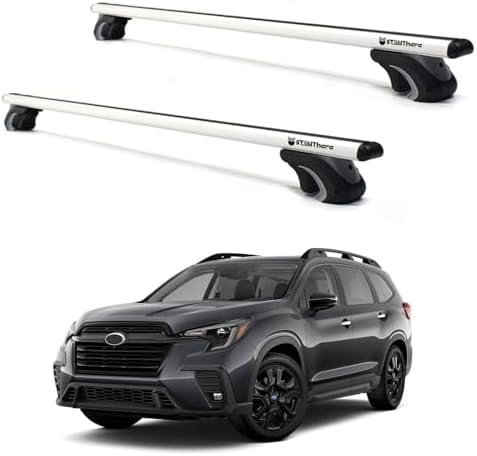
Rooftop tents and the racks that carry them are sold separately, and the rack is where most of the decision-making happens. The items below cover the tent itself, load-bearing platforms and the alternatives worth considering.
Match the dynamic rating of any rack to the combined weight of the tent and everything else you intend to carry on it, and check the mounting pattern against your trailer before ordering.




Static Versus Dynamic Load, and Why It Decides Everything
This is the single concept that determines whether an installation is safe, and it is the one most commonly skipped. Static load is what a structure can support when nothing is moving. Dynamic load is what it can support while the whole assembly is bouncing down a road, and it is always the smaller number.
The reason is force multiplication. A 150 pound tent sitting still exerts 150 pounds. The same tent going over a pothole at speed momentarily exerts several times that, because deceleration adds force on top of gravity. Racks are rated dynamically for exactly this, and the dynamic figure is often a third or less of the static one.
The practical consequence is counterintuitive. The occupants, who feel like the heavy part, only ever load the structure statically, because nobody sleeps in it while towing. The tent itself is the dynamic load, and that is the number that must fit within the rack rating with margin to spare.
| Situation | Rating that applies | What is on the rack |
|---|---|---|
| Towing on the highway | Dynamic | Tent and rack only, loaded by road forces |
| Towing on rough forest road | Dynamic, with a bigger margin | Tent and rack, with much higher peak forces |
| Parked, tent closed | Static | Tent and rack at rest |
| Parked, tent open and occupied | Static | Tent, rack, bedding and two adults |
| Storing gear on the rack as well | Both, added together | Everything counts toward both limits |
Which Trailers Work and Which Do Not
Camper trailer is a broad term covering everything from a teardrop with a steel frame to a lightweight pop-up with an aluminium shell. Those two ends of the spectrum give completely different answers, and the deciding factor is whether the roof is structural or simply a weather barrier.
Teardrop and off-road style trailers are generally the best candidates, because many are built on substantial steel frames with roofs designed to carry loads, and several manufacturers offer rooftop tent mounting as a factory option. Utility and flatbed trailers with a purpose-built rack are equally workable, because the rack ties straight into the chassis.
Pop-up tent trailers are usually the worst candidate. The roof is a thin panel that lifts, often aluminium over a light frame, and it is not engineered to carry a few hundred pounds of tent and occupants. Larger travel trailers vary enormously and need the manufacturer consulted directly rather than guessed at.
Mounting Options, Ranked by How Well They Work
There are essentially four approaches, and they differ in how directly the load reaches the trailer frame. The more structure between the tent and the chassis, the more places there are for something to work loose or fail.
| Approach | How it works | Best for | Main concern |
|---|---|---|---|
| Purpose-built trailer rack | Bolts or welds directly to the trailer frame | Teardrop and off-road trailers | Cost, and fabrication if nothing fits |
| Full-length roof rack system | Multiple crossbars on rated roof rails | Trailers with structural roof rails | Rails must be rated, not decorative |
| Crossbars on a cargo basket | Tent sits on a load-rated platform | Spreading load over more points | Adds height and weight of its own |
| Direct mount to roof panel | Bolts through the roof skin | Almost nothing | Thin panels are not structural; avoid |
Spreading the load matters as much as total capacity. Four mounting points carrying 40 pounds each is a far kinder arrangement than two carrying 80, and it reduces the chance of a concentrated point load working its way through a panel over a season of vibration.
Fastener choice is not an afterthought either. Use the hardware the rack manufacturer specifies, add thread-locking compound where they call for it, and accept that you will be rechecking torque periodically. Road vibration loosens bolts, which is why the check becomes part of your trip routine rather than a one-time job.
Checking Your Own Setup
The sequence below is the one that keeps people out of trouble. It starts with the weight plate rather than the tent catalogue, because the limits are fixed and the tent choice is not.
- Find the trailer weight plate. Locate the gross vehicle weight rating on the trailer data plate. Everything you add, including the tent and the rack, counts against it.
- Identify the load path. Work out what the rack would actually bolt to. Steel frame members and reinforced roof rails are load-bearing; thin aluminium or fibreglass roof skin is not.
- Get the rack dynamic rating. Ask the rack manufacturer for the dynamic rating specifically, not the static one. If they only publish static, treat that as a warning sign.
- Add up the real weight. Tent weight plus rack weight plus bedding and anything stored inside the tent. Compare against the dynamic rating with a margin, not right at the limit.
- Check the parked load separately. Static load must cover tent, rack, bedding and the occupants. Two adults is a significant addition that dynamic rating does not need to cover.
- Measure the finished height. Measure from the ground to the top of the closed tent, and write it somewhere you will see it while driving. Low bridges and drive-through heights are unforgiving.
- Verify the legal side. Check your local height limits, trailer weight rules and any requirement to declare modifications. Rules differ between states and countries.
- Test before a long trip. Fit it, load it, then drive a short local route and recheck every fastener. Vibration finds loose bolts faster than anything else.
The Downsides Nobody Photographs
Height is the first and most persistent. Adding a foot or more to a towed trailer changes which car parks, garages and back roads are available to you, and it stays changed for the whole trip because the tent does not come off between campsites.
Fuel economy and handling are the second. A rooftop tent is a brick in the airflow, and raising it above a trailer roof puts it in clean air rather than in the vehicle wake. Crosswind sensitivity goes up, and the taller the assembly, the more the trailer wants to move around behind you.
Do
- Confirm the dynamic rating of every component in the load path
- Mount to frame or rated rails, never to a thin roof panel alone
- Spread the load across as many mounting points as the rack allows
- Recheck fastener torque after the first trip and periodically after
- Measure and record your loaded height before you drive anywhere
- Consider a ground tent or awning room as the cheaper alternative
Don’t
- Do not use static ratings to justify a towing installation
- Do not mount a rooftop tent on a pop-up camper roof
- Do not exceed the trailer gross vehicle weight rating
- Do not store heavy gear inside the tent while towing
- Do not assume a rack rated for a kayak is rated for a tent
- Do not skip the manufacturer guidance for your specific trailer
If this is starting to sound like a lot of engineering for a place to sleep, that is a fair conclusion to reach. Our comparison of how tent camping compares with an RV covers the simpler alternatives, and family camping tents worth considering covers ground tents that need no load calculations at all.
When a Ground Tent Is the Better Answer
Rooftop tents solve specific problems: uneven or wet ground, areas where you would rather be off the floor, and fast setup when the tent lives permanently mounted. If those are not your problems, the engineering effort buys you very little.
A good ground tent costs a fraction as much, adds nothing to your towing height, does not require load calculations, and can be pitched away from the trailer so you are not sleeping next to the road. For most trailer owners, a ground tent plus an awning covers the same ground more cheaply.
The middle option worth knowing about is an awning room or annex attached to the side of the trailer. It gives you enclosed space without anything on the roof, which sidesteps the load question entirely while still expanding what the trailer offers.
For the general kit list either way, see what to pack for tent camping.
Honest Limits
This article explains the principles, and principles do not substitute for the specifications of your trailer. Every trailer has its own structure, weight rating and roof construction, and the manufacturer is the authority on what theirs will carry. Where a maker says no, that is the answer.
We have also not tested any of these products in a mounted installation, and nothing here is confirmation that a particular rack will carry a particular tent on a particular trailer. Weight figures for rooftop tents vary widely, and listings do not always separate tent weight from shipping weight.
Finally, fabrication and structural modification are outside what any article can responsibly guide. If your installation needs welding, frame reinforcement or anything beyond bolting rated components together as the manufacturer intends, that is work for someone qualified to assess the structure.
Stay Safe Out There
An overloaded or poorly mounted roof load is a hazard to everyone on the road, not just to you. Stay inside the trailer gross weight rating, inside the rack dynamic rating, and recheck fasteners regularly, because vibration is relentless and a loose mount gets worse rather than better.
Ladders are the other injury source people underestimate. Climbing down from a rooftop tent at night, half asleep, onto a ladder that may be on uneven ground is a genuine fall risk. Level the trailer properly, secure the ladder foot, and keep a headlamp where you can reach it from inside the tent.
Campground rules on vehicle and trailer size, and on where you may pitch, vary by site and season. The National Park Service publishes guidance that is updated as conditions change, and checking before you arrive avoids discovering a length or height restriction at the gate.
Disclaimer: this article is general information, not engineering, legal or safety advice. Load ratings, construction and regulations vary, and you are responsible for the safety of any modification you make. Consult your trailer and rack manufacturers, check local rules, and use a qualified professional for structural work.
Frequently Asked Questions
Can you put a rooftop tent on a camper trailer?
Yes, if the rack and the structure underneath are rated for the load. The critical figure is dynamic capacity, what the assembly carries while towing, which is typically much lower than static capacity and is often the limiting factor.
What is the difference between static and dynamic load rating?
Static is what a structure holds at rest, dynamic is what it holds while moving. Road forces multiply the effective weight of a load, so dynamic ratings are far lower, often a third or less of the static figure.
How much does a rooftop tent weigh?
Commonly 100 to 200 pounds depending on size and whether it is soft or hard shell, before bedding. That is the figure that must fit within the rack dynamic rating, with margin, since occupants only ever load it statically.
Can I put one on a pop-up camper?
Usually not. Pop-up roofs are thin lifting panels designed as weather protection rather than structure, and they are not engineered to carry a few hundred pounds. Consult the manufacturer, and expect the answer to be no.
What kind of trailer works best?
Teardrops and off-road style trailers built on substantial steel frames, where the roof or a purpose-built rack ties into the chassis. Utility and flatbed trailers with a fabricated rack also work well because the load path is direct.
Do I need a special rack?
You need one with a published dynamic rating that exceeds your tent weight with margin, mounted to structure rather than to roof skin. Purpose-built trailer racks that bolt to the frame are the most dependable option.
Does it affect towing height and fuel use?
Yes to both. Expect to add a foot or more to overall height, which affects car parks, garages and low branches, and expect worse fuel economy and more crosswind sensitivity because the tent sits in clean air above the trailer.
Is it legal?
Generally yes, but height limits, trailer weight ratings and rules on modifications vary by state and country. Exceeding the trailer gross vehicle weight rating is both unsafe and a legal problem, so check your plate and local regulations first.
Can I leave gear inside the tent while towing?
Keep it minimal. Anything inside counts toward the dynamic load and shifts around under road forces. Bedding is usually acceptable; heavy items are not, and the rack rating should be assessed with whatever you intend to leave in there.
Is a ground tent a better option?
For many people, yes. A ground tent costs far less, adds no height, needs no load calculations, and can be pitched away from the trailer. An awning room is the middle option if you want enclosed space without anything on the roof.
The Bottom Line
The answer is yes with conditions, and the conditions are all about load paths. Find the dynamic rating of every component between the tent and the trailer chassis, confirm what the rack actually bolts to, and make sure the tent weight fits inside that rating with margin rather than scraping against it. Teardrops and frame-built trailers are good candidates; pop-up camper roofs are not.
Then weigh up whether it is worth it for how you camp. A rooftop tent on a trailer buys you off-the-ground sleeping and a setup that stays rigged, at the cost of height, fuel, crosswind handling and a meaningful amount of money and engineering. If your ground is usually fine and your trips are usually short, a ground tent or an awning room gets you most of the benefit for a fraction of the complication.