
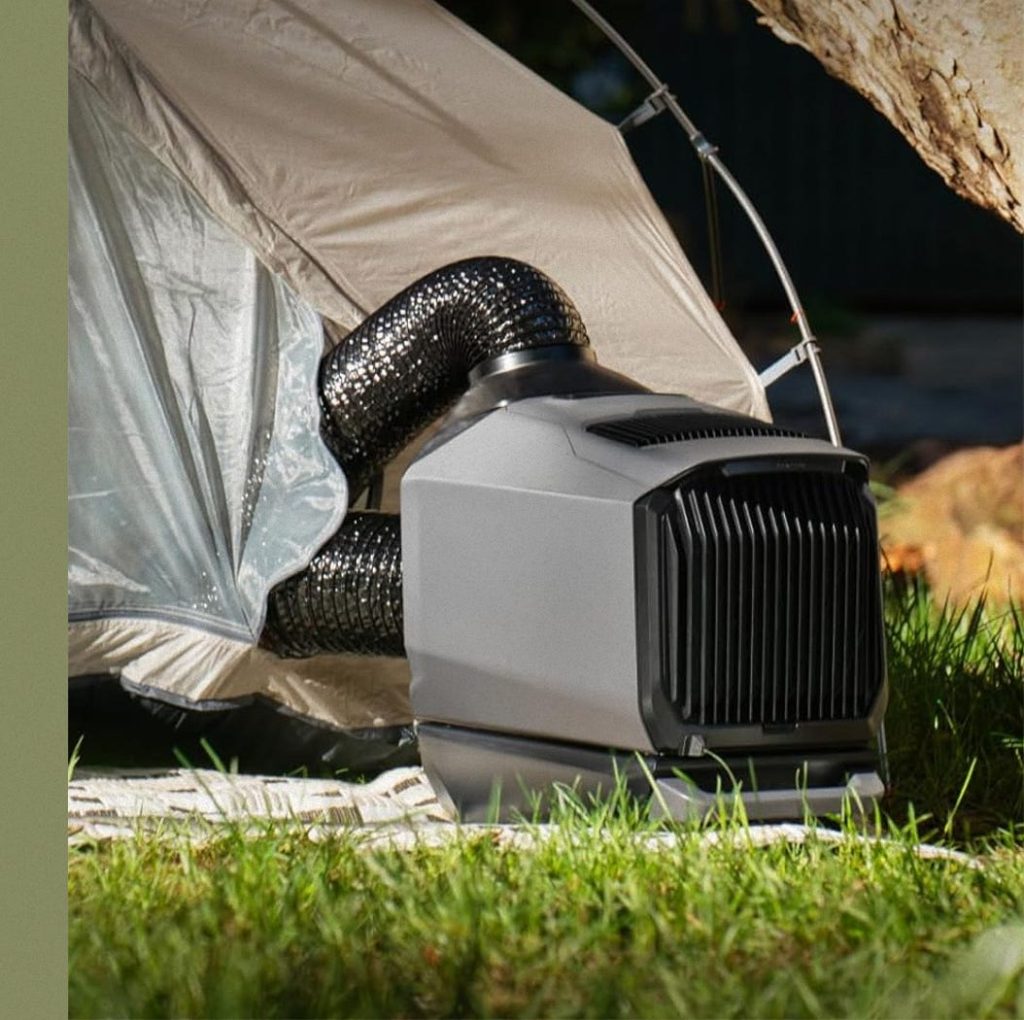
Air conditioning a tent sounds like the obvious answer to a hot campsite, and it is one of the most disappointing purchases in camping. Not because the units do not work, but because a tent is close to the worst possible enclosure to cool. Understanding why saves money and points you toward the things that genuinely help.
A portable air conditioner can cool a camping tent, but only with mains power or a substantial battery, a sealed vent for the hot exhaust, and a tent insulated enough to hold the cold air. Standard tent fabric has almost no insulation value and leaks air constantly through mesh, zips and vents, so a unit sized for a bedroom fights an enclosure that is effectively open to the outside. In most campsites the realistic options are shade, airflow and a battery fan, with air conditioning reserved for powered sites, large insulated tents or vehicle-based setups.
In short: possible with power, a vent and insulation, and usually not worth it without all three.
There is also a safety dimension that overshadows the comfort question. Running a generator to power an air conditioner introduces carbon monoxide, which the US Consumer Product Safety Commission identifies as a cause of deaths involving portable generators used near occupied spaces. Generator placement is not a detail here, it is the main risk.
Below: why tents are so hard to cool, what a portable unit actually needs, the alternatives that work better for most people, how to make any cooling more effective, and the power and safety realities.
Key Takeaways
- Tent fabric has almost no insulation value, so cooled air is lost continuously.
- Portable air conditioners produce hot exhaust that must be vented outside the tent.
- Running one needs mains power or a large battery, which rules out most campsites.
- Generators introduce carbon monoxide risk and must be kept well away from tents.
- Shade, cross ventilation and a battery fan deliver most of the practical benefit.
- Evaporative coolers only work in dry air and add humidity in an enclosed tent.
- Pitching for shade and airflow beats any appliance you can carry.
Cooling Options, From Realistic to Ambitious
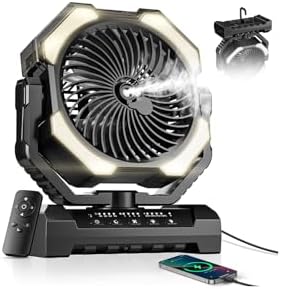
The list below runs from what most campers should actually buy to what only works on a powered site. Fans and misting fans solve the common problem; portable air conditioners solve a narrower one at considerable cost.
If you are camping without hookups, stop at the fans. Everything above them needs a power supply that tent campsites rarely provide.




Why a Tent Is So Hard to Cool
Air conditioning works by removing heat from an enclosed volume faster than heat enters it. In a house, insulation and sealed walls slow that inflow dramatically, which is why a modest unit keeps a room cool. A tent has essentially neither.
Tent fabric is a single layer of coated nylon or polyester, typically well under a millimetre thick, with no insulating air gap. Its R-value is close to nothing. Heat conducts through it almost as fast as it arrives, and in direct sun the fabric itself heats and radiates inward.
Air leakage finishes the job. Mesh panels, vents, zips and the gap under a fly are all deliberate features that let a tent breathe, and every one of them lets cooled air out. A tent sealed well enough to hold conditioned air would be a tent that condensates badly and feels stifling without the unit running.
| Factor | House room | Camping tent |
|---|---|---|
| Insulation | Walls, roof and glazing slow heat flow | Effectively none |
| Air sealing | Reasonably sealed envelope | Mesh, vents and zips leak constantly |
| Solar gain | Walls absorb and delay heat | Fabric heats within minutes and radiates in |
| Thermal mass | Substantial; cools slowly, warms slowly | None; follows outside temperature closely |
| Exhaust routing | Window kit or duct through a wall | Must be vented without wrecking the fly |
| Power | Mains, always available | Rarely available on a tent site |
What a Portable Unit Actually Needs
A portable air conditioner does not create cold. It moves heat from inside to outside, and the outside part is a hot exhaust duct that has to leave the tent. Leave that duct inside and the unit heats the tent on balance, because the compressor adds its own waste heat.
So you need a way to pass a duct through the tent wall without opening the fabric to weather or losing all your cooled air around it. Some large tents have an AC port for exactly this, and without one the arrangement usually involves a partly open zip and a compromise.
Power is the second requirement and the one that rules most campsites out. A portable air conditioner draws hundreds of watts continuously, which is beyond ordinary power banks and demands either a mains hookup or a substantial battery station recharged daily.
Finally, the unit produces condensate. Portable air conditioners extract moisture from the air and have to put it somewhere, through self-evaporation or a drain. Inside a tent that becomes a damp management problem on top of everything else.
Evaporative Coolers and Why Climate Decides
Evaporative or swamp coolers are often suggested as the camping-friendly alternative because they draw far less power. They work by evaporating water into passing air, which lowers its temperature, and they are genuinely effective in the right conditions.
The condition is dry air. Evaporation depends on the air having capacity to absorb moisture, so in a desert climate a swamp cooler drops air temperature noticeably. In humid air there is little capacity left, so the cooling effect is small and you have added humidity for nothing.
In an enclosed tent that humidity matters even in dry climates, because you are adding moisture to a small volume you are also breathing into. The result can be a tent that is a little cooler and distinctly clammy, which is not an improvement most people welcome.
What Works Better for Most People
The things that actually make a hot tent bearable are unglamorous and mostly free. Pitch selection does more than any appliance, because a tent in afternoon shade never reaches the temperature a tent in full sun does, and no unit can undo that head start.
Airflow is the second. A tent with both doors open and vents at two heights moves air through continuously, which both removes warm air and cools your skin directly. A tent closed up with an appliance running is working against itself.
- Pitch in afternoon shade. Morning sun is tolerable; afternoon sun is what overheats a tent. Choose a pitch shaded from the west, even if the view is worse.
- Orient the doors across the breeze. Set the tent so the prevailing wind runs through from one door to the other, which gives you cross ventilation rather than a single opening.
- Take the fly off during the day. The rainfly traps a layer of hot air against the inner. Roll it back or remove it entirely in dry weather and put it on before dew falls.
- Open every vent, high and low. Low vents let cooler air in and high vents let hot air escape. Opening only one does far less, because there is no pressure difference to drive flow.
- Add a battery fan pointed at you. Moving air across skin carries heat away by evaporation. A fan aimed at you does far more for comfort than the same fan aimed at the tent.
- Rig a tarp above the tent. A tarp pitched a foot or two above the tent blocks direct sun while letting air move between, which is more effective than shade cloth laid on the fabric.
- Cool yourself rather than the air. A damp cloth on the neck, wet feet, or soaked clothing in dry heat cools you directly and costs almost nothing in power.
- Sleep lighter and later. A tent sheds heat for hours after sunset. Staying up later and using a lighter bag or a liner works with that cycle rather than against it.
Power, Generators and the Real Risk
If you do pursue air conditioning, power becomes the central problem and the central hazard. A portable unit drawing several hundred watts for hours needs either a mains hookup, which few tent sites offer, or a large portable power station, which is expensive and needs daily recharging.
Generators are the obvious third option and the dangerous one. Portable generators produce carbon monoxide in quantities that can be lethal, and the Consumer Product Safety Commission has repeatedly warned about deaths from generators run in or near occupied spaces. A tent is not a barrier to CO.
| Power source | Runs a fan? | Runs an AC unit? | Main concern |
|---|---|---|---|
| Rechargeable fan battery | Yes, all night | No | None; this is the practical option |
| Power bank | Yes | No | Nowhere near the capacity needed |
| Portable power station | Easily | Briefly, with a large unit | Cost, weight and daily recharging |
| Mains hookup at a powered site | Yes | Yes | Site availability and amperage limits |
| Vehicle 12V socket | Yes | No | Flattening the starter battery |
| Portable generator | Yes | Yes | Carbon monoxide, noise, and site rules |
Campground rules add a further constraint. Generator hours are standard at most campgrounds and many prohibit them entirely in tent loops, so even setting the safety question aside, running one through a hot night is frequently not permitted.
If You Are Going to Do It Anyway
There are setups where tent air conditioning makes sense, and they share three features: a powered site, a large tent with thick or insulated walls and ideally an AC port, and warm humid conditions where evaporative cooling would not help.
Within that, sizing matters less than sealing. A smaller unit in a tent you have genuinely closed up and shaded will outperform a larger one blowing into a tent with the mesh open, because the limiting factor is how fast cooled air escapes rather than how much cold is produced.
Do
- Vent the hot exhaust outside the tent, always
- Use a powered site rather than a generator where possible
- Shade the tent so the unit is not fighting direct sun
- Close mesh panels and zips while the unit runs
- Plan where condensate will drain
- Check campground rules on generators and quiet hours
Don’t
- Do not run a generator inside, under or beside a tent
- Do not vent the exhaust duct into the tent or a vestibule
- Do not expect a bedroom-sized unit to cool an uninsulated tent
- Do not use an evaporative cooler in humid air or a sealed tent
- Do not run any fuel-burning appliance inside a tent
- Do not rely on a power bank to run an air conditioner
Tent choice affects this more than the appliance does: see family camping tents worth considering for designs with better ventilation and, in some cases, AC ports. Power planning overlaps with lighting a tent when car camping.
Honest Limits
Whether any of this works depends heavily on climate, tent design and site. A shaded pitch with an evening breeze in a dry climate needs no appliance at all; a humid southern campground in August with no shade is a genuinely difficult problem that a fan only partly solves.
Manufacturer cooling figures are also based on enclosed, insulated rooms. A unit rated for a given room size will not achieve anything close to that in a tent, and no published figure accounts for an enclosure with no insulation and deliberate ventilation.
We have not tested these products in tents. The recommendations reflect what each category of product is designed to do and the physics of cooling an uninsulated enclosure, rather than controlled comparison on a campsite.
Stay Safe Out There
Carbon monoxide is the hazard that matters here and it is worth being blunt about. Never run a generator inside a tent, in a vestibule, under an awning or close to where people are sleeping. CO is odorless, it accumulates quickly, and tent fabric does not keep it out.
Heat illness is the other risk, and it develops faster than people expect in an enclosed tent. Heavy sweating, headache, dizziness, nausea and cramps indicate heat exhaustion, which needs shade, rest and fluids. Confusion, hot dry skin or collapse indicate heat stroke, which is a medical emergency.
Children, older adults and pets are affected faster than healthy adults, and a closed tent in sun can reach dangerous temperatures within a short time. Never leave anyone sleeping in a zipped tent in direct sun, and check on people during the hottest part of the day.
Campground rules on generators, quiet hours and electrical hookups vary by site and season. The National Park Service publishes campsite guidance that is updated as conditions change, and the kit list in what to pack for tent camping covers hot weather basics.
Disclaimer: this article is general information, not safety, electrical or medical advice. Equipment, climates and site rules vary, and you are responsible for decisions made on your trip. Follow manufacturer instructions and campground rules, and seek professional medical help immediately for suspected carbon monoxide exposure or heat stroke.
Frequently Asked Questions
Can you air condition a camping tent?
Yes, with mains power or a large battery, a vent for the hot exhaust, and a tent insulated enough to hold cooled air. Without all three, a portable unit struggles because tent fabric has almost no insulation value.
Why do portable air conditioners work badly in tents?
Because a tent has no insulation and leaks air through mesh, vents and zips by design. Cooled air escapes as fast as it is produced, and in sun the fabric heats and radiates warmth straight back inside.
Do I need to vent the exhaust outside?
Yes, always. A portable air conditioner moves heat rather than destroying it, so the hot exhaust must leave the tent. Venting it inside heats the tent overall, because the compressor adds its own waste heat too.
What power do I need to run one?
Several hundred watts continuously, which means a mains hookup or a substantial portable power station recharged daily. Power banks and vehicle sockets cannot sustain it, and generators introduce serious safety considerations.
Are evaporative coolers better for camping?
In dry climates with a power supply, they can help and use far less power. In humid air they do very little, and inside a tent they add moisture to a small volume you are also breathing into, which feels clammy.
Is a battery fan enough?
For most campers, yes. Moving air across skin accelerates evaporation and makes the same temperature feel several degrees cooler. Pointed at you rather than at the tent, a fan delivers most of the practical benefit for a fraction of the cost.
Can I run a generator to power an air conditioner?
Only with great care, well away from tents and sleeping areas, and only where campground rules permit it. Generators produce carbon monoxide, which is odorless, accumulates fast and is not stopped by tent fabric.
What tent features help with heat?
Large mesh panels, vents at two heights, multiple doors for cross ventilation, light-coloured fabric and a removable fly. Some large tents include an AC port, which is the feature that makes air conditioning practical at all.
Does taking the rainfly off help?
Considerably, in dry weather. The fly traps a layer of hot air against the inner and blocks airflow through the mesh. Remove or roll it back during the day and replace it before dew or rain arrives.
How do I keep a tent cool without any power?
Pitch in afternoon shade, orient doors across the breeze, open vents at both heights, remove the fly during the day, rig a tarp above the tent for shade, and cool yourself directly with water rather than cooling the air.
The Bottom Line
A tent is close to the worst enclosure anyone ever tries to air condition. There is no insulation, the fabric heats in sun and radiates inward, and mesh and vents leak cooled air continuously because that is what they are for. Add the need to route a hot exhaust duct outside and a continuous draw of several hundred watts, and the reason most tent air conditioning setups disappoint becomes obvious.
Where it genuinely works is a powered site, a large tent with thick walls and an AC port, and humid heat that evaporative cooling cannot touch. Everyone else gets more from shade, cross ventilation and a battery fan pointed at them rather than at the tent. And if a generator is part of your plan, treat its placement as the most important decision in the whole setup, because carbon monoxide is a far greater risk than the heat ever was.