
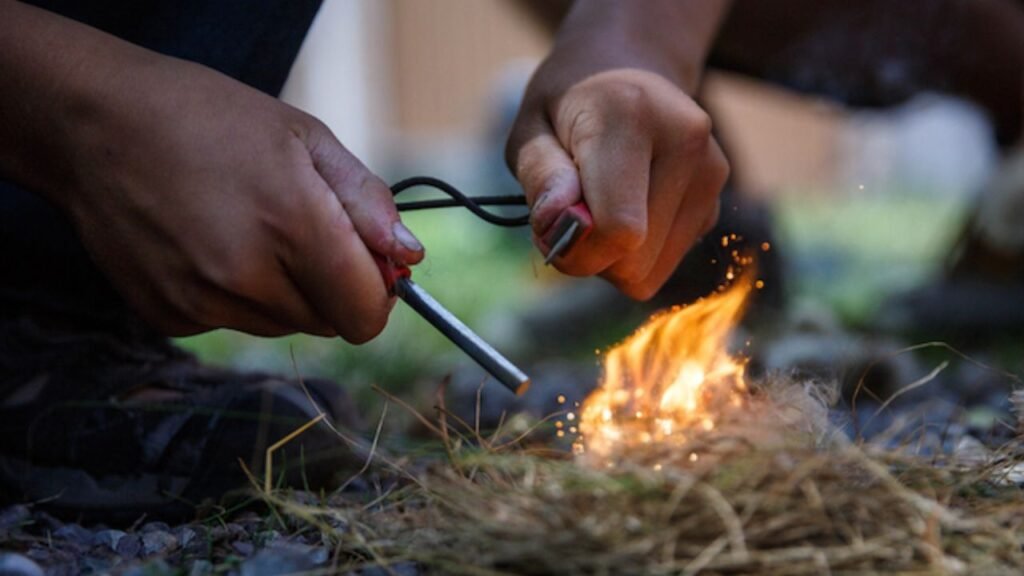
Your lighter is soaked, your matches are a pulpy brick at the bottom of the pack, and the light is going. This is the moment people discover that fire starting is a skill, not a purchase. The good news is that the methods that work without matches are old, well understood, and learnable in an afternoon in your backyard.
You can build a fire without matches with one of four ignition sources: a ferro rod, which scrapes off metal shavings that burn at roughly 5,000 degrees F; friction, where a bow drill grinds wood dust into a glowing ember; focused sunlight through a lens, which chars a hot spot into dry tinder; or a battery shorted across fine steel wool, which heats the strands until they glow. Each one only delivers heat. Turning that heat into flame depends on your tinder, and dry, finely shredded, fibrous tinder is what separates a fire from a frustrating evening.
In short: carry a ferro rod, prepare three times more tinder than you think you need, and shred it finer than feels reasonable. The tool is the easy part.
The National Park Service makes the same point about preparation from the other direction, advising campers to check local rules and current fire conditions before striking anything at all, since dry and windy stretches often mean campfires are banned outright. Knowing how to make fire and knowing whether you are allowed to are two separate skills.
Below you will find how each method actually works, which ones survive rain and wind, a step-by-step for the ferro rod, and an honest account of where friction fire stops being romantic and starts being a two-hour workout.
Key Takeaways
- A ferro rod is the most reliable no-match method: it works wet, works cold, and throws sparks hot enough to light prepared tinder on the first or second strike.
- Every method produces either a shower of sparks or a single glowing ember, and the two need completely different tinder setups.
- Tinder quality decides the outcome more than the tool does. Shred it until it looks like hair, not like grass.
- Friction fire with a bow drill is genuinely hard and depends on finding the right dry wood, which you may not have.
- A lens needs direct sun, so it is useless at dusk, under cloud, and exactly when you are coldest.
- Battery and steel wool works well and is light, but a shorted battery in a pack is a real fire risk if you store it carelessly.
- Check local fire restrictions before you build anything, and drown the fire until it is cold to the touch before you leave.
Fire Starting Tools Worth Carrying


What Has to Happen Before Anything Burns
Fire needs three things at once: fuel, oxygen and enough heat to push the fuel to its ignition temperature. Every no-match method is simply a different way of supplying that last ingredient. Nothing you do will matter if the first two are missing, which is why a damp, densely packed tinder nest defeats even an excellent ferro rod.
Dry wood fibers begin to break down and release flammable gas somewhere around 500 to 600 degrees F, and it is those gases that actually carry a flame. That is the mechanism worth remembering. You are not lighting wood, you are heating wood until it gives off something that will light. Thin material reaches that point almost instantly; a thumb-thick stick never will from a spark.
This is also why surface area beats volume at every stage. A handful of hair-fine fibers has enormously more surface exposed to air than the same mass of twigs, so it crosses the ignition threshold while the twigs are still warming up.
Sparks or Embers: The Split That Decides Your Method
Guides often lump every matchless technique into one list, which hides the distinction that actually governs how you prepare. Some methods throw a brief shower of hot particles. Others produce a single small coal that glows and grows. The two want different tinder and different handling, and mixing up the approach is why a method that worked in a video fails in the field.
Spark methods need tinder fine enough to catch a particle that lasts a fraction of a second. Ember methods need tinder you can wrap around a fragile coal and coax with your breath over a minute or more. A nest built for one is usually wrong for the other.
| Method family | What it gives you | Tinder it needs | Realistic time to flame |
|---|---|---|---|
| Ferro rod, flint and steel | A burst of burning metal particles | Hair-fine fibers, packed loosely, spark landing inside the nest | Seconds to a minute |
| Bow drill, hand drill, fire plough | One small glowing coal of wood dust | A nest you can fold around the coal and breathe into | Ten minutes to never, depending on wood |
| Lens focusing sunlight | A sustained hot spot that chars then smokes | Dark, dry, flat material that holds the focal point still | One to five minutes in strong sun |
| Battery across steel wool | Glowing filaments that spread through the pad | The steel wool is the tinder; surround it with fine kindling | Under a minute |
Your Tinder Matters More Than Your Tool
If one idea survives this article, make it this one. A beginner with excellent tinder and a cheap rod will beat an expert with poor tinder and a premium one. Tinder is the conversion stage between a heat source and a sustainable flame, and it is the stage almost everyone underbuilds.
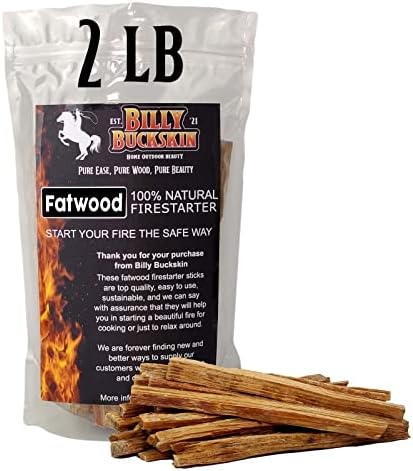
Good natural tinder is dry, fibrous and finely divided. Think the inner bark of dead standing cedar or birch rubbed between your palms, dry grass heads, the fluff from cattail or milkweed, pine needle duff from under an overhang, or fine shavings cut from a resinous fatwood stick. Dead branches still attached to a tree are usually drier than anything lying on the ground.
Prepared tinder is worth carrying precisely because the weather that soaks your matches also soaks the forest. Petroleum jelly worked into a cotton ball will burn for a couple of minutes from a single spark, weighs almost nothing, and does not care about humidity.
- Shred until the material looks like hair, then shred the center finer still
- Build the nest loose, with air gaps all through it, not packed into a ball
- Collect three times as much as you think you need, before you start
- Keep a sealed bag of prepared tinder in your pack as insurance
- Dry marginal tinder against your body for twenty minutes before trying
Ferro Rod: The Method That Works When Others Will Not
A ferrocerium rod is an alloy that sheds fine shavings when scraped, and those shavings oxidize so rapidly that they burn in flight at roughly 5,000 degrees F. That temperature is the whole point. It is far above the ignition threshold of any dry tinder, which is why the method works when a rod is soaking wet, when it is below freezing, and at altitude where a lighter flame struggles.
Technique matters in one specific way that most beginners get wrong: move the rod, not the striker. If you push the striker down the rod you will knock your carefully built nest across the campsite. Seat the rod tip in the tinder, hold the striker steady at about 45 degrees, and pull the rod back.
- Build the bundle. Shape a loose nest of fine, dry, fibrous material about the size of your two cupped hands. Air gaps matter as much as the material.
- Shred finer. Rub and tease the center of the nest until the fibers are hair thin. A spark cannot ignite anything thicker than a thread.
- Prepare the next stage. Stack pencil-thin kindling and thumb-thick wood within arm reach before you make any sparks. Hunting for fuel while the tinder burns is the most common failure.
- Seat the rod. Press the tip of the ferro rod into the nest so the sparks land inside the fibers rather than bouncing off the surface.
- Scrape, do not stab. Hold the striker at about 45 degrees and pull the rod back sharply while keeping the striker still. Moving the rod instead of the striker keeps you from scattering the nest.
- Feed the ember. When the fibers catch, lift the nest, fold it loosely around the glow, and blow in long steady breaths from underneath.
- Transfer to the lay. Place the burning bundle under your kindling stack and add fuel gradually, keeping gaps so air can reach the flame.
A magnesium bar adds a second stage to the same idea. You shave a coin-sized pile of magnesium into the tinder first, then spark it. The magnesium burns intensely for a few seconds, which can push damp tinder over the threshold that a bare spark would not reach. Shave it where the wind cannot scatter the pile, which in practice means shaving directly onto the nest.
Friction Fire, Described Honestly
The bow drill is the friction method most people can eventually learn. A bow wrapped once around a spindle spins it against a notched fire board; the dust ground off collects in the notch, and if you generate heat faster than it dissipates, that dust pile reaches ember temperature. You then transfer the coal into a tinder nest and blow it to flame.
What videos rarely convey is how specific the material requirements are. Spindle and board both want soft, dry, dead wood of similar hardness, cedar, willow, cottonwood and basswood are classics, and both must be genuinely dry inside, not merely dry on the surface. In a wet forest after three days of rain, that wood may simply not be available to you.
Learn it at home where failure costs nothing. A practice kit with a prepared board and spindle removes the material variable so you can focus on the motion, the downward pressure, and the moment the smoke changes character. Then try it with wood you found yourself, which is the real skill.
Sunlight, Batteries and the Methods With Conditions Attached
A lens concentrates sunlight into a point small enough to raise tinder past its ignition temperature. A credit card Fresnel lens does this nearly as well as a glass magnifier and weighs almost nothing. Angle it so the bright spot is as small and sharp as you can make it, hold it steady on dark dry material, and wait for smoke before you expect flame.
The limitation is blunt: it needs direct, strong sun. It fails under overcast, it fails in deep forest, and it fails at dusk, which is precisely when you most want a fire. Carry one as a weightless backup, never as your only plan.
Battery and steel wool works on a different principle. Touching both terminals of a 9 volt battery to fine grade steel wool passes current through the thin strands, which heat until they glow and propagate through the pad. Grade 0000 wool works best because the finer the strand, the less current it takes to heat it.
Which Method Survives Bad Conditions
Methods are usually ranked by how impressive they are. The more useful ranking is how they behave when things are against you, because that is when you will need one. Weight figures in too, since a method you left at home has a success rate of zero.
| Method | After heavy rain | In strong wind | At night or under cloud | Pack weight |
|---|---|---|---|---|
| Ferro rod | Works, rod is unaffected by water | Works, shield the nest with your body | Works | About 1 to 3 oz |
| Magnesium bar and flint | Works, shavings help damp tinder | Shavings blow away easily | Works | About 2 to 4 oz |
| Bow drill | Usually fails, wood is damp through | Workable but cooling is faster | Works if you have dry wood | Found materials or a kit |
| Fresnel lens | Works only if sun returns | Works, no flame to disturb | Fails completely | Under 1 oz |
| Battery and steel wool | Works if both stayed dry | Works, wool holds its heat | Works | About 2 oz plus battery |
Read across that table and one conclusion is hard to avoid. A ferro rod plus prepared tinder covers more situations than anything else for a few ounces. Everything else is redundancy, or a skill worth owning for its own sake. Once you have flame, the next question is what you feed it into, which we cover in building a fire in a fire pit, and if you are working with a site that has no ring at all, here is how to build a stone fire ring that contains it properly.
Do and Do Not at the Fire Ring
Do
- Check current fire restrictions with the land manager before you plan on a fire at all
- Use an existing fire ring wherever one exists rather than building a new scar
- Clear flammable material well back from the ring, and keep tents and gear at a distance
- Keep the fire small, which is easier to control and easier to put out
- Keep water within arm reach the entire time the fire is burning
- Drown, stir and drown again until the ashes are cold to the touch
Don’t
- Do not use gasoline or any accelerant other than lighter fluid, and only where it is permitted
- Do not squirt lighter fluid onto embers or an open flame
- Do not burn plastics, cans or bottles, which leave toxic smoke and a mess for the next camper
- Do not move firewood long distances, since it transports pests into new areas
- Do not leave a fire unattended even briefly, and never sleep with one still warm
- Do not bank dirt over coals and assume they are out, since soil insulates and holds heat
The National Park Service advises keeping tents, gear and anything else flammable at least 15 feet from the fire pit and upwind of it, and warns that whitish gray coals can hold heat for hours and flare up again if the wind picks up. Its full guidance on building, feeding and extinguishing a campfire is worth reading before a trip: NPS campfire safety. Rules vary by park and by season, so confirm locally rather than assuming.
Heat radiating from a fire can dry and eventually ignite wood that is merely near the flames rather than in them, which is a slower process than people expect and catches campers out. We go into the mechanism in more detail in our piece on how campfire heat spreads to nearby wood, linked below.
For the physics of that, see how campfire heat spreads to nearby wood.
Honest Limits
Reading about friction fire is not the same as being able to do it. The bow drill in particular has a steep failure curve: people who have never produced a coal in their backyard will almost certainly not produce one in cold, damp conditions on their first real attempt. Treat any article, including this one, as a map rather than as practice.
There are also conditions where no method in this guide is the answer. Sustained rain with no dry material anywhere, high wind, hypothermia already setting in, or a genuine emergency with daylight running out are all situations where the correct move is shelter, insulation and getting help, not persisting with a fire attempt that is burning the energy you need.
Finally, the gear above is selected from listing specifications and from what is widely reported by buyers. We have not run these tools through a controlled field test, and no article can tell you how a specific rod feels in your hand or how your local wood behaves. Practice in your yard, in the rain, before you depend on any of it.
Stay Safe Out There
Fire restrictions exist because conditions change faster than guidebooks do. Before any trip, check with the park, forest or agency that manages the land, and check again on arrival. A burn ban is not a suggestion, and in dry seasons a single escaped ember can start something that outruns anyone on foot.
If a fire gets away from you, do not try to fight it beyond what a bucket of water can handle. Note your location, move upwind and away, and call 911. Where there is no cell service, find the campground host or the nearest ranger station. Reporting a fire early is far more useful than attempting to hide a mistake.
For burns, cool the area with clean running water rather than ice, cover loosely, and seek medical help for anything beyond a small superficial burn, for any burn on the hands, face or joints, and for any burn on a child. Signs of hypothermia, confusion, severe shivering or clumsiness, mean you should prioritize shelter and dry insulation over continuing to work on a fire.
Disclaimer: this article is general outdoor information, not emergency, medical or legal advice. Local rules differ, conditions change, and you are responsible for the fire you light. Check local rules, ask a ranger when you are unsure, and seek professional medical help for any injury that concerns you.
Frequently Asked Questions
What is the easiest way to start a fire without matches?
A ferro rod with prepared tinder. It works wet, works cold, needs no sun and no skill beyond a scraping motion you can learn in ten minutes. Everything else is either slower, conditional on the weather, or much harder to learn.
Can you really start a fire with sticks by rubbing them together?
Yes, but not by rubbing two random sticks. The bow drill and hand drill work by grinding a specific pairing of soft dry woods into dust and concentrating the heat in a notch. It takes practice and the right materials, and in a wet forest the materials may not exist.
What is the best tinder for catching a spark?
Anything dry, fibrous and shredded to near hair thickness. Inner bark from dead standing cedar or birch, dry grass heads, cattail fluff, fine fatwood shavings, or a cotton ball worked with petroleum jelly. Thickness matters more than the specific material.
Does a ferro rod work when it is wet?
Yes. Ferrocerium is unaffected by water, and a wet rod will throw sparks normally once you wipe it. Your tinder is the part that fails in the wet, which is why carrying a sealed bag of prepared tinder matters more than protecting the rod.
How is a ferro rod different from flint and steel?
Traditional flint and steel shaves tiny particles off a high-carbon steel striker and needs char cloth to catch them. A ferrocerium rod is a modern alloy that produces far hotter sparks and will light ordinary dry tinder directly, which makes it much more forgiving.
Can I start a fire with a phone battery?
Lithium batteries can be made to short and ignite, but doing it deliberately risks a violent chemical fire, toxic fumes and burns, and it destroys the phone you may need to call for help. Carry a 9 volt battery and steel wool instead if you want that method.
Why does my tinder smoke but never catch fire?
Almost always because the material is too coarse, too damp, or packed too tightly for air to move through it. Shred the center finer, build the nest looser, and blow steadily from underneath rather than in short puffs.
Is magnesium worth carrying as well as a ferro rod?
It helps in damp conditions, where a pile of magnesium shavings burns hot enough to carry marginal tinder over the line. In dry conditions a ferro rod alone is enough. The shavings also blow away readily, so shave directly onto the nest.
Do I need a permit to have a campfire?
It depends entirely on where you are. Many areas require a permit, restrict fires to designated rings, or ban them outright during dry spells. Check with the managing agency before your trip and again when you arrive, because restrictions change with conditions.
How do I know the fire is properly out?
Spread the coals, pour water slowly over everything, stir the ashes, and pour again. Then hold the back of your hand near the ashes. If you feel any warmth at all it is not out. Grayish coals can stay hot for hours and reignite in wind.
The Bottom Line
Building a fire without matches comes down to one honest trade. You can spend a few ounces and about twenty dollars on a ferro rod and a bag of prepared tinder and have a method that works in rain, wind and cold on your first try, or you can learn friction fire, which costs nothing to carry and a great deal to master. Most campers should do the first and then practice the second in the backyard, because the day you need it is the worst possible day to be learning.
Whichever route you take, the tinder is the part that decides it. Shred finer than feels sensible, build the nest loose, prepare every stage of fuel before you strike a spark, and keep water beside you the whole time. Then put it out properly, drown it, stir it, drown it again, and leave the ashes cold enough to touch.