
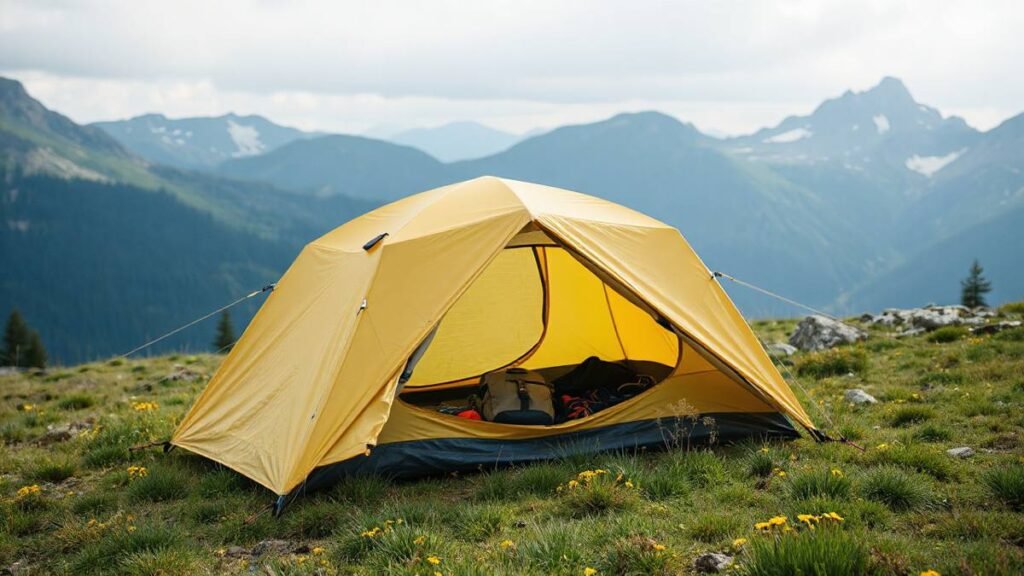
A good lightweight two-person backpacking tent balances low packed weight with a vestibule big enough for boots and packs, two doors for easy entry and a fly that sheds rain. Look for a total weight that you and your partner can share comfortably, and compare vestibule area and peak height as well. The tents below are current Amazon results, and the guide explains how to choose.


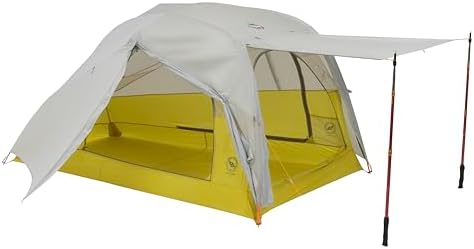
As an Amazon Associate we may earn from qualifying purchases. The products above are my picks from Amazon search results for this topic, not a verified sales ranking. Prices change often, so use the button to see the current offer. For deals around Black Friday and Cyber Monday, see the Black Friday camping gear hub.
Why a vestibule matters
A vestibule is the covered space between the tent body and the rainfly, usually at the door. It is easy to overlook when you compare tents, but it has a huge effect on comfort. A vestibule gives you a dry place for muddy boots, wet rain gear and your pack, so none of that has to come inside where you sleep. On a rainy trip it can be the difference between a comfortable tent and a wet, crowded one. Some campers also cook in a vestibule during storms, though that carries a carbon monoxide and fire risk and should be done with great caution or avoided altogether.
Ultralight tents often shrink vestibules to save weight, so check the area before you buy. A vestibule of around 8 to 12 square feet per door is typical for two-person backpacking tents, though sizes vary.
What counts as lightweight
For a two-person backpacking tent, packed weights vary widely. Some models weigh a little over two pounds, while many comfortable freestanding tents weigh three to five pounds. Lower weights usually mean thinner fabrics, shorter poles and smaller interiors. Think about whether you will share the load: two hikers can split the body, fly and poles, which makes a three-pound tent feel like a pound and a half each.
Pay attention to the difference between minimum weight and packed weight. Minimum weight counts only the tent body, fly and poles. Packed weight includes stakes, guy lines and stuff sacks, and it is closer to what you will actually carry.
Freestanding or trekking-pole designs
Freestanding tents hold their shape without stakes, which makes them easy to pitch on rocky ground and easy to move. They usually weigh more because they need full pole structures. Trekking-pole tents use your hiking poles as supports, which cuts weight, but they need stakes and a more careful pitch. If you do not hike with poles, a trekking-pole tent will not work for you without buying poles. Beginners often prefer freestanding designs for simplicity.
Doors and entry
Two doors and two vestibules mean each person has their own exit and gear space. A single-door tent saves weight, but one person will climb over the other to get out. Doors with a rolled-back option let you stargaze or get air on warm nights. Look at zipper quality, because a cheap zipper that snags or breaks is a common failure point.
Interior space and livability
- Floor area: Check the width and length to make sure two sleeping pads fit side by side.
- Peak height: A taller peak makes it easier to sit up and change clothes.
- Wall shape: Steeper walls give more usable space than sloped walls.
- Pockets and loops: Small pockets for headlamps and phones keep the interior tidy.
Remember that very narrow tents leave little room for gear. Many hikers put packs in the vestibule to keep the interior free.
Weather performance
Most lightweight tents are designed for three-season use. A full-coverage fly with taped seams keeps out rain. Good ventilation reduces condensation. Tension points and guy lines give extra stability in wind. If you hike in the mountains where storms can arrive fast, pick a tent with a sturdy pole structure and a low profile to the wind. Our guide to winter camping tents covers heavier-duty options.
Materials and durability
Ultralight tents use thin nylon or polyester fabrics, sometimes with silicone coatings, that save weight but can be punctured more easily. A footprint adds protection but also adds weight. Many backpackers use a lightweight groundsheet or simply choose their campsite carefully. Our guide on what to put under a tent explains the options.
A quick comparison checklist
| Check | What to look for |
|---|---|
| Packed weight | Includes stakes, poles and stuff sacks |
| Vestibule area | At least enough for a pack and boots per door |
| Doors | Two doors for two people |
| Design | Freestanding or trekking-pole |
| Fly coverage | Full coverage with taped seams |
| Packed size | Fits inside your pack easily |
Care and storage
Dry your tent completely before storing it, clean it with water and a soft cloth and keep it loose in a breathable bag. Our guide on washing a camping tent has steps. Check the seams and poles before every trip.
How to pitch a lightweight tent for the best performance
Light tents reward good technique. Choose a flat site with good drainage and clear it of sharp objects, since thin floors puncture easily. Lay out the footprint or groundsheet, then assemble the poles and clip or sleeve the tent body. Stake the corners first, pulling them taut in a square, then add the fly and stake out the vestibules so they pull away from the tent body. Finish by tightening the guy lines so the fly does not touch the inner tent, which keeps condensation from dripping on you.
Face the lowest, narrowest end of the tent into the wind if the design is asymmetric, and use extra stakes or rocks to anchor it when the wind picks up. In mountain terrain, weather can change fast, so check the pitch again before bed. A tent that feels tight at sunset can loosen overnight as the fabric relaxes with the dew.
Managing condensation in a small tent
Two people breathe out a surprising amount of water overnight, and a lightweight tent has little space to absorb it. To reduce condensation, pitch away from water, use all the vents the tent provides, open the vestibule doors slightly if the weather allows and keep wet gear in the vestibule instead of the sleeping area. In cold, humid conditions, wipe the inside walls with a small camp towel in the morning. A wet tent is a normal fact of backpacking, and it is not necessarily a leak. If you suspect a real leak, check the seams and the fly coating.
Packing and carrying a light tent
Split the tent between two hikers. One carries the body and the other carries the fly and poles, with stakes divided between them. Compress the pieces in lightweight stuff sacks and keep the fly handy, since you may need to pitch it first in a rainstorm. Stuff, do not fold, if you want to avoid creasing the same fabric lines over and over, and store the tent loose at home. Place the tent on the outside of your pack, or inside near the top, depending on the pack, so you can reach it quickly. Our guide on how to pack your hiking backpack offers tips for balancing the weight.
Ultralight trade-offs to understand
- Fabric thickness: Thin fabrics save weight but tear more easily. Treat them with care.
- Pole strength: Slimmer poles flex more in wind and can bend if you pitch carelessly.
- Interior volume: Smaller interiors mean less space for sitting up or storing gear.
- Price: Very light tents are often more expensive, so decide how much weight savings is worth to you.
- Repair needs: Carry a small repair kit with tape and a pole splint, because lightweight tents are harder to fix in the field.
A balanced tent is often better than the lightest tent. If you are not an ultralight enthusiast, a tent that is a few ounces heavier but more spacious and durable may be a better fit.
Choosing between similar models
When two tents look similar, compare them by floor area, peak height, vestibule area and weight, and then look at how the doors work. Check whether the fly can be pitched alone for a lighter option on dry nights. Read recent reviews for patterns on zipper reliability, pole durability and condensation. Consider whether you want a color that blends in at a campsite or a brighter one that is easier to find in poor visibility. Finally, check the warranty and repair policy, because a company with good support is a good bet for the long term.
If you are shopping during sale season, see our Black Friday camping gear hub and learn how to spot a real camping deal. Prices change often, so use the button in the table to see the current Amazon offer.
Our recommendation
For most backpacking couples, a freestanding three-season two-person tent with two doors, two vestibules and a packed weight that fits your load limit is the best balance. Look for a weight you can share, a vestibule that holds a pack and boots, and a fly that covers the whole tent. If you hike with trekking poles and care about weight above all else, consider a trekking-pole design. Practice pitching at home before your first trip, and treat the tent well so it lasts for many seasons.
Questions to ask before you buy
Before you click the buy button, ask yourself a few practical questions. How much weight can you and your partner comfortably share? Do you usually camp in rain, wind or heat, and does the tent’s ventilation and fly design match? Do you hike with trekking poles? How tall are you, and will you be able to sit up and stretch out? Do you want a vestibule big enough to cook under in an emergency, or will you always cook in the open? Write down your answers, then compare each candidate against your list. The tent that matches the most of your answers is almost always the right one, and it is a better guide than any ranking or discount label.
FAQ
What is a good weight for a 2-person backpacking tent?
Many comfortable freestanding tents weigh between three and five pounds, and ultralight designs weigh less. Split the weight between two hikers.
Is a vestibule necessary?
It is not mandatory, but it keeps wet boots and packs outside the sleeping area, so it adds comfort in rain.
Can I cook in a vestibule?
It is risky. Fire and carbon monoxide are serious hazards, so cook outside whenever possible.
Are freestanding tents better?
They are easier to pitch on hard ground and simpler for beginners, but trekking-pole tents are lighter.
Do I need a footprint?
It protects the floor but adds weight. Many hikers use a lighter groundsheet.
Related guides
- What are the best camping tents
- Who makes the best camping tents
- Best two person tent for camping cheap