
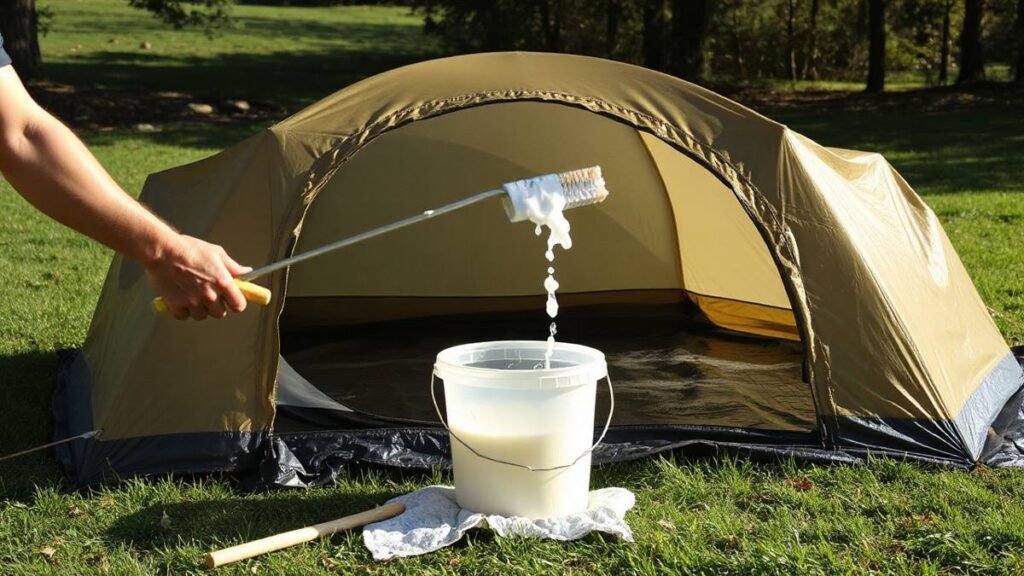
Yes, you can wash a camping tent, but never in a washing machine or dryer. Set the tent up outdoors, wipe it down with a sponge, lukewarm water and a mild soap if needed, rinse it well, then let it dry completely in the shade before you pack it away.
Why you should never machine wash a tent
It is tempting to treat a dirty tent like a big sleeping bag and toss it in a front-loading washer. Please do not. A washing machine agitates the fabric hard, and the tumbling can tear seams, strip waterproof coatings and bend or crack zippers, clips and mesh. A dryer is even worse because high heat can melt or delaminate the coatings that keep rain out. Tent makers and outdoor retailers consistently recommend hand cleaning for exactly this reason.
The coatings on tent fabric are what make it waterproof. The rainfly usually has a polyurethane or silicone-based layer, and the floor has a thicker waterproof layer. Harsh detergents, bleach, fabric softeners and hard scrubbing all damage those layers. Once a coating starts to flake, peel or turn sticky, no amount of washing will fix it, and the tent will begin to leak at the first real storm.
So the rule is simple: be gentle, use as little cleaning product as possible, and never use heat. Everything else in this guide follows from that.
What you need before you start
You do not need special equipment to clean a tent. Gather these items before you begin:
- A large clean sponge or soft cloth, never a stiff brush
- Lukewarm water, a bucket and a hose or tub for rinsing
- A mild, non-detergent soap, such as a gentle castile soap or a cleaner made for technical outdoor gear, only if plain water is not enough
- A soft toothbrush for zipper teeth and stubborn spots
- A clothesline, a fence or the tent poles to hang the parts while they dry
Pick a calm, mild day with some shade. Direct sun is hard on tent fabric, because ultraviolet light slowly weakens nylon and polyester. A shaded patch of lawn or a clean driveway works well. If you have a bathtub and a large tub, you can also wash a small backpacking tent indoors, as long as you rinse the tub afterward and hang the tent to dry somewhere with good airflow.
Step-by-step: how to hand wash your tent
- Set it up. Pitch the tent outside with the rainfly off. This lets you see every panel and reach the corners and the floor.
- Empty it and shake it out. Remove stakes and gear, shake out dirt, sand and pine needles, and sweep the floor with a soft brush.
- Spot clean first. Use a sponge and lukewarm water on sap, mud and bird droppings. Many stains lift with water and patience alone.
- Add soap only if needed. Mix a small amount of mild soap in the bucket. Wipe the body, floor and fly gently, working in sections from top to bottom.
- Rinse thoroughly. Soap left on the fabric attracts dirt and can break down coatings, so rinse until the water runs clear and no suds remain.
- Clean the zippers. Use the soft toothbrush and clean water to remove grit from zipper teeth. Gritty zippers jam and wear out early, so this small step pays off.
- Dry completely. Leave the tent standing, or hang the pieces, in a shaded, airy spot until every seam, corner and pocket is bone dry.
Do not rush the drying step. A tent packed away even slightly damp can grow mildew in a few days, and mildew leaves a smell that is very hard to remove. If the weather turns, finish drying the tent indoors, for example over a shower rod or draped across chairs in a spare room.
How to deal with specific problems
Tree sap
Put a little rubbing alcohol on a cloth and dab the sap, then rinse with water. Test a hidden corner first, because alcohol can affect some coatings. Work gently and avoid soaking the fabric.
Mildew and odor
Mix a solution of water and a small amount of mild soap and scrub the spots lightly. Rinse well and dry in fresh air. If the smell remains, repeat the process rather than reaching for stronger chemicals. Bleach is not recommended for tent fabric because it can weaken it and strip the coatings.
Bug spray and sunscreen residue
Some insect repellents and sunscreens can damage tent fabric and coatings. Wipe residue off with a damp cloth as soon as you notice it, especially around the door and on the floor where hands and feet touch the tent most.
Dirty or sticky zippers
Clean the teeth with a toothbrush, then apply a zipper lubricant made for outdoor gear. This is often all that stops a zipper from snagging, and it is much cheaper than replacing a tent.
Stubborn mud on the floor
Let mud dry, then brush off what you can. Wipe the remaining stain with a damp sponge. Aggressive scrubbing can wear down the waterproof floor coating, so patience is better than force.
Campfire smoke and food smells
Hang the tent in fresh air for a day or two. Smoke smells fade well in open air and a light wipe-down. Do not spray scented products on the fabric, because they can leave residue and may attract animals on your next trip.
How often should you clean your tent?
Most campers do not need to wash their tent after every trip. A good routine looks like this:
- After every trip: shake it out, wipe off visible dirt and dry it completely at home before storage.
- Once or twice a season: give it a proper hand wash if it looks dirty or smells stale.
- After a salty, sandy or muddy trip: rinse the whole tent with fresh water, since salt and sand are hard on zippers and fabric.
Cleaning too often can actually wear the tent faster than occasional use does, so match the effort to how dirty it really is. A tent that is only dusty needs a good shake and a dry storage spot, not a bath.
Drying and storing a clean tent
Proper storage is where a tent’s lifespan is really won or lost. After the tent is fully dry, store it loosely in a large breathable bag or in a cool, dry place such as a closet or under a bed. Avoid garages, attics and basements where heat or humidity swings can damage coatings. Do not leave it packed tightly in its small stuff sack for months, because tight folding along the same creases can weaken the fabric and wear the coatings along those fold lines.
Store poles and stakes separately, and make sure the rainfly and body are completely dry before they touch each other. If you have room, hang the tent loosely so air can reach it. Before you put it away, it is also a good moment to inspect the seams, the pole sleeves and the mesh for small tears, and to patch them while they are still small.
Cleaning different types of tents
The basic method stays the same, but a few details change with the tent type.
- Backpacking tents use thin, lightweight fabric that is easy to damage. Use only water and a soft cloth, and avoid rubbing the thin coatings hard.
- Family cabin tents are big, so wash them in sections on a clean lawn and use a hose for rinsing. Pay attention to the floor, which collects the most dirt.
- Canvas tents need different care from synthetic ones, because they can shrink and mildew. Follow the maker’s directions, brush off dirt when dry, and avoid soap unless the instructions allow it.
- Roof top tents can be cleaned with a damp cloth while open, then aired out before closing.
If you are unsure, check the care tag or the maker’s website for exact directions.
Should you re-waterproof a tent after washing?
Washing a tent removes dirt that blocks water from beading, but it does not restore a worn waterproof coating. If water starts to soak into the fly instead of beading and rolling off, you can apply a spray-on waterproofing treatment made for tents. Follow the product’s instructions, apply it to a clean, dry fly, and let it cure fully. Seam leaks are a separate fix and usually need a seam sealer applied along the stitching. If you want a deeper look at keeping rain out, see our guide on using a tent without a rain tarp.
Common mistakes to avoid
- Using a washing machine or dryer
- Using bleach, fabric softener or strong detergents
- Scrubbing with a stiff brush
- Drying in strong, direct sun for hours
- Packing the tent away damp
- Skipping the zippers, which are the first part to fail
If you avoid these six, your tent will last much longer. A well-cared-for tent can serve for many seasons, which is why care matters more than the choice of a particular soap.
Care checklist you can save
- Pitch outside and brush out loose dirt.
- Sponge with lukewarm water, adding mild soap only if needed.
- Rinse until no soap remains.
- Clean zippers with a soft toothbrush.
- Dry fully in the shade.
- Store loose, cool and dry.
If you are planning to upgrade, our Black Friday camping gear hub collects guides to tents and other gear. Always check the live offer on Amazon, since prices change often.
FAQ
Can you put a camping tent in the washing machine?
No. The agitation can damage seams, zippers and waterproof coatings, and a dryer’s heat can ruin the coating. Hand wash it outdoors instead.
Can you use dish soap on a tent?
Dish soap is a degreaser and can strip coatings, so avoid it. If you need soap, use a small amount of a mild, non-detergent soap made for gear, and rinse thoroughly.
How do you get the smell out of a tent?
Dry it fully in fresh air first. Then wipe the affected areas with a mild soap solution, rinse and dry again. Repeat if needed instead of using bleach.
Can you wash a tent with a hose?
Yes. A hose with a gentle spray is ideal for rinsing dirt and soap. Avoid a high-pressure jet that could damage the fabric.
Is it okay to dry a tent in the sun?
Short periods are fine, but hours of strong sun weaken the fabric over time. Shade or filtered light is better.
How do you clean tent zippers?
Brush the teeth with a soft toothbrush and clean water to remove grit, then apply a zipper lubricant made for outdoor gear if they feel stiff.
Can I wash a tent footprint?
Yes, wipe it with a sponge and water, rinse and let it dry in the shade before storing it with the tent.
Related guides
- What to put under a tent when camping
- Using a tent without a rain tarp
- Do i need a tent to go camping