
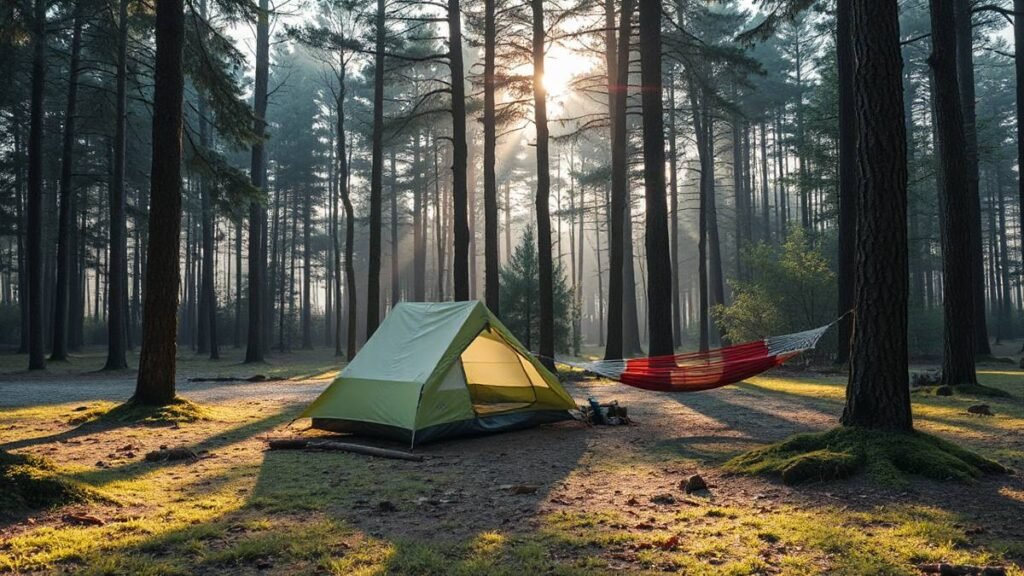
No, you do not strictly need a tent to go camping, but for most people a tent is the best choice. It protects you from rain, wind, insects and cold, and it gives you a private, predictable place to sleep. Alternatives such as tarps, hammocks, bivy sacks, vehicles and cabins work well in the right conditions.
What a tent actually does for you
Camping means sleeping outdoors, and a tent is simply the most complete shelter for doing that. It does several jobs at once. It keeps rain and dew off you and your gear. It blocks wind, which is often the biggest source of heat loss at night. It keeps mosquitoes, flies and crawling insects out. And it gives you a small private space to change clothes, store your pack and sleep without feeling exposed.
You can do some of those jobs with other gear, but few alternatives do all of them. That is why beginners are almost always told to start with a tent, and why experienced campers use one in unpredictable weather even when they own lighter options.
When you can camp without a tent
There are real situations where skipping the tent is fine.
- Camping from a vehicle. Many people sleep in the back of an SUV, a van, a truck bed with a cap or a camper. The vehicle becomes the shelter.
- Staying in a cabin, yurt or lodge. Many campgrounds and parks rent out cabins and similar structures. These count as camping for most travelers.
- Warm, dry, bug-free conditions. Some campers sleep under the stars on a pad and bag when the forecast is clear and insects are not a problem.
- Using a lighter shelter. A tarp, a hammock with a rain fly or a bivy sack can replace a tent for experienced campers who know how to set them up.
If any of these fits your trip, a tent is optional. If you are not sure, bring one.
Tent alternatives compared
| Option | Best for | Main drawback |
|---|---|---|
| Tent | Most trips, most weather, beginners | Heavier and bulkier than a tarp or bivy |
| Tarp shelter | Lightweight backpacking, dry regions | Needs skill to pitch well; open to insects |
| Hammock with rain fly | Wooded areas with good trees | Needs trees and an insulation plan underneath |
| Bivy sack | Solo, fast and light trips | Cramped, and condensation can build inside |
| Sleeping in a vehicle | Car camping, road trips | Limited space, ventilation and legal limits |
| Cabin or yurt | Families, cold or wet seasons | Must be booked; fees apply |
None of these is better in all cases. The right pick depends on the weather, the terrain, the length of the trip and your experience.
Risks of sleeping without a tent
Sleeping without any shelter has real downsides that new campers often underestimate.
- Weather changes quickly. A clear evening can turn into a rainy night. Without a shelter you can get soaked, and wet gear loses most of its insulation.
- Wind and cold. Wind pulls heat from your body. A tent breaks the wind and traps a little warmth.
- Insects and animals. Mosquitoes and ticks are a nuisance and, in some places, a health risk. A tent with mesh keeps most of them out.
- Wildlife. A tent will not stop a bear, so you must still store food properly, but it keeps you from sleeping in the open at ground level.
- Privacy and comfort. In a busy campground, a tent gives you a private space.
Checking a detailed forecast helps, but forecasts can be wrong, especially in the mountains. If the cost of being wrong is a cold, wet night, bring a tent or a solid backup shelter.
Rules at campgrounds and parks
Some campgrounds require campers to use a tent, camper or other approved shelter in designated sites, and some wild areas have their own rules about camping structures or sleeping out. Before you go, read the rules for the place you plan to camp. Park and forest service websites list what is allowed, what permits you need, and how to handle food and fires. Never assume that because a rule is not obvious, it does not exist.
Also check seasonal restrictions. Fire bans, bear regulations and closures can change how you plan your shelter and your food storage.
What to bring if you skip the tent
If you decide to go without a tent, you still need a plan for weather and sleep. At a minimum, pack:
- A sleeping bag rated for the lowest temperature you expect
- A sleeping pad, because the ground steals warmth
- A waterproof ground sheet or tarp for under and over you
- Rain gear and warm layers, and keep a dry set for sleeping
- Insect protection, such as a head net or repellent
- A headlamp with spare batteries
- A way to signal and navigate if you get into trouble
It is smart to carry an emergency shelter, such as a lightweight emergency bivy, even if you do not plan to use it.
Why beginners should still bring a tent
If you are new to camping, a tent removes a lot of guesswork. You do not have to learn tarp pitching, hammock tree selection or bivy condensation control at the same time as everything else. A freestanding tent can be pitched on almost any flat spot. A rainfly keeps you dry. Mesh doors let air in and bugs out. And a good tent can last for years.
You also do not need an expensive one. A basic tent with a full-coverage rainfly is enough for your first trips. For a place to start, read our guide on what camping gear to buy first and our checklist for tent camping.
How to choose a tent when you decide you need one
Think about who will sleep in it, how you will carry it and what weather you expect.
- Capacity: A tent labeled for two people is snug for two adults. Many campers choose one size up for comfort.
- Season rating: Three-season tents handle spring through fall. Four-season tents are built for snow and strong wind.
- Weight and packed size: This matters if you carry it on your back, and less so if you drive to the site.
- Rainfly coverage: A fly that reaches near the ground keeps out more rain.
- Ventilation: Mesh panels and vents help reduce condensation inside.
REI’s tent guides explain these features in detail if you want a second reference.
Smart ways to test shelter before a big trip
The best way to learn what you need is to practice. Pitch your tent in the backyard or a local park, spend a night and see how it feels. Try the same with a tarp if you are curious. A short test night teaches you more about wind, condensation and comfort than hours of reading. It also lets you find missing stakes, a broken pole or a leaky seam before you are miles from home.
If you plan to buy during the sales, our Black Friday camping gear hub gathers guides, and our page on how to spot a real camping deal can help you avoid paying more than you need to.
A simple decision guide by weather
Use the forecast and the terrain to decide, and always add a margin for error.
- Rain in the forecast, or any chance of it: bring a tent or at least a full tarp setup. Do not rely on luck.
- Cold nights near or below freezing: a tent adds warmth by blocking wind, and your sleeping bag and pad matter even more. Avoid sleeping in the open.
- Heavy bugs, ticks or mosquitoes: a tent with mesh is the simplest protection.
- Hot, dry, clear and calm: you may be comfortable with a tarp, a bivy or just a pad and a bag, if the area and rules allow it.
- Windy exposed sites: a low, sturdy tent handles wind better than a tarp.
When two or more of those apply, the answer is almost always a tent.
Common myths about camping without a tent
“It never rains where I am going”
Even deserts get sudden storms, and mountain weather can shift within an hour. Dry forecasts are helpful, but they are not guarantees.
“A tent is only for bad weather”
A tent also manages dew, insects and privacy. Many nights are cold and damp even when it is not raining.
“A hammock does not need anything else”
A hammock leaves your back exposed to cold air, which compresses the insulation under you. Hammock campers use an underquilt or a pad to stay warm, plus a rain fly and bug net.
“Tents are too expensive”
Basic tents are widely available at modest prices, and borrowing or renting gear is a good way to test camping before you invest. If you buy, compare options and use the live Amazon offer to see the current price.
A quick pre-trip shelter checklist
- Check the forecast for the lowest temperature, rain and wind.
- Read the campground or land rules for shelter and fires.
- Decide on a shelter and a backup, such as a tarp or emergency bivy.
- Test your setup at home first.
- Pack the sleep system: bag, pad and an extra layer.
- Tell someone your plan and expected return time.
If you can check all six, you will be prepared whichever shelter you choose.
Final thoughts
Camping is about being comfortable enough to enjoy the outdoors, and shelter is the foundation of that comfort. A tent is not required in every situation, but it is the most forgiving choice, particularly for beginners, families and anyone camping in changeable weather. If you choose to go without one, treat that as a skill to build gradually: start with a short, low-risk trip near home, carry a backup shelter and learn how your gear behaves in wind and damp before you go farther. With a little planning, you can choose the shelter that fits the trip, stay warm and dry, and sleep well, wherever you pitch for the night.
FAQ
Can you camp without a tent?
Yes. You can sleep in a vehicle, a cabin or under a tarp, hammock or bivy. A tent is simply the easiest and most protective option for most people.
Is it safe to sleep outside without a tent?
It can be in warm, dry, insect-free conditions with a good plan, but it is riskier than using a tent. Weather can change fast, and wet gear loses warmth.
What can I use instead of a tent?
A tarp, a hammock with a rain fly, a bivy sack, a vehicle or a rented cabin or yurt all work, depending on the trip.
Do campgrounds require a tent?
Some do require an approved shelter in a designated site. Always read the rules for the specific campground or park.
What is the cheapest way to camp?
A simple tent, a sleeping bag and a pad are inexpensive, and borrowing or renting gear for the first trips lowers the cost further.
Can I just sleep in my car instead?
In many places you can, but check local rules, keep windows slightly open for airflow and never run an engine in an enclosed space.
Related guides
- What you need to go camping in a tent
- What camping gear to buy first
- A type of tent use for car camping