
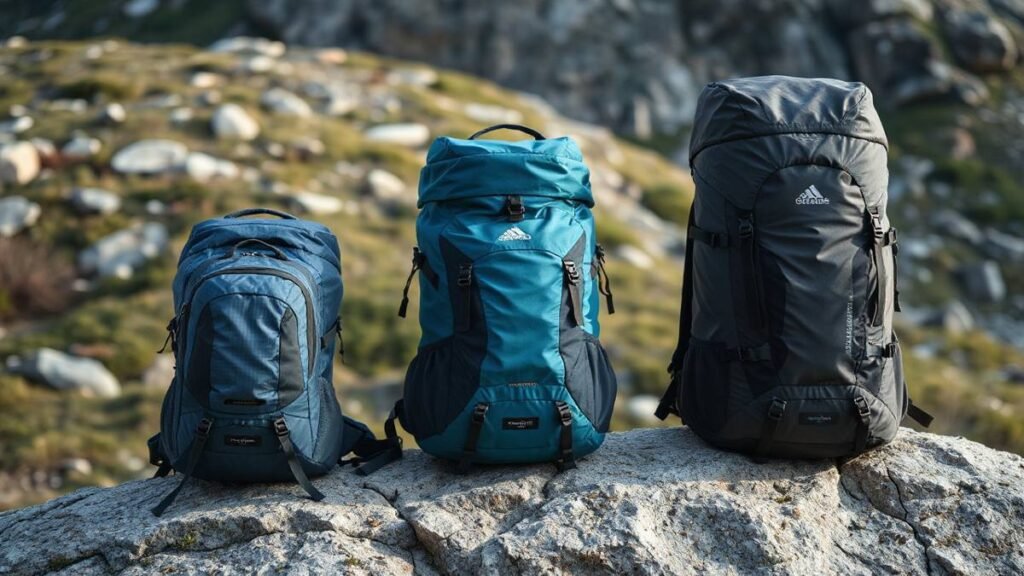
A hiking backpack should be about 10 to 30 liters for a day hike, 30 to 50 liters for an overnight trip, 50 to 65 liters for a weekend to a week, and 65 liters or more for long treks or winter trips. The right size depends on your trip length, gear and packing style. This guide shows how to pick the right capacity and avoid carrying more than you need.
What does liters mean in a backpack?
Pack volume is measured in liters and tells you how much the main compartment and pockets can hold. A larger number means more room, but not necessarily more comfort. Different brands measure volume in slightly different ways, such as including or excluding the lid and pockets, so use the number as a guide. The right pack is not the largest one you can carry but the smallest one that holds your gear comfortably.
Day hikes: 10 to 30 liters
For a few hours on the trail, a small pack of about 10 to 20 liters carries water, snacks, a light jacket and a first aid kit. For a full day with extra layers, lunch, a camera and more water, 20 to 30 liters is better. Look for a pack with a hip belt for stability and a hydration sleeve. Our guide on a good backpack for hiking and school covers daypacks that double for daily use.
Overnight trips: 30 to 50 liters
For one or two nights, a pack of 30 to 50 liters can work if you have compact gear. A lightweight tent, a small sleeping bag, a pad, a stove and food for a day or two fit in this range. If your gear is bulky, choose the upper end. Our guide to packing a backpack for overnight hiking shows how to arrange your gear in a pack of this size.
Weekend to week-long trips: 50 to 65 liters
For three to five days, you need space for more food, extra clothing and fuel. A pack of 50 to 65 liters is the most popular size for this type of trip. It can handle a tent, a sleeping bag, a stove, a few days of food and a rain jacket. If you hike in cold weather or carry bulky gear, move up in size. If you are an ultralight hiker, you can use a smaller pack.
Long treks and winter trips: 65 liters and up
For a week or longer, or for winter trips, you need extra room for food, insulation and safety gear. Packs of 65 to 80 liters are common, and expedition packs go higher. Large packs are heavier and can encourage overpacking, so choose the smallest size that fits your needs. Check the frame and the hip belt, since these carry more weight and must be comfortable.
Quick reference table
| Trip type | Typical size | Notes |
|---|---|---|
| Short day hike | 10 to 20 L | Water, snacks, light layer |
| Full day hike | 20 to 30 L | Extra layers, lunch, camera |
| Overnight | 30 to 50 L | Needs compact gear |
| 3 to 5 days | 50 to 65 L | Most popular range |
| Week or longer | 65 L and up | Winter trips, extra food |
Factors that change the size you need
- Season. Winter gear is bulky and needs more space.
- Shelter. A tent takes more room than a tarp or hammock.
- Food and water. Long trips with few resupply points need more capacity.
- Gear weight. Ultralight gear packs smaller than traditional equipment.
- Group sharing. Sharing the tent or stove reduces your load.
Your body and the pack
Capacity is only part of the picture. A pack must also fit your torso length and hips. A large pack on a small frame feels unbalanced, and a small pack on a tall person rides too high. Our guide to how to adjust a new hiking backpack and the fitting advice from REI Co-op explain how to size and adjust a pack. If you are buying, see our guide to how to buy a hiking backpack.
Why bigger is not always better
A big pack tempts you to fill it. Every extra item adds weight, and weight is the main cause of fatigue and injury on the trail. Choose a pack that is a bit tight, and make your gear fit by removing extras. A smaller pack is also easier to use in tight spaces, on public transport and in tents.
Signs that your pack is the wrong size
- Gear spills out of the top, and straps are at their limit.
- The pack feels empty and shifts around.
- You need to hang many items on the outside.
- The hip belt does not sit on your hips.
- You are unable to compress the load.
How to test a size before you buy
Take your gear to a store, or lay it out at home and estimate its volume. Pack the gear into a candidate pack and check whether it fits with room to spare. Walk with the load, and check balance and comfort. If you shop online, check the return policy, and keep the tags on until you have tested the pack at home. Our guide on how to pack your hiking backpack helps you arrange the load.
Our recommendation
For most hikers, a 20 to 30 liter pack handles day trips, and a 50 to 60 liter pack handles most multi-day trips. If you only want one pack for several uses, a 40 to 50 liter pack is a flexible compromise. Choose by trip length, gear volume and fit, and aim for the smallest pack that works.
Liters by activity: beyond classic hiking
Other activities call for different volumes. For trail running, a 5 to 12 liter vest holds water and essentials. For ski touring and mountaineering, 30 to 45 liters is common for day tours, with larger packs for hut trips. For travel and city use, a 30 to 45 liter pack serves as a carry-on bag. For photography hikes, a camera insert takes space, so you may want a few more liters than you expect. Match the size to the real list of gear you carry, and consider the weight as well as the volume.
How compression and outside attachments change the numbers
Compression straps can reduce the volume of a partly filled pack, which keeps the load stable. A pack that can expand with an extension collar gives you flexibility for trips with more food. Attachment points for trekking poles, a sleeping pad or an ice axe free up internal space, but outside gear affects balance. Choose a pack that can handle your biggest trip yet still compresses well for your smallest, instead of buying a different one for each.
Women’s and youth sizing
Women’s-specific packs often have lower stated volumes for a given torso length, and youth packs are scaled to smaller frames. A child needs a pack sized for their torso, not their trip length, and the load should stay light, usually no more than a small fraction of body weight. Our guide to how to buy a hiking backpack explains how torso measurement drives the fit, and the REI Co-op fitting guide gives step-by-step instructions.
Example gear lists by pack size
A 25 liter day pack holds two liters of water, lunch, snacks, a fleece, a rain shell, a hat, gloves, a headlamp, a first aid kit, sunscreen and a map. A 45 liter overnight pack adds a compact tent or tarp, a quilt or light sleeping bag, a pad, a stove, a pot and a day or two of food. A 60 liter pack for four nights adds food for the extra days, a warmer layer, a larger first aid kit and a water filter. Seeing your list against the pack volume makes the choice concrete.
Weight is not the same as volume
Volume tells you how much space you have, but weight is what you feel. A 30 liter pack full of dense gear can weigh more than a 60 liter pack stuffed with a light sleeping bag. Aim to keep your total pack weight within a modest share of your body weight, and use a scale to weigh your loaded pack at home. If it feels heavy, cut gear rather than buying a bigger pack. Our guide on whether 21 pounds is too heavy for a hiking backpack explores weight limits in more detail.
Renting or borrowing before you buy
If you are unsure which size suits you, borrow or rent a pack for a trip or two. Many outdoor stores and clubs rent packs, and a test on a real hike teaches you more than any chart. Note what you carried, what you left unused and whether the pack felt too big or too small. Use that information to choose a size, and then buy with confidence.
Changing your pack as your skills grow
Most hikers start with a medium pack and change as their style evolves. As you learn to pack lighter, you may move to a smaller size, and as you tackle longer trips you may add a bigger one. Many experienced hikers own two or three packs for different uses. If you can only afford one, choose a 40 to 55 liter model that works for overnights and short trips, and add a small daypack later.
One last tip on volume
Write down every item you plan to carry, then pack it in a spare bag or on the floor before you choose a pack. Seeing the pile gives you a quick sense of volume, and it reveals items you can leave behind. Repeat this after each trip, noting what you did not use. Over time, your list gets shorter and your pack gets smaller and lighter.
Checking your choice against real trips
Think about the last three trips you took, or the three trips you want to take. For each, list the gear and estimate whether it would fit in the pack you are considering. If it fits all three with room to spare, the size is probably right. If it only fits the smallest trip, you need a larger one. This simple test beats any chart and takes only a few minutes.
FAQ
How many liters is a good hiking backpack?
It depends on the trip. About 20 to 30 liters suits day hikes, and 50 to 65 liters suits multi-day trips.
Is 40 liters enough for a weekend?
Yes, if your gear is compact and you pack carefully.
Is 60 liters too big?
It is large for short trips but standard for longer ones. Smaller packs encourage lighter loads.
How do I measure pack volume?
Look at the maker’s stated capacity, and note whether it includes pockets and the lid.
Does more volume mean more weight?
The pack itself is heavier, and a large pack tempts you to carry more.
What size pack for international travel?
A 40 to 50 liter pack often works as a flexible carry-on option, depending on the airline.
Related guides
- What size backpack should i get for hiking with kids
- How to buy a hiking backpack
- How to pack a backpack for overnight hiking