
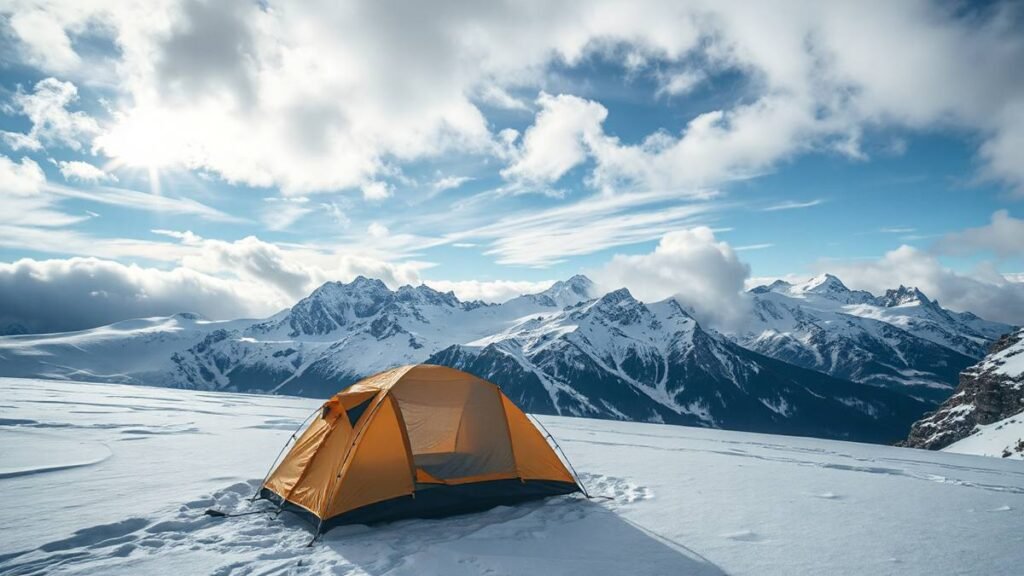
A 4-season tent is not always necessary for winter camping, but it is the safest choice for heavy snow, strong wind and sustained sub-freezing temperatures. A sturdy 3-season tent can handle mild, dry winter trips, especially at lower elevations with little snow. This guide explains the differences, when each type works and how to stay warm and safe in cold conditions.
What does “4-season tent” mean?
A 4-season tent, also called a winter or mountaineering tent, is built to withstand snow loads, strong wind and cold. It typically has more poles, stronger fabric and a lower, more aerodynamic shape than a 3-season tent. Its walls are often made of solid fabric rather than mesh, which keeps out spindrift and drafts. Many are designed to be pitched in snow and to survive storms that would flatten a lighter shelter.
How a 3-season tent differs
A 3-season tent is made for spring, summer and fall. It prioritizes ventilation and low weight, with large mesh panels, fewer poles and lighter fabric. It sheds rain well, but it is not designed to carry a heavy snow load or resist strong, sustained wind. In cold, calm and dry weather, it can still be used, but it will be drafty and may collapse under snow.
Comparing the two types
| Feature | 3-season tent | 4-season tent |
|---|---|---|
| Poles | Fewer, lighter | More, stronger |
| Fabric and walls | Mesh panels, light fabric | Solid, heavier fabric |
| Snow load | Low | High |
| Wind resistance | Moderate | High |
| Ventilation | Excellent | Lower, with vents |
| Weight | Light | Heavier |
When a 4-season tent is necessary
- Heavy snow. A snow load can crush a 3-season tent.
- High winds. Exposed ridges and open terrain demand a strong frame.
- Mountaineering. Expeditions need a tent that survives storms.
- Extended cold. Long trips below freezing benefit from a sealed, sturdy shelter.
- Camping on snow. Stakes and guy lines need strength and a design that handles drift.
When a 3-season tent is enough
Many winter trips are mild. At lower elevations, in the southern US, or in dry, cold climates with little snow, a good 3-season tent with a full-coverage rain fly can work. Choose a model with a rainfly that reaches the ground, block vents partly to reduce drafts and use a warm sleeping system. If snow is in the forecast, check the forecast before you go, and be ready to change plans. A 3-season tent is a gamble in a storm, so keep it for gentle conditions only.
The in-between option: 3-season-plus tents
Some tents are labeled three-to-four season or all-season. These have a stronger pole structure and fewer mesh panels than a standard 3-season tent, but they are lighter and better ventilated than a full 4-season tent. They suit shoulder-season trips and mild winter conditions. Check the specifications and the maker’s statement on snow load, and don’t expect them to match a true mountaineering tent in a blizzard.
Staying warm: the tent is only part of the system
A winter tent keeps out wind and snow, but warmth comes from your sleep system. Use a sleeping bag rated well below the expected temperature, an insulated pad with a high R-value, and dry base layers. Eat a hot meal and a snack before bed, and keep a bottle of warm water in your bag. Our guide on whether you need electricity while tent camping discusses heat sources, and our article on using an ice fishing tent for winter camping covers another cold-weather shelter.
Managing condensation
Condensation is a big problem in winter tents, because your breath and body heat create moisture that freezes on the walls. Open the vents even in cold weather, avoid cooking inside and wipe the walls in the morning. Double-wall tents handle condensation better than single-wall ones. Pitch the tent with the door away from the wind, and shake off any frost before you pack. Dry the tent when you get home, following the advice from REI Co-op on tent care.
Safety in cold weather
Carbon monoxide is a serious danger in a closed tent. Never use a stove, heater or grill inside, as the US Consumer Product Safety Commission explains. Check the weather and avalanche conditions before you go, tell someone your plan and carry a shovel in snow country. Learn the signs of hypothermia and frostbite, and turn back if conditions worsen. Keep extra layers, food and a repair kit in the tent.
Choosing a site and pitching in snow
Look for flat ground sheltered from the wind and away from avalanche slopes, dead trees and water. In snow, stamp down the area and let it set for a while before pitching, so that the surface is firm. Use snow stakes, deadman anchors or buried stuff sacks for guy lines, since regular stakes pull out of snow. Build a wind wall from snow blocks if you will stay more than a night. Keep the doorway clear and use a small shovel to dig out.
Budget and value
True 4-season tents are more expensive and heavier, and many are used for only a few trips a year. If you camp in winter occasionally, consider renting, as discussed in our guide on where to rent tents for camping. If you camp in cold conditions often, the investment pays off in safety and comfort. Think about the conditions you will face rather than the label.
Our recommendation
For heavy snow, high winds or high-altitude trips, a 4-season tent is worth having. For mild, low-elevation winter camping, a strong 3-season or 3-to-4 season tent plus a good sleep system will do. Look at the forecast, know your limits and choose gear that matches the risks.
What makes a winter tent shape stronger
Winter tents often use geodesic or semi-geodesic designs, where poles cross several times to spread loads. This shape sheds snow, resists wind from any direction and keeps the tent stable. Tunnel tents work well in steady wind but need to be pointed into it, and dome tents with extra poles can be strong too. Pyramid shelters are light and shed snow well but have no floor. Look at the number of poles, the pole diameter and the way the sleeves or clips attach the fabric. Fewer poles and thin materials mean less strength.
Vestibules, floors and extra features
A large vestibule gives you room to store boots and cook out of the wind, and keeps snow out of the sleeping area. A full floor with a bathtub design stops cold and water from creeping in. Skirts around the base of some tents can be buried with snow to seal drafts. Interior pockets and loops for hanging gear keep the space tidy. Reflective guy lines help you find the tent in the dark, and a vent you can open from inside lets you adjust airflow.
Cold-weather sleep system
No tent can replace a good sleep system. Choose a sleeping bag rated for at least ten degrees below the lowest expected temperature. Use two pads if needed, one closed-cell foam and one inflatable, to block cold from the ground. Wear dry base layers and a hat to bed, and avoid wearing wet clothing in your bag. Keep tomorrow’s clothing in your bag so that it is warm in the morning. A liner or a vapor barrier can add warmth in extreme cold.
Planning a first winter trip
Choose a short trip close to home, at a low elevation, with an easy escape route. Check the forecast and the avalanche report, tell someone your plan and carry a stove, extra food and extra fuel. Practice pitching your tent in the yard in cold weather, and test your sleep system before you go. A first winter trip works best when you learn the basics without taking on serious risk. As confidence grows, extend your trips and your range.
Cooking and eating in cold weather
Your body burns more energy in the cold, so plan more calories than you would in summer. Choose foods that are high in fat and easy to prepare, such as nuts, cheese, oatmeal and instant meals. Keep snacks in an inside pocket so they do not freeze, and eat before you feel cold. Use a stove designed for cold weather, and protect the fuel from freezing by keeping canisters warm in your jacket or sleeping bag before use. Cook in the vestibule with the door partly open for ventilation, and never inside a closed tent. A hot drink before bed helps you stay warm through the night.
Common mistakes in winter tent camping
- Underestimating snow load. Heavy snow can collapse a light tent, so knock it off during the night if needed.
- Poor ventilation. Sealing every vent increases condensation and carbon monoxide risk.
- Wet gear in the sleeping area. Moisture freezes and makes you cold.
- Pitching in a hollow. Cold air collects in low spots.
- Skipping a trial run. Test your setup at home before you rely on it.
Keeping the tent in good shape
Winter use is hard on tents. After each trip, shake off snow and ice, dry the fabric and check the poles and seams. Follow the cleaning advice in our guide on how to wash a tent to remove dirt without damaging coatings. Store the tent loose in a dry place. Replace bent poles and worn guy lines before the next trip, and carry a repair kit with a pole splint, tape and spare cord.
Our bottom line on winter tents
The tent you choose should match the worst weather you might meet, not the average. If you could get caught in a storm with heavy snow or gusting wind, spend the money on a real 4-season tent. If you camp only in settled conditions, save the weight and money, but always keep an exit plan. Safety and good judgment matter more than the label on the bag.
FAQ
Do I need a 4-season tent for winter camping?
Only if you expect heavy snow, strong wind or severe cold. Mild winter conditions may be fine in a strong 3-season tent.
Can I use a 3-season tent in snow?
Light snow may be fine, but heavy snow can collapse a 3-season tent.
Are 4-season tents warmer?
They block wind better, but warmth depends mostly on your sleeping bag and pad.
Why are 4-season tents heavier?
They have more poles and stronger fabric to resist snow and wind.
Can I use a stove in my winter tent?
Not in a closed tent. Carbon monoxide is dangerous, so cook outside or in a ventilated vestibule with care.
How do I stop condensation in winter?
Ventilate, avoid cooking inside and wipe moisture from the walls.
Related guides
- Can i use ice fishing tent for winter camping
- Do ou need electicity while tent camping
- Where to rent tents for camping