
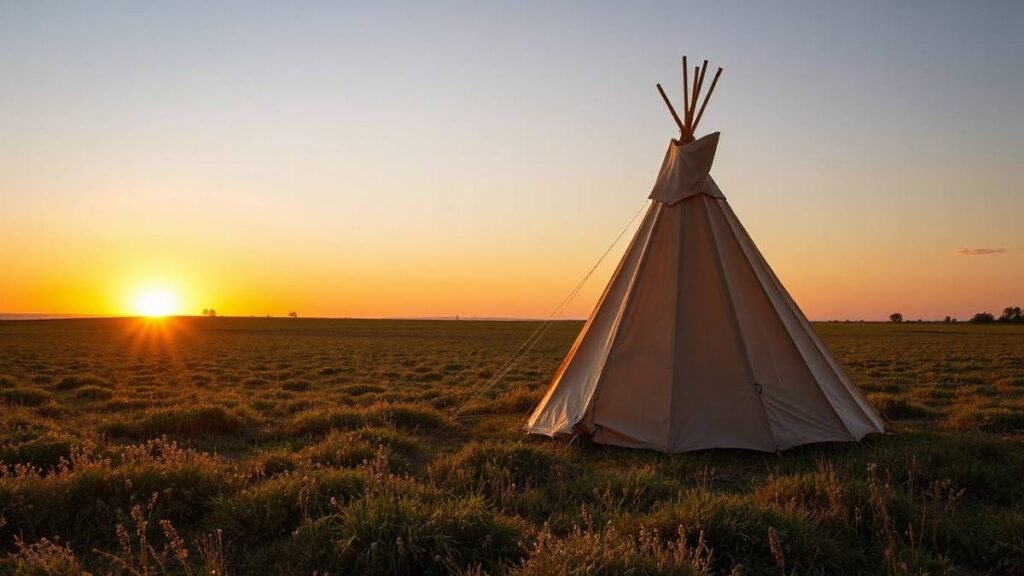
Teepee tents are good for camping if you want a roomy, easy-to-pitch shelter with a single pole and a high ceiling, especially for casual, fair-weather trips. They are less ideal in strong wind, heavy rain or on rocky ground, and some models need stakes at every corner. Compare current teepee-style tents below, then use this guide to decide whether one fits your camping style.


As an Amazon Associate we may earn from qualifying purchases. The products above are my picks from Amazon search results for this topic, not a verified sales ranking. Prices change often, so use the button to see the current offer. For deals around Black Friday and Cyber Monday, see the Black Friday camping gear hub.
How a teepee tent works
A teepee tent, or pyramid tent, is a cone- or pyramid-shaped shelter held up by a central pole or a small frame. The fabric slopes steeply from the peak to the ground, which sheds rain and gives a roomy interior at the center. Many models are floorless, while others include a sewn-in floor or a removable inner tent. Because there are few poles, setup is quick, and because the design is simple, it also packs fairly small for its capacity.
The shape is old and effective. Variations include the bell tent, the hot tent for use with a stove, and modern ultralight pyramid tents used by backpackers. The main differences are materials, size and whether the tent is floorless.
Advantages of teepee tents
- Simple setup. One central pole and a ring of stakes pitch many models in minutes.
- Headroom. A tall center gives standing room and a feeling of space.
- Good for groups. A large teepee can sleep several people around the pole.
- Shedding rain. The steep sides shed rain well when properly pitched.
- Packability. Few poles and light fabric can mean a compact bundle.
- Stove compatibility. Some floorless models are designed for use with a stove jack, which makes them popular for cold-weather trips.
Disadvantages to consider
- Wasted corner space. The sloped walls reduce usable floor area, especially near the edges.
- Center pole in the way. The pole sits in the middle of the floor, which affects how you arrange beds.
- Wind. Without proper staking, some designs flap or collapse in strong wind. Others handle wind well if anchored correctly.
- Ground issues. Many need stakes, which are hard to place in rocky or frozen ground.
- Floorless designs. A floorless tent lets in insects and moisture unless you add a ground sheet or inner tent.
- Condensation. Single-wall designs can drip in damp weather without ventilation.
Who they suit
| Camper | Fit |
|---|---|
| Family on a casual weekend | Good for fair-weather trips, easy and roomy |
| Group or scout camp | Good for sleeping several people in one space |
| Hot tent winter camper | Good with a safe stove setup and floorless design |
| Ultralight backpacker | Good with a modern pyramid shelter and trekking pole |
| Camper in rocky or sandy ground | Poor, because staking is difficult |
| Camper in frequent high winds | Depends on the design and anchoring |
What to look for when buying
- Floor. Decide whether you want a sewn-in floor, a removable one or a floorless design.
- Ventilation. Look for a top vent and bottom vents to reduce condensation.
- Pole type. A center pole, an A-frame or an external frame each have trade-offs.
- Fabric. Polyester and ripstop nylon are common. Canvas is heavier but durable.
- Weight and packed size. Important if you hike or have limited storage.
- Door design. A zippered door with a mesh screen helps in bug season.
- Stove jack. Only relevant if you plan to use a stove safely.
Setting up a teepee tent properly
- Choose a flat, cleared site with good drainage and no overhanging dead branches.
- Lay out the tent and stake the corners first, pulling them taut.
- Insert the center pole and raise the peak while a helper steadies it.
- Stake out any remaining anchor points and guy lines.
- Adjust tension and open the vents.
Practice at home, because a poor pitch causes sagging and flapping. If you camp in wind, face the lowest part of the tent into the wind and add guy lines.
Weather and condensation
Teepee tents shed rain well, but they can still get damp inside. Use ventilation, avoid cooking inside and keep wet items out. In cold weather, condensation can freeze on the inside walls, so brush frost off before it melts. In strong wind, take extra care with the stakes. If a storm is severe, take the tent down or move to a safer shelter. Our guide on camping in a tent during a thunderstorm covers lightning safety.
Cooking and heating safety
Never use a stove, heater or charcoal inside a tent that is not specifically designed and rated for it, because of fire and carbon monoxide risk. If you use a stove in a hot tent, follow the manufacturer’s instructions exactly, use a carbon monoxide alarm and ventilate well. Keep a safe distance between the stove and the fabric, and never leave it unattended. For most campers, the safest approach is to cook outside and use warm sleeping gear instead of tent heaters.
Teepee, bell and pyramid tents compared
These terms overlap, so it helps to sort them out. A teepee tent generally means a cone-shaped tent with a single pole, sometimes with a floor, aimed at casual campers. A pyramid tent has four sides and often a single center pole, and is popular among backpackers and hot tent campers. A bell tent is a larger round canvas tent with a center pole, often used for glamping and long stays. All three share the same advantage, which is a tall center and simple structure, and the same disadvantage, which is wasted space near the walls.
When shopping, read the specifications rather than relying on the name, since sellers use the terms loosely. Check the floor type, the pole style, the fabric and the capacity, and then decide which fits your trip.
Ground sheets, floors and bugs
Many teepee-style tents come without a floor, which keeps weight down and lets you use a stove, but it also lets bugs and moisture in. If you camp in mosquito or tick country, choose a model with a sewn-in floor or an inner tent. If you use a floorless tent, a groundsheet helps keep moisture and dirt away from your sleeping gear. Make sure the groundsheet is slightly smaller than the tent footprint so rain runs off the tent and not underneath it. Some campers use a sheet of lightweight polyethylene or a purpose-made footprint, and tuck the edges so water does not pool. Our guide on what to put under a tent goes into more detail.
Packing and carrying a teepee tent
Packed size depends on the fabric. A lightweight polyester or nylon teepee can be small enough to carry in a backpack, while a canvas bell tent is heavy and bulky and meant for car camping. If you plan to hike, check the weight and think about the center pole, which can be long. Some pole sections break down into short lengths, while others need an adjustable trekking pole or a long strap. A tent that is difficult to carry will end up staying at home, so be honest about how you will transport it.
Common mistakes with teepee tents
- Pitching on rocky or hard ground without a plan for staking
- Skipping the guy lines in wind
- Ignoring ventilation and getting soaked with condensation
- Using a stove in a tent that is not designed for it
- Assuming the capacity number leaves comfortable space
- Choosing a floorless tent without a bug plan
Most of these mistakes are easy to avoid with a little planning and a practice pitch at home.
Care and storage
Dry the tent fully before storage, shake out dirt and store it loosely in a breathable bag. Fabric damage often comes from damp storage or UV exposure, so avoid leaving the tent standing in direct sunlight for days. Our guide on washing a camping tent explains how to clean it without damaging coatings. Check the center pole and stake loops for wear before each trip.
Our recommendation
If you want a roomy, fast-pitching tent for fair-weather camping, a teepee tent is worth considering. Choose one with ventilation, a floor or inner tent if bugs are a problem, and a pole you can transport. Learn the pitch, use all the stakes and guy lines and respect its limits in wind and rain. If you plan to buy on sale, see our Black Friday camping gear hub, and use the button in the table to check the current Amazon offer. For broader tent advice, read the best camping tents.
A simple pre-trip test
Teepee tents are simple, but their performance depends heavily on how well they are pitched, so a short test at home pays off. Set the tent up in your yard or a park, using every stake and guy line. Walk around it and check that the fabric is taut and the pole is vertical. Look at how the door opens and closes, how the vents work and where you would place your sleeping pads around the center pole. If you plan to use a groundsheet or inner tent, install it now. Spend a night in the tent if you can, which will reveal condensation, noise and comfort issues before you are far from home. Take notes on what you would change, such as bringing extra stakes, a different pad layout or a small broom for the floor, so that your first real trip goes smoothly.
How teepee tents hold up over time
Longevity depends on materials and care. Polyester resists sun damage better than nylon, so it is a common choice for tents that stay pitched for long periods. Canvas lasts a very long time when cared for, but it is heavy and needs seasoning and drying to prevent mildew. Look at the stitching at stress points around the peak and the door, and check the pole sections for bends. Replace lost or bent stakes before a trip, and keep a repair kit with fabric tape and spare guy line. With reasonable care, a good tent can serve for many seasons of family camping.
FAQ
Are teepee tents waterproof?
Many are water-resistant and shed rain well when pitched correctly, but waterproofing varies by fabric and seams.
Do teepee tents handle wind?
Some do if staked and guyed out, but poor pitching can lead to flapping or collapse in strong wind.
Can I use a stove in a teepee tent?
Only in tents designed for it, with a proper stove jack and a safe setup, following the manufacturer’s directions and carbon monoxide precautions.
Do I need a footprint?
If the tent has no sewn-in floor, use a groundsheet or a bug-proof inner tent for comfort and protection.
How many people fit in a teepee tent?
Capacity varies by size. The sloped walls reduce usable space compared with a cabin tent of the same listed capacity.
Related guides
- Is a clam screen tent any good for camping in
- What are the best camping tents
- Best type of tent with stove for camping