
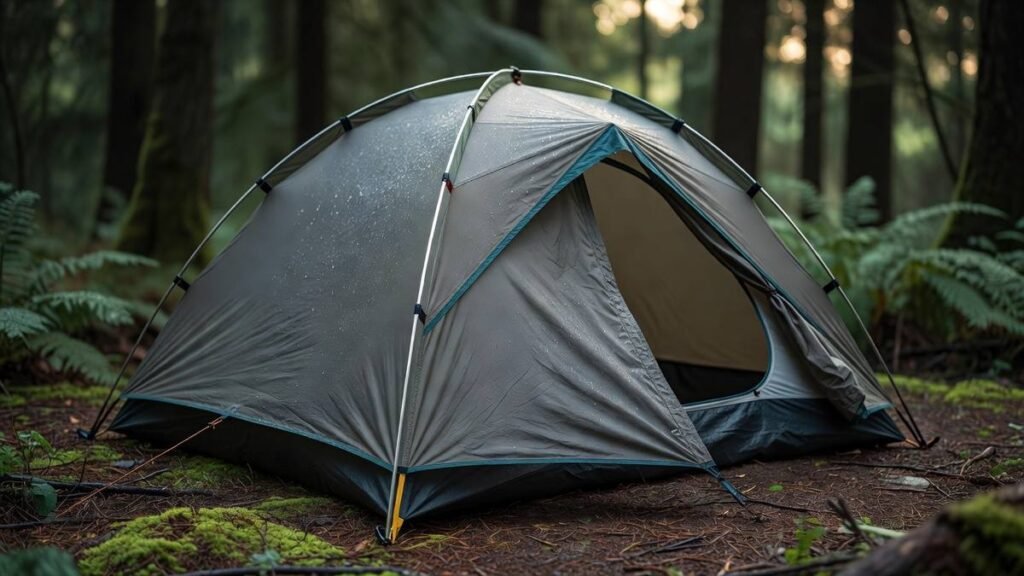
Quick answer: Look at five things: capacity, season rating, floor dimensions and wall shape, doors and vestibules, and whether the tent is freestanding. REI explains that the seasonal rating is the only spec that directly indicates strength, and that capacity has no industry standard, so you must compare exact dimensions.
Tent listings are full of numbers, and most of them matter less than they look. Denier, peak height and packed weight all have caveats.
This guide walks through the specs in the order that affects a tent camper most.
Related: tent camping gear checklist, what size tent you need and camping without a rain fly.
Season Rating
| Rating | Built for, per REI | Tradeoff |
|---|---|---|
| 3-season | Spring, summer, early fall; downpours and light snow | Not for sustained storms, strong wind or heavy snow |
| Extended (3-4 or 3+) | Early spring, late fall, exposed high-elevation trips | Fabric panels over mesh and extra poles add weight |
| 4-season | Heavy snow and strong wind | More poles, heavier fabric, can feel stuffy in mild weather |
REI notes that the seasonal rating is the only spec that directly indicates strength: a 4-season tent is stronger than a 3-season tent.
Capacity and Floor
There is no industry standard for per-person size, so compare the exact floor dimensions. Size up if you are large, want room or bring a pet. Peak height is measured at one spot; steeper walls make a tent feel bigger.
Freestanding, Doors and Vestibules
Freestanding tents stand without stakes, set up faster and can be moved easily. Non-freestanding tents can be lighter. Ideally every sleeper has a door, and vestibules give sheltered gear storage.
Fabric and Poles
Denier measures a yarn weight in grams per 9,000 meters, and higher numbers generally mean a more rugged fabric. REI says to compare denier only between identical fabrics, since other properties affect strength more. Poles are typically high-strength, low-weight aluminum.
Honest Limits
This guide is built on REI buying advice and does not test specific tents. Brand quality and warranty vary, so read the product manual and return policy before buying.
Frequently Asked Questions
What is the most important tent spec?
The season rating, because it is the only spec that directly indicates strength.
Is a 3-season tent enough?
For spring, summer and early fall, yes, per REI.
What is a 3-4 season tent?
An extended-season tent with fabric panels over mesh and extra poles.
Does denier tell me how strong a tent is?
Only when comparing identical fabrics.
Is freestanding better?
It sets up faster and moves easily. Non-freestanding can be lighter.
How much vestibule do I need?
Enough for packs and boots. Oversized vestibules add weight and cost.
Is peak height a good guide to headroom?
Not on its own. Wall shape matters more.
What does minimum trail weight include?
Only the tent body, rainfly and poles.
Do I need a footprint?
It is sold separately and protects the floor; see our footprint guide.
Should I size up?
If you are larger, want room or bring a pet.
Bottom Line
Season rating, capacity, floor shape, doors and freestanding design matter most.
Treat denier and peak height as secondary and compare exact dimensions.