
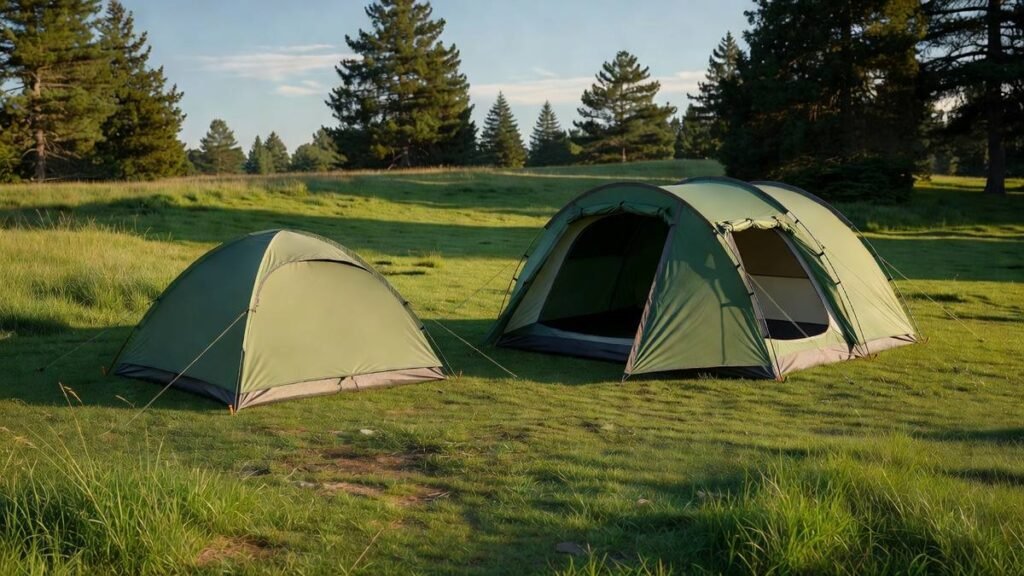
Quick answer: Pick a tent rated for one more person than will sleep in it. REI explains that no industry standard defines how much space each person gets, so a 2-person tent from one brand can be tighter than another. Compare the exact floor dimensions, and size up if you are tall, bring a pet or want room for gear.
The number in a tent name is a sleeping count, not a comfort rating. Two adults fit in a 2-person tent with their shoulders touching and their packs outside.
This guide explains what the capacity number means, how to read floor dimensions and peak height, and when to size up.
Related: tent camping gear checklist, what to put under a tent and sleeping pad placement.
What the Capacity Number Means
REI says the number in a tent name usually indicates capacity, so a Half Dome 2 sleeps two. Because no industry standard defines per-person size, REI advises comparing exact dimensions between tents you are considering. Some tents are only 1 to 2 inches wider or longer than average, which is not much extra room.
A plus sign in a name, such as a 3+, signals extra room for one more person, gear or a pet.
When to Size Up
| Situation | REI guidance |
|---|---|
| You are larger or taller than average | Size up, for example a 3-person tent for two |
| You bring a dog | Size up |
| You want gear inside | Size up, or choose a larger vestibule |
| Winter trips | REI winter guidance also suggests room for one extra person |
Reading Floor Dimensions and Peak Height
Floor dimensions are listed as length and width, often with head and foot widths, such as 85 by 51/43 inches. Tapered floors add shoulder room while saving weight. Floor area in square feet helps compare tents but does not show how the space is laid out.
Peak height is measured at one spot. REI says wall shape matters more, because steeper walls feel more open, and a test pitch is the better check.
Doors and Vestibules
Ideally every sleeper has a door. A single door on a multi-person tent saves weight and cost but means climbing over a partner. Vestibules give sheltered gear storage, so a bigger vestibule can let you choose a smaller sleeping area.
Honest Limits
Capacity ratings are set by each brand, so this guide cannot tell you that a specific tent fits you. Check the floor dimensions against your height and gear. We have not tested tents.
Frequently Asked Questions
What does a 2-person tent mean?
It sleeps two people side by side, usually with no room for packs. Sizes vary by brand.
Should I buy a bigger tent than I need?
REI suggests sizing up if you are larger, want more room or bring a pet.
What does the plus sign mean in a tent name?
Extra room for one more person, gear or a pet.
Is peak height important?
Less than wall shape. Steeper walls feel roomier at the same peak height.
How do I compare two tents?
Compare exact floor dimensions, since there is no per-person standard.
Does a bigger tent weigh more?
Generally yes, which matters for backpacking more than car camping.
Where does my gear go in a small tent?
In the vestibule, or inside if you sized up.
What size for two adults and a dog?
REI suggests sizing up, so a 3-person tent.
Do I need a door each?
It is ideal, but one door saves weight and cost.
Should I test pitch before a trip?
Yes. It checks headroom, layout and that all parts are present.
Bottom Line
The capacity number is a sleeping count with no industry standard behind it. Compare floor dimensions and size up for comfort, gear or a dog.
Check wall shape, doors and vestibule size before you buy.
Sources: REI, How to Choose a Backpacking Tent; REI, Winter Camping Basics.