
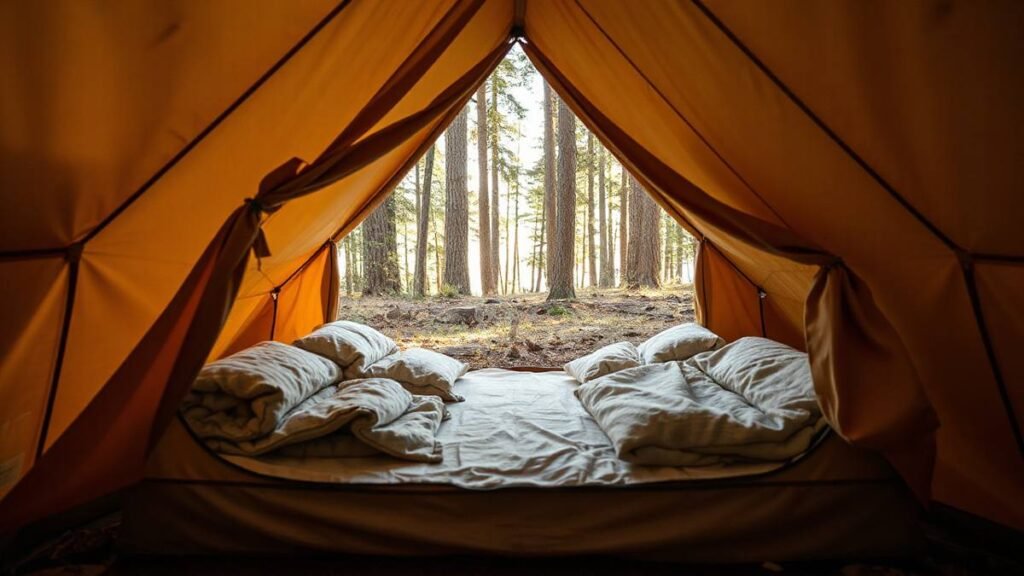
The best tent for camping with an infant is a roomy, well-ventilated family tent with a full rainfly, a floor that stays dry and enough space for a safe sleep setup beside you. Choose a tent one or two sizes larger than you think you need, with two doors, good mesh and easy setup. Compare the family tents below, then follow the safety and comfort tips in this guide.


As an Amazon Associate we may earn from qualifying purchases. The products above are my picks from Amazon search results for this topic, not a verified sales ranking. Prices change often, so use the button to see the current offer. For deals around Black Friday and Cyber Monday, see the Black Friday camping gear hub.
Why camping with a baby changes your tent choice
A tent for a baby has to do everything a normal tent does and a bit more. It has to stay dry, stay at a comfortable temperature and keep out insects, while leaving room for a safe sleeping space, a diaper changing area and gear that grows quickly with every extra person. Parents also need to get in and out quietly at night, and they need a setup they can manage with one hand while holding a child.
This guide focuses on the tent. For medical questions, such as safe sleep, temperature and what is appropriate for your child’s age, ask your pediatrician, who can give guidance specific to your baby.
Size and layout
Families with infants usually need much more space than the capacity numbers suggest. A portable crib or travel bassinet, a sleeping pad for each adult, a diaper bag and a changing mat take up a lot of floor. As a rule, choose a tent rated for at least four to six people for two adults and a baby. A taller ceiling is helpful so that adults can stand while changing and dressing the baby. Look for a layout that has room beside the adults’ sleeping area for the baby’s bed, so you can reach the baby easily at night.
A room divider or screen porch can also be useful. A divider gives you a separate area to change or to let the baby nap while you talk quietly, and a screen porch gives you somewhere to sit when the baby sleeps in the tent.
Ventilation and temperature control
Babies are sensitive to heat and cold, and a closed tent can become hot in summer sun or cold on a clear night. Choose a tent with large mesh panels and vents you can open or close, so that you can adjust airflow through the night. A rainfly that you can roll back lets you air the tent in good weather. Pitch the tent in the shade in hot weather, and avoid placing it beside a campfire. Keep an eye on the temperature and dress the baby in layers you can add or remove, following your pediatrician’s guidance on what is safe.
Weather protection
Rain, wind and dew are more stressful with a baby, so pick a tent with a full-coverage rainfly, taped seams and a bathtub-style floor that keeps water out. Make sure the tent is staked out securely and the fly is tight. Check the forecast carefully, and have a backup plan, such as a nearby cabin or going home early, if the weather turns. A tent that holds up in wind and rain lets everybody sleep better.
Safe sleep and setup inside the tent
- Use a firm, flat sleep surface made for babies, such as a portable crib or bassinet, as recommended by your pediatrician.
- Keep loose blankets, pillows and soft items out of the baby’s sleep area.
- Keep the baby’s sleeping area away from tent walls, cords, zippers and heaters.
- Never use a stove, heater or charcoal inside the tent, because of fire and carbon monoxide risk.
- Make sure that cords, stakes and guy lines are visible, so that no one trips on them in the dark.
Safe sleep guidelines come from pediatric health authorities, so check their current recommendations before your trip.
Features that make camping with a baby easier
- Two doors, so you can step out quietly without climbing over a sleeping partner
- A large vestibule or porch for strollers, wet shoes and the diaper bag
- Interior pockets and a gear loft for small items
- Dark interior fabric that blocks early morning light
- Easy setup, which matters when you have a fussy baby
Setup tips
Pitch the tent early, before the baby is tired and hungry. Practice setting up at home, so the process is fast. Choose a site that is flat, free of roots and rocks and away from busy paths. Keep the baby in a safe, shaded spot while you pitch, ideally with another adult. Put the footprint down first, stake the tent firmly and set up the baby’s sleeping area before nightfall. Our guide on what to put under a tent explains ground protection.
What to bring besides the tent
Pack a portable crib or bassinet, a thicker pad for the adults, layers for temperature swings, a small battery lantern, wipes and a tarp for a dry changing area. Bring a first-aid kit, insect protection that is safe for babies and a plan for water, food and cleanup. See our tent camping checklist for general gear.
Choosing a campsite with a baby
The best campsites for families with infants are close to restrooms and water, relatively quiet and easy to reach from the car, so you do not have to carry a baby and heavy gear far. Developed campgrounds with drive-up sites are ideal for a first trip. Look for level ground, shade for the heat of the day and good drainage. Avoid sites near steep drops, fast water or busy roads. Check whether the campground has any restrictions on tents and how it handles wildlife and food storage, and plan food and diapers accordingly. If you camp in bear country, follow local rules on storing food and scented items, including baby food and diapers.
Packing and routines
Babies thrive on routine, and keeping it as normal as possible helps everyone sleep. Bring the usual blanket, sleep sack or toy, follow the usual bedtime sequence and keep the tent calm and dim in the evening. Pack more clothes and diapers than you think you need, because camping is messy. Bring a waterproof mat for changing and a bag for dirty items, and plan how you will dispose of waste according to campground rules. A small lantern with a warm, low light helps with nighttime feedings and changes without waking everyone.
Keep a simple medical kit close at hand, with any medications your pediatrician recommends, a thermometer and contact information for the nearest urgent care. Know where the closest hospital is and check cell service at the site.
Daytime comfort and sun protection
The tent can be a refuge from sun, wind and insects during the day. Choose a shaded pitch or use a tarp or canopy to create a shaded area for the baby. Pitch the tent so that the door faces away from the afternoon sun and wind. A pop-up screen house outside the tent is useful for bug-free meals and naps. Keep the baby out of direct sun and use protective clothing and shade in line with your pediatrician’s advice. Our guide to screen tents for camping explains how a screen shelter can help.
Handling night waking and noise
Tents do not block sound, so every cry carries to neighboring campsites. Choose a site away from the busiest areas, and bring a white noise machine or phone app to mask sounds. Keep the tent zippers quiet by opening them slowly. Plan for an early start, because campgrounds wake with the sun. If you have a light sleeper, consider a dark tent or a few simple blackout measures. It can also help to practice a night in the backyard first, which shows how the baby sleeps in the tent without the pressure of a long drive and unfamiliar campsite.
Trial run at home
A backyard trial run is the single best preparation for camping with a baby. Set up the tent, try your sleep arrangement and see how the baby reacts. You will quickly learn what you forgot, how the baby handles the tent and how much space you need. It also lets you test the tent for leaks and noise, and it gives you the option to retreat inside if things do not go well. If the practice night works, you will feel much more confident about your first real trip.
Our recommendation
Choose a spacious family tent with a full rainfly, good ventilation and two doors, in a size at least four to six people. Prioritize a safe, flat sleep setup, easy access and comfortable temperature control. Keep the first trip short and close to home, and follow your pediatrician’s guidance. If you plan to shop sale season, see our Black Friday camping gear hub, and use the table button to check the current Amazon offer.
What to do if the weather turns
With an infant, a flexible plan matters more than sticking to the original itinerary. Check the forecast daily and before bed. If heavy rain, high winds or extreme heat or cold are expected, consider moving to a cabin, a lodge or going home. Know the nearest shelter, such as a restroom building or your car, and keep your keys and essentials handy. Cutting a trip short is a sensible decision, not a failure, and it protects everyone’s comfort and safety. Choosing a tent with solid weather protection simply widens the range of conditions you can enjoy.
FAQ
What size tent do I need for camping with a baby?
Most parents choose a tent for four to six people so there is space for a portable crib, gear and a changing area.
Is it safe to camp with an infant?
Many families do it with planning, but check with your pediatrician about age, weather and sleep safety first.
How do I keep a baby warm in a tent?
Use layers, a suitable sleeping setup and a tent that blocks wind, and follow your pediatrician’s guidance on safe sleep and temperature.
Should I use a heater in a tent?
No, not inside the tent. Fuel heaters carry fire and carbon monoxide risks. Use appropriate clothing and bedding instead.
Is a bigger tent better for babies?
Usually yes, because it provides space for a crib, gear and parents, though larger tents are harder to heat in cold weather.
Related guides
- Whats the best tent for family camping
- Best rated large family camping tents
- What are the best camping tents