
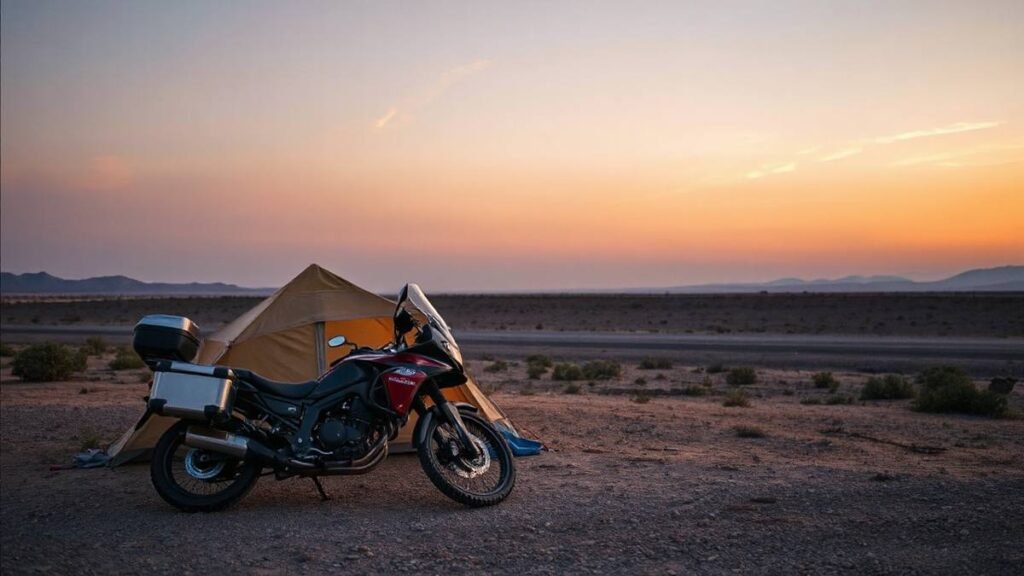
The best tent for motorcycle camping packs small, weighs little, pitches fast and stands up to wind and rain. Look for a packed length that fits your luggage, a freestanding or quick-pitch design and a weight of roughly two to five pounds for one or two riders. Compare the lightweight tents below, then use this guide to match one to your bike and style of riding.


As an Amazon Associate we may earn from qualifying purchases. The products above are my picks from Amazon search results for this topic, not a verified sales ranking. Prices change often, so use the button to see the current offer. For deals around Black Friday and Cyber Monday, see the Black Friday camping gear hub.
Why motorcycle camping changes how you choose a tent
Camping from a motorcycle is a game of space and weight. A car camper can throw in a big cabin tent, a cooler and a folding table, but a rider has a few saddlebags, a tail bag or a rack to hold everything. Every item in the load competes with spare clothes, tools, food and rain gear, so the tent must be compact. At the same time, a rider often arrives tired, at the end of a long day in the wind, and wants a tent that goes up quickly and stays up in bad weather.
That combination, small packed size, low weight, quick setup and good weather protection, is the core of what makes a motorcycle tent different from a general camping tent. Everything else is a trade-off.
Packed size matters more than packed weight
For hikers, weight is the main concern. For riders, the packed dimensions are often more important, because the tent has to fit into a specific bag or on a specific rack. A tent that is short and fat may fit in a tail bag, while a long thin tent can be strapped across the passenger seat or to the side of a pannier. Measure your available space before you shop. Many tent listings give packed length and diameter, so compare those numbers with your luggage.
Weight still matters. Heavy loads, especially high and far back, can change a motorcycle’s handling. Keep heavy items low and close to the center of the bike, and treat the tent as a medium-weight item that you place carefully.
Tent types that work well on a bike
Lightweight backpacking tents
These are the most common choice. They pack small and weigh a few pounds, and many are freestanding, which helps when you cannot stake into hard or rocky ground.
Bikepacking and ultralight tents
Designed for cyclists, these are very light and compact. They suit riders who want to travel light and are comfortable with thinner fabrics.
Pop-up and instant tents
Pop-up tents pitch in seconds, but they are often bulky when folded and less wind-resistant. They can work for short trips on a bike with room for a big bag.
Hammock setups
Some riders use hammocks with a rain fly, which pack very small. They need trees, and they do not suit every campsite.
Ease of setup after a long ride
A motorcycle tent should be easy to pitch when you are tired, hungry or racing the sunset. Look for a design with color-coded poles, a short pole set and a simple fly attachment. Freestanding tents let you pitch on gravel, sand or hard ground where stakes will not hold. Practice pitching at home in the dark with a headlamp, because that is probably when you will do it on the road.
Weather protection for riders
Riders feel weather more than car campers do, and a rainy night in a thin tent can ruin the next day’s ride. Choose a tent with a full-coverage rainfly, taped seams and a bathtub floor. Wind is common on open roads and campsites, so look for sturdy poles and guy-line points, and use all the stakes you can. A vestibule is useful for storing helmets, boots and gear out of the rain. Many riders also appreciate a tent with good ventilation, because riding gear can get hot and wet.
Size and capacity for solo and two-up riders
- Solo rider: A one-person tent saves space and weight, but many riders choose a two-person tent for extra room for gear.
- Two-up riders: A two-person tent is the usual choice, and a larger tent adds comfort at the cost of packed size.
- Group trips: Each rider usually brings their own tent, but you can share a larger tent to split weight and gear.
Comparing motorcycle tents
| Feature | What to check |
|---|---|
| Packed size | Fits your bags or rack |
| Weight | Under five pounds for most riders |
| Setup | Quick and simple, ideally freestanding |
| Weather | Full-coverage fly, taped seams |
| Durability | Fabric and pole quality |
| Vestibule | Space for boots and helmets |
Other gear that completes a bike camping kit
A tent is only part of the kit. Pair it with a compact sleeping bag, a small inflatable sleeping pad, a lightweight stove, a headlamp and a compact repair kit. Choose gear that packs small and works together. A compression sack for the sleeping bag and a roll-top dry bag for the tent save space and keep gear dry. Our guide on what camping gear to buy first covers the basics for new campers.
How to pack a tent on a motorcycle
Good packing keeps the bike stable and the tent protected. Take the tent out of its original bag and repack the poles, stakes and fly separately if that makes the bundle smaller or easier to place. Stuff the body into a compression sack to reduce volume. Wrap the bundle in a dry bag or a roll-top bag, because rain and road spray can soak the tent even before you reach the campsite.
Place the tent where it will not interfere with the passenger seat, the exhaust or your ability to move. Many riders strap it across the rear seat or rack, or place it in a tail bag. Keep heavier items low and toward the center of the bike. Check straps after the first few miles, since loads settle and loosen. Never let straps, cords or stakes dangle near wheels, chains or exhaust pipes, where they can melt, tangle or cause a crash.
Choosing a campsite when you ride
Campsite choice affects comfort more on a bike than in a car. You will often arrive late, so know your route and the campground’s check-in hours. Look for sites with level ground, since a sloped site makes it hard to park the bike and sleep. Bring a small board or flat rock for the kickstand on soft ground, and park the bike on firm, level terrain. Consider wind direction, avoid low spots that collect water and keep your bike within sight if possible. If you camp at a developed campground, check whether tent camping is allowed, and look at the quiet hours and fire rules.
At a primitive or backcountry site, follow local rules and leave no trace. Pack out all trash, avoid trampling vegetation and camp on durable surfaces.
Security and gear protection
A tent is not a locker. Take valuables, such as electronics and documents, with you, and lock the bike with a disc lock or chain. Cover the bike if you can, to shield it from rain and curious eyes. At night, bring helmets and riding gear into the vestibule to dry them and keep them safe, but keep fuel and tools out of the tent. Do not store fuel or run stoves inside, because fire and carbon monoxide are serious risks.
Weather tips for riders
Check the forecast before you leave and plan alternatives. Rain on a motorcycle is manageable, but camping in a downpour is more difficult. Carry a lightweight tarp to extend the vestibule or create a dry cooking and gear area. If a storm threatens, set up early, stake the tent securely and move the bike so it does not block your exit. In cold weather, pack a warmer sleeping bag and an insulated pad, because the ground draws heat quickly. In hot weather, choose a shady site and use ventilation.
Mistakes riders often make
- Buying a tent that does not fit the luggage
- Skipping a test pitch before the trip
- Packing the tent damp and letting mildew set in
- Underestimating wind and not using all stakes
- Letting the tent or straps loosen and flap on the road
- Forgetting a repair kit with a pole splint and patch tape
Our recommendation
For most riders, a freestanding, lightweight two-person backpacking tent with a vestibule is a safe all-around choice. It packs small, handles three-season weather and gives space for gear. If you ride solo and prioritize space, a one-person tent works as well, and if you ride two-up, a two-person tent gives enough room. Measure your luggage first, compare packed size and weight, read recent reviews and practice pitching at home. For deal ideas, see our Black Friday camping gear hub and our guide on spotting a real camping deal. Prices change often, so use the button in the table to see the current Amazon offer.
Final checklist before you ride
Before you leave, run through a short checklist. Check that the tent, poles, stakes and fly are all in the bag, and that the bag is dry and secured. Make sure you have a small repair kit and a few extra stakes. Confirm your campsite reservation, the check-in time and the quiet hours. Pack a headlamp where you can reach it without unpacking everything, because you may pitch the tent in the dark. Share your route and plans with someone, and keep your phone charged for navigation and emergencies. A few minutes of preparation turns a tiring arrival into a smooth one, and it lets you enjoy the ride and the campfire instead of fighting your gear.
FAQ
How small can a motorcycle tent pack?
Many lightweight backpacking tents pack to a length of about 15 to 20 inches and a diameter of 5 to 8 inches, but sizes vary. Check the packed dimensions before you buy.
Is a freestanding tent better for motorcycle camping?
It is often easier on hard or rocky ground, but non-freestanding tents can be lighter and smaller.
Can I use a hammock instead of a tent?
Some riders do, but you need suitable trees and a rain fly, and cold nights require insulation under the hammock.
How heavy should a motorcycle tent be?
Most riders look for a tent weighing between two and five pounds, but the right weight depends on your bike and luggage.
Should I carry a footprint?
A footprint protects the floor but adds weight and bulk, so many riders use a thin groundsheet or skip it.
Related guides
- Best light camping 2 tent vestibule
- Best two person tent for camping cheap
- What are the best camping tents