
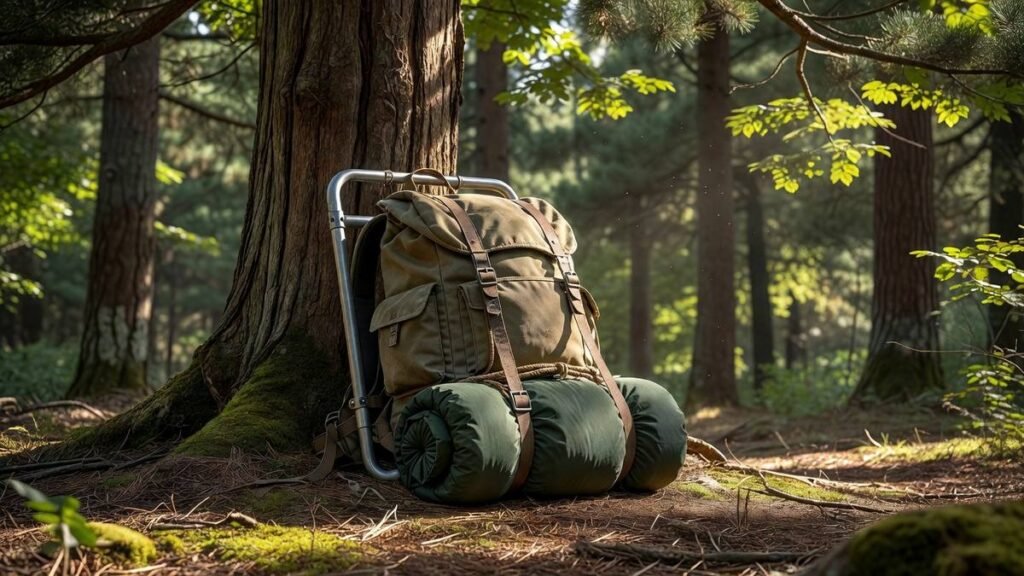
Quick answer: Put the dense, heavy items high and close to the frame, bulky soft items in the bag, and the sleeping bag lashed to the frame below the bag. REI describes external frames as suited to heavy or irregular loads with good ventilation, and the hipbelt still carries most of the weight, so set it on the hip bones first.
External frames are rarer now but still used for heavy loads and trail work. They pack differently from internal frames because the frame is outside and gear hangs from it.
This guide combines REI frame guidance with the standard external-frame layout.
Related: tent camping gear checklist, packing an internal frame pack and frame types compared.
Layout
| Place | What |
|---|---|
| Upper bag, against the frame | Food, stove, water: the dense items |
| Lower bag | Clothes and soft bulky gear |
| Below the bag, lashed to the frame | Sleeping bag in a waterproof sack, then pad |
| Top of frame or lid | Rain gear and first aid for fast access |
| Side pockets | Water bottles, snacks, map |
Steps
- Lash the sleeping bag to the lower frame first, tight and centered.
- Fill the lower bag with soft gear.
- Load dense items in the upper bag, close to the frame.
- Put rain gear and first aid on top.
- Fit: hipbelt on the hip bones, shoulder straps snug, load lifters about 45 degrees, per REI.
On the Trail
A high, dense load can feel tippy on rough ground, so lower it slightly for scrambling. Check lashings at breaks. REI notes that external frames ventilate well, which is a plus in heat.
Honest Limits
REI describes external frames briefly and does not give a packing method, so the layout here is the standard approach for these packs. Follow your pack manual.
Frequently Asked Questions
Where do heavy items go in an external frame pack?
High and close to the frame.
Where does the sleeping bag go?
Lashed to the frame below the bag, in a waterproof sack.
Why are external frames used?
Heavy or irregular loads and good ventilation, per REI.
Does the hipbelt still matter?
Yes. It carries most of the load.
Where does the tent go?
Lashed to the frame or in the lower bag.
Are external frames tippy?
A high load can be on rough ground. Lower it for scrambling.
What about water bottles?
Side pockets.
Can I carry a cooler or odd gear?
That is what the frame suits.
How do I check fit?
Load about 15 lb and adjust from the hipbelt up.
Are they still made?
Yes, though internal frames are far more common.
Bottom Line
Dense gear high against the frame, sleeping bag lashed below, soft gear in the bag.
Set the hipbelt first.
Sources: REI, How to Choose a Backpack; REI, Backpack Fit: Torso and Hip Size.