
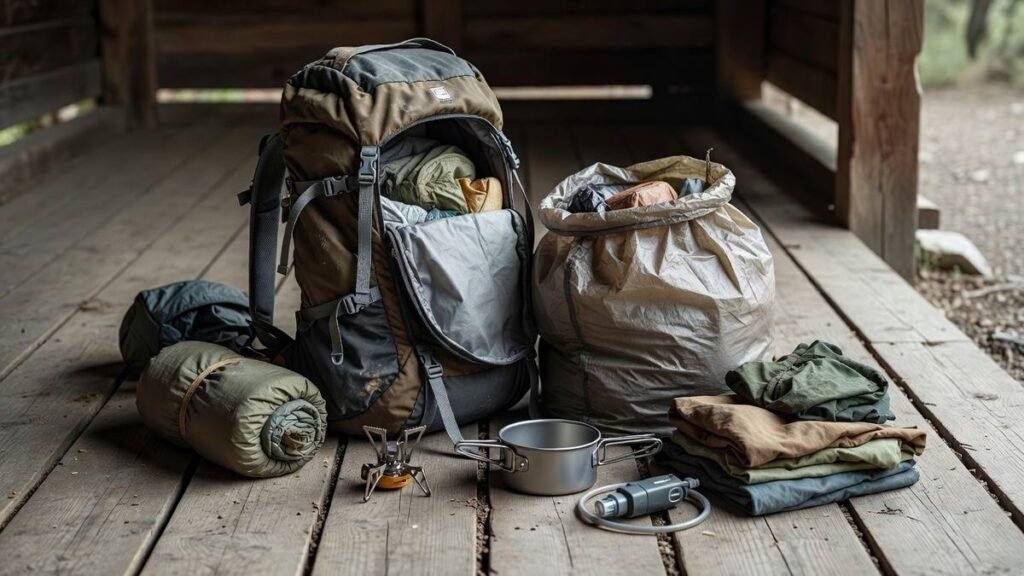
Quick answer: Use the same zones as any backpacking trip, with more discipline. REI puts bulky sleep gear at the bottom, dense items such as food, stove and water in the core against your back, bulky trail essentials and rain gear on top, and small items in pockets. On a thru-hike, food is the heaviest variable, so the core gets repacked after every resupply and the outside stays nearly empty.
A thru-hiker packs and unpacks the same bag hundreds of times. Consistency matters more than cleverness: the same item in the same place every day.
This guide applies the REI zone method to a long trail.
Related: tent camping gear checklist, the zone method and how much a pack should weigh.
Zones on a Long Trail
| Zone | Thru-hike contents |
|---|---|
| Bottom | Sleeping bag or quilt, sleep clothes |
| Core | Food bag, stove, water; heaviest after resupply, so repack it then |
| Top | Rain jacket, insulated jacket, first aid, water filter, toilet kit |
| Pockets | Snacks for the day, phone, map, sunscreen, headlamp |
| Outside | Only poles or a pad; REI warns outside gear snags and scrapes |
A Daily Routine
- Pack the bag in the same order every morning.
- Keep the day food and water reachable without unpacking.
- After resupply, move the heaviest food to the core against your back and centered, per REI.
- Store fuel upright below food with the cap tight.
- Tighten compression straps so the load does not shift as food shrinks.
Weight Reality
REI gives no weight limit; it says a well-loaded pack feels balanced on the hips and does not sway. Water and food dominate thru-hike weight, so carry water to the next reliable source and plan resupplies to keep the food bag small.
Honest Limits
Thru-hiking strategies vary widely, and ultralight setups skip some zones. This is the standard framework, not a complete trail guide.
Frequently Asked Questions
Is thru-hike packing different from weekend packing?
Same zones, more consistency and less outside gear.
Where does the food bag go?
Core, against the back and centered.
Where does the quilt go?
Bottom zone.
What stays on top?
Rain gear, insulation, first aid, filter, toilet kit.
How do I handle resupply weight?
Repack the core so the heavy food sits against your back.
Should I hang gear outside?
Minimal; REI says it snags and scrapes.
What is the heaviest item?
Usually water, then food.
How do I keep the load from shifting?
Compression straps, tightened as food shrinks.
Where does the bear canister go?
Core, per REI.
Where does fuel go?
Upright, below food, cap tight.
Bottom Line
Same zones, repacked after every resupply.
Keep the outside empty and the routine identical each day.
Sources: REI, How to Pack a Backpack; REI, How to Choose a Backpack; NPS, Grand Teton, Safety in Bear Country.