
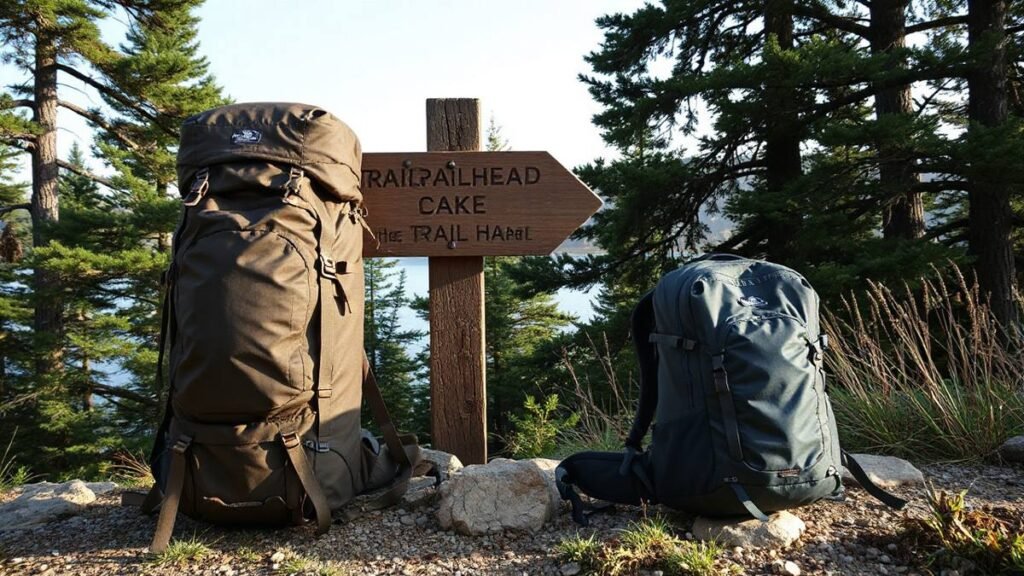
Backpacking is harder than day hiking because you carry all your gear, including shelter, sleeping system, food and water, for more than one day. The pack is heavier, the planning is more involved and the margin for error is smaller. With some training and good preparation, most reasonably fit hikers can handle a first overnight trip. This guide compares the two in detail and helps you build up to backpacking.
The core difference
A day hike ends at the car, with a hot meal and a bed. Backpacking means that you sleep outside and carry everything you need. That changes the physical effort, the planning, the safety needs and the skills you must use. The trails may be similar, but the experience is different because you carry a heavier load for more hours and have fewer chances to fix a mistake.
Physical effort: the weight on your back
A day pack usually weighs under 15 pounds, while a backpacking pack, loaded with a tent, sleeping bag, pad, stove, food and water, often weighs 25 to 40 pounds. That extra weight raises your heart rate, taxes your legs and shoulders, and slows you on hills. Many backpackers say a mile with a full pack feels like one and a half miles without. Good fit helps, and our guide on how to fit a hiking backpack correctly explains how to carry weight on your hips.
Distance, pace and elevation
Backpackers cover fewer miles per day than day hikers, often 8 to 15 miles on moderate terrain, because of the weight and the need to set up camp. Elevation gain also feels harder with a heavy pack. Plan short days at first, such as 4 to 8 miles, and add distance as you build fitness. Remember that you will cover the same distance again on the way out if you plan an out-and-back route.
Planning and logistics
- Route and permits. Many areas require permits or reservations for overnight stays.
- Water. You must know where to refill and how to treat water.
- Food. You need to plan meals and snacks for every day, and store food safely.
- Campsites. Some trails restrict camping to designated sites.
- Weather. You must prepare for changes overnight.
Gear and the learning curve
Backpacking needs more gear than day hiking, such as a tent, sleeping bag, pad, stove, cookware, filter and a larger pack. Learning to use this gear takes time. You must pitch a tent in the dark, cook on a small stove and pack everything again in the morning. Practice in your yard first. Our guide on how to pack a backpack for overnight hiking and the checklist from REI Co-op help you get started.
Skills you need
- Navigation with a map and compass or a GPS.
- Pitching and striking a tent.
- Cooking and cleaning in the backcountry.
- Filtering water.
- Basic first aid.
- Leave No Trace practices.
You can build these skills on short trips close to home.
Risk and safety differences
On a day hike, help is often within hours. On a backpacking trip, you may be a day or more from the road, with limited phone signal. Injuries, bad weather or getting lost are more serious. Carry the ten essentials, tell someone your plan and check the forecast. Learn when to turn around. The risk is manageable with preparation, but it is a step up from a day hike.
Comparing hiking and backpacking at a glance
| Factor | Day hiking | Backpacking |
|---|---|---|
| Pack weight | Under about 15 lb | 25 to 40 lb or more |
| Typical distance | 5 to 12 miles | 6 to 15 miles per day |
| Planning | Light | Detailed |
| Gear | Basic | Full camping kit |
| Risk | Lower | Higher |
| Reward | Day outdoors | Immersion and solitude |
Training for backpacking
You do not need to be an athlete, but some conditioning helps. Walk regularly with a loaded pack, starting light and increasing weight over several weeks. Add hills or stairs for leg strength, and do core and back exercises for stability. Practice your pack adjustment so you know how to shift weight. Even a month of regular training makes your first trip easier.
Cutting weight to make backpacking easier
Every pound you remove makes the trip easier. Choose lighter versions of the big three: pack, shelter and sleep system. Repackage food, leave duplicate items at home and share gear with a partner. Our guide on how to make a hiking backpack lighter lists practical ways to reduce weight without losing safety. But don’t sacrifice essential items to save a few ounces.
A path from hiking to your first backpacking trip
- Build up to long day hikes of 8 to 10 miles.
- Practice with a loaded pack on day hikes.
- Camp in your yard or a campground near your car.
- Take a one-night trip a few miles from the trailhead.
- Gradually extend the distance and duration.
Our guide to how to start hiking and backpacking goes into more detail.
Is backpacking worth the extra effort?
For many people, yes. Backpacking gives access to places you cannot reach in a day, quiet evenings under the stars and a sense of self-reliance. The extra effort rewards you with views, solitude and memories. If you are not sure, try a single easy overnight and see how you feel. You might discover that the extra effort is part of the appeal.
Mental challenges of backpacking
Backpacking tests your mind as well as your legs. Long days, tired muscles and uncertain weather can wear down your mood. You must also handle small problems, such as a blister, a missed turn or a wet tent, without a quick escape. Many backpackers find that a positive attitude, a flexible plan and good company make a huge difference. Take regular breaks, eat and drink before you feel depleted, and set modest goals. Knowing that you can turn back or shorten the trip takes pressure off.
Food and water: the hidden workload
On a day hike, you carry lunch and a bottle. On a backpacking trip, you must plan every meal, carry the fuel to cook it and treat water along the way. Food adds weight, about 1.5 to 2 pounds per person per day, and water can add several pounds between sources. Learning to estimate water needs, to filter or treat water and to store food safely takes practice. Bear canisters or hanging systems may be required in some areas, so check the rules for your route.
Sleep and recovery
A good night’s sleep makes a big difference to how you feel on day two. A comfortable pad, a warm sleeping bag and a quiet campsite help, but sleeping outdoors can still be restless at first. Use earplugs and an eye mask if you need them, and test your sleep system at home. Stretch in the evening, elevate your feet and eat a good dinner. Recovery is part of the effort, and it improves with experience.
Weather and seasons
Weather can change quickly, and you have to cope with it in a tent. Check the forecast before you go, and pack layers for cold and rain. Summer thunderstorms, winter cold and shoulder-season surprises all affect how hard the trip feels. Choose a season and a region that match your skill level. Our guide on whether you need a 4-season tent for winter camping covers cold-weather shelter in more depth.
How long it takes to feel comfortable
Most people feel awkward on their first backpacking trip and comfortable by the third or fourth. You learn how to pack faster, how to pitch the tent and how to manage your energy. Don’t compare yourself to experienced backpackers, who have years of practice. Give yourself time, and treat each trip as a chance to learn. By the end of your first season, the extra effort will feel normal.
Common beginner mistakes
- Packing too much. Heavy packs cause fatigue and injury.
- Planning too far. Overambitious mileage ruins the trip.
- Skipping gear tests. New gear may fail or be hard to use.
- Ignoring blisters. Treat hot spots early.
- Not telling anyone. Always share your route and return time.
Where backpacking is easier than you expect
Backpacking is not harder in every way. You set your own pace, camp when you are tired and see places without crowds. The routine of walking, camping and cooking becomes simple and calming, and you do not need to rush to beat the sun. Many people find that the quiet evening and morning make the extra effort worthwhile. And because you carry your home, you can stop where you like, within the rules of the area.
Costs and gear investment
Backpacking needs a bigger investment than day hiking. You will need a pack, a tent or other shelter, a sleeping bag and pad, a stove and cookware, plus a filter. You can reduce costs by borrowing or renting gear for the first trips, as covered in our guide on where to rent tents for camping, and by choosing durable basics before upgrading. Start with the big items that affect comfort most: a well-fitted pack and a warm sleeping bag.
A sample first overnight trip
For a first trip, pick a trail of 3 to 5 miles to a campsite with water nearby, in mild weather. Leave in the morning, arrive early and set up camp while you have energy. Cook an easy dinner, enjoy the evening and sleep. Pack up after breakfast and hike out. This simple plan teaches the essential skills while keeping risk low, and it shows you what you want to change for next time.
What experienced backpackers say
Ask a group of experienced backpackers what made them better, and you will hear the same advice again and again: start small, carry less, take care of your feet and learn from every trip. They also say that the first night is the hardest, because everything is new, and that the second night is already easier. If you treat the first trips as practice, you remove the pressure to be perfect, and you give yourself room to enjoy the experience while you learn.
FAQ
Is backpacking harder than hiking?
Yes, because you carry more weight, plan more and need more skills, but a fit hiker can learn quickly.
How heavy is a backpacking pack?
Often 25 to 40 pounds, depending on the trip and the gear.
How far can a beginner backpack in a day?
Most beginners do well with 4 to 8 miles on moderate terrain.
Do I need to be very fit to backpack?
No, but some conditioning helps. Train with a loaded pack on regular walks.
What should I practice first?
Pitching a tent, cooking on a stove and packing your gear efficiently.
Is backpacking safe?
With preparation, yes. Tell someone your plan and carry essentials.
Related guides
- How to start hiking and backpacking
- How to pack a backpack for overnight hiking
- How to make hiking backpack lighter