
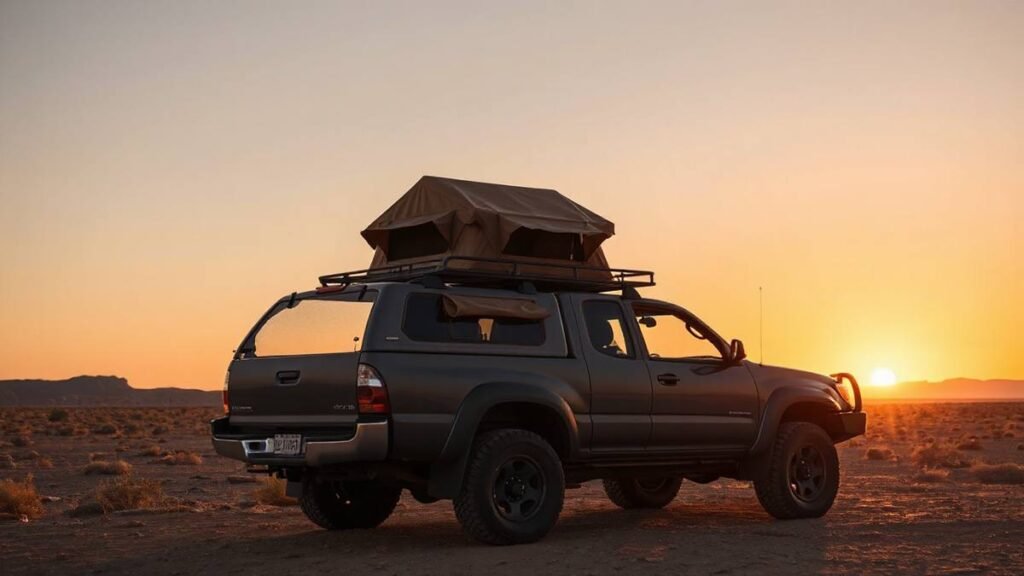
Sometimes, but only if the camper shell and its rack are specifically rated to carry a roof top tent while you drive and while you sleep. Most standard fiberglass shells are not strong enough, and the tent’s weight can damage the shell or become unsafe. Check the shell maker’s dynamic and static load ratings and the tent’s weight, or mount the tent on a bed rack instead. Compare roof top tents below, then read the limits.



As an Amazon Associate we may earn from qualifying purchases. The products above are my picks from Amazon search results for this topic, not a verified sales ranking. Prices change often, so use the button to see the current offer. For deals around Black Friday and Cyber Monday, see the Black Friday camping gear hub.
Why camper shells are a problem for roof top tents
A roof top tent, or RTT, can weigh anywhere from about 100 to well over 200 pounds, depending on the style and size. Adding the weight of two sleepers makes the load even higher. A typical fiberglass or aluminum truck cap was designed to cover the bed and protect gear, not to carry a heavy load on its roof while the truck is moving or sitting on uneven ground. Most are not designed to hold a tent and people without reinforcement, and mounting an RTT to a standard shell can crack the shell or cause failure.
Roof top tents also create leverage and wind forces, which add stress to the roof and mounting points. That is why ratings matter more than guesses, and why the manufacturer’s specifications must come before any purchase.
Two numbers that decide everything
| Rating | What it means |
|---|---|
| Dynamic load capacity | The weight the roof or rack can carry while the vehicle is moving. |
| Static load capacity | The weight the roof or rack can carry when parked, including sleepers. |
Both numbers must exceed the tent’s weight, and the static number must also cover the weight of the people who will sleep in it plus gear. Many roof racks have a high static rating but a lower dynamic rating, so check both. If the manufacturer does not publish these numbers, assume the shell cannot carry the load.
Shells and racks that may work
- Shells with a rated roof rack. Some manufacturers sell reinforced caps with rated cross bars for tents or gear. Follow their instructions exactly.
- Truck bed racks. A tall rack that mounts to the bed rails can carry the tent above a shell or in place of one.
- Overland caps. Some modern aluminum or composite caps are built with strong rooftop mounting systems for roof top tents.
- Soft or lightweight tents. A lighter tent may suit a rated rack more easily than a heavy hard shell.
Never rely on a seller or a forum post for load ratings. Read the actual specification sheet and, if in doubt, contact the maker.
Questions to ask before you mount a tent
- What are the dynamic and static load ratings of the shell and its rack?
- How much does the tent weigh, and what is its recommended mounting system?
- Does the vehicle’s roof or bed rack have a combined weight limit that includes gear?
- Will the tent’s clamshell or fold-out design clear the cab, the tailgate and the shell’s door?
- How will the added weight and height affect handling, fuel use and clearance in garages, trees and bridges?
Alternatives if your shell cannot carry one
If your shell is not rated for a roof top tent, you still have options. A bed rack that mounts independently can carry the tent. A tent that mounts to a trailer or an overland platform uses a separate frame. A ground tent or a tent designed for truck beds, such as a truck-bed tent, may be lighter and cheaper. Or you can use a conventional tent and keep the shell for storage. These approaches avoid load rating problems and often cost less. For general tent advice, see our guide to the best camping tents.
Types of roof top tents
Soft-shell roof top tents
These fold out or unfold with a ladder, and the fabric covers a frame. They are usually less expensive and offer more sleeping room when open, but they can take a few more minutes to set up and pack.
Hard-shell roof top tents
These open like a clamshell or pop straight up, and the hard shell protects the tent when closed. They set up quickly and are aerodynamic, but they cost more and often sleep fewer people.
Hybrid or lightweight designs
A few tents combine features, such as a lighter structure and a quicker setup, to suit smaller vehicles.
Whichever type you choose, check the weight, the mounting hardware and the size when open, because the tent has to fit your vehicle and your campsite.
Mounting basics and common mistakes
Mount the tent according to the manufacturer’s instructions, using the supplied hardware or compatible crossbars. Tighten bolts to the specified torque, and recheck them after the first few miles and regularly after that, because vibration can loosen hardware. Make sure the crossbars are rated for the tent’s weight, and that the mounting points are spaced to match the tent’s rails. Avoid mounting a tent so that it overhangs the tailgate or blocks the shell door. Common mistakes include using crossbars that are not rated for static loads, overlooking the combined weight of the tent plus gear and failing to retighten hardware after the first few trips.
Driving and camping with a roof top tent
A roof top tent raises the vehicle’s height and changes the center of gravity, so handling feels different, especially in crosswinds and on rough roads. Allow more braking distance, take corners slowly and be careful in parking garages, drive-throughs and low branches. At camp, park on level ground, set the parking brake and chock the wheels if needed. Use the ladder properly, and keep the sleepers’ weight within the static rating. In strong wind or storms, consider closing the tent or moving to safer shelter, since a tent on a vehicle is a large sail.
Cost, value and alternatives
Roof top tents cost more than most ground tents, and they add expense for racks and installation. They can pay off for people who camp often, move camp every night or want quick setup and a comfortable bed. For occasional campers, a ground tent is more economical. Prices on Amazon change frequently, so this guide does not quote them. Use the table button to check the current offer, and see our Black Friday camping gear hub for sale-season guidance.
Our recommendation
Do not mount a roof top tent on a camper shell unless the shell maker specifically rates it for that load. Check both load ratings, choose a mounting system designed for the tent and consider a separate bed rack if you want to keep a shell. When in doubt, choose a ground tent. Safety and ratings matter more than convenience, and a little research now prevents expensive damage later.
Weight limits: a worked example
The numbers matter, so here is a simple way to check them. Suppose a tent weighs 150 pounds, two sleepers weigh 350 pounds together and you keep 30 pounds of bedding inside. The static load is 530 pounds. If your rack or shell has a static rating of 500 pounds, it is not suitable, even if the dynamic rating looks fine. Now add the weight of the crossbars and the mounting hardware, which also count against the limit. Always leave a safety margin, and remember that ratings assume the load is spread across the mounting points and that the vehicle is parked on level ground. This is the kind of arithmetic that prevents broken shells and unsafe nights.
Also check the vehicle’s own roof or bed rating. A rack that is strong enough does not help if the truck bed rails or the mounting points cannot carry the force. Read the vehicle owner’s manual and the rack manual together.
Installation tips that save trouble
- Have a helper or two, since tents are heavy and awkward to lift.
- Use a ladder or a lift stand, and never try to hoist a tent alone.
- Check that crossbars are level and spaced as the tent manufacturer directs.
- Use thread locker or locking nuts if the manufacturer recommends them.
- Check clearance with the cab, the tailgate and any shell door.
- After the first drive, stop and retighten every bolt.
Weather, wind and condensation
A roof top tent sits above ground, which can be an advantage in wet, muddy or insect-heavy places. It also catches wind, so park with the narrow end facing the wind when you can. Keep the tent’s ventilation open to reduce condensation, and use a breathable mattress cover or a small fan if humidity builds. Wet weather means wet fabric when you pack up, so open the tent to dry it as soon as possible, and never store it damp for long. Our guide on washing a camping tent explains how to clean fabric safely.
Overlanding gear that goes with a roof top tent
Many overlanders pair a roof top tent with a few core items: an awning or a screen room for shade and bug protection, a portable stove and fuel, water containers, recovery gear for off-road trips and a compact power setup for lights and charging. Plan the weight carefully, because everything you carry adds to the vehicle’s load and affects handling and fuel use. Keep heavy items low and near the center of the vehicle, and avoid putting extra weight on the roof beyond the tent. A tidy, balanced vehicle is safer and more comfortable on long trips.
Buying checklist
Before you buy a roof top tent, write down your vehicle, its roof or bed rack ratings and the number of people who will sleep in the tent. Check the tent’s weight and its mounting requirements, and confirm that you can find compatible crossbars. Compare the setup time, the interior size and the warranty. Read recent reviews for patterns about leaks, zippers and mounting hardware. Finally, think about whether a roof top tent is the right choice, or whether a ground tent or a bed tent would meet your needs with less cost and risk. Because prices and availability change, check the live Amazon offer through the table when you are ready to buy.
FAQ
Can I put a roof top tent on a fiberglass camper shell?
Usually not, unless the shell is specifically rated for it. Most fiberglass shells cannot support the weight.
What is the difference between dynamic and static load?
Dynamic load is what a roof or rack can carry while moving, and static load is what it can carry while parked, including sleepers.
How heavy is a roof top tent?
Weights vary widely, often from about 100 to over 200 pounds, depending on size and style.
Do roof top tents affect fuel economy?
Yes, they add weight and wind resistance, which usually reduces fuel economy.
Is a roof top tent better than a ground tent?
They are quick to set up and keep you off the ground, but they cost more, add weight and make the vehicle taller.
Related guides
- Best side tent for teardrop camper
- A beginners guide to rooftop tent camping
- What are the best camping tents