
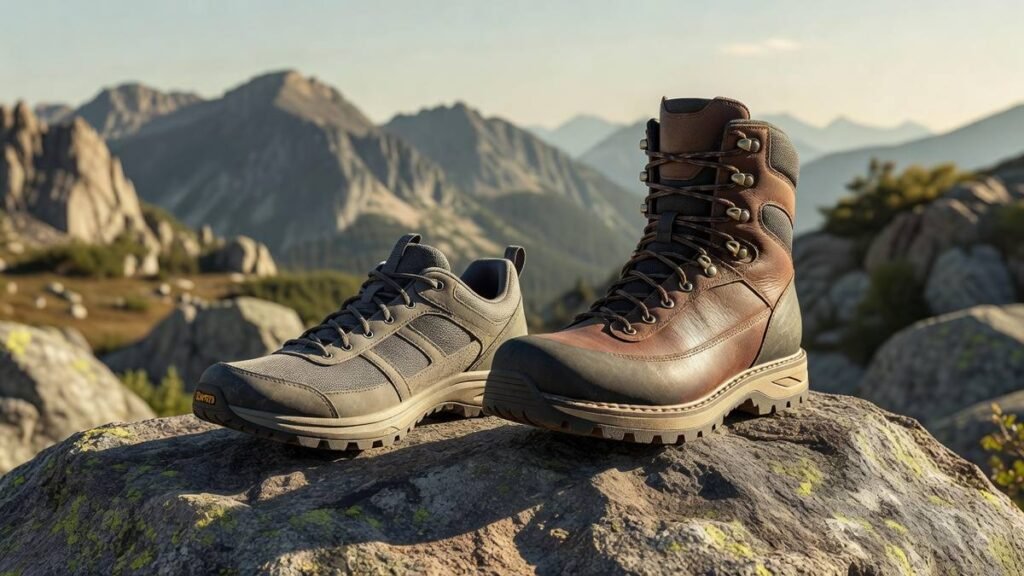
Quick answer: Backpacking boots are built for heavy loads over multiple days: higher cut, stiffer midsole, more support and more weight. Hiking boots and hiking shoes are lighter and more flexible for day hikes and light overnight loads. The pack weight you carry is the main reason to choose one over the other, since a heavy pack on rough ground demands more ankle and foot support.
The boot categories follow the pack categories. Light pack, light footwear; heavy pack, supportive boot.
This guide gives the practical differences and how to decide.
Related: tent camping gear checklist, carrying boots on a pack and pack weight.
Side by Side
| Feature | Hiking shoes and boots | Backpacking boots |
|---|---|---|
| Cut | Low to mid | Mid to high, over the ankle |
| Midsole | Flexible | Stiff, to support a loaded pack |
| Weight | Lighter | Heavier |
| Best for | Day hikes, light overnights | Multiday trips with heavy packs and rough terrain |
| Break-in | Little | More |
How to Decide
- Weigh your typical pack. REI defines a daypack load as about 30 pounds or less; heavier multiday loads push toward backpacking boots.
- Consider the terrain. Rocky, off-trail and scree favor stiffer boots.
- Consider your ankles. Prior injuries favor higher cuts.
- Try them loaded. Walk with the pack you will carry.
Honest Limits
Footwear categories are marketing labels and overlap. We have not tested boots, and fit matters more than category. Try them on with your hiking socks.
Frequently Asked Questions
What is a backpacking boot?
A stiffer, higher boot built for heavy multiday loads.
Can I backpack in hiking shoes?
With a light pack on good trails, many do.
Do I need high ankles?
For heavy loads, rough ground or weak ankles, they help.
Which is lighter?
Hiking shoes and boots.
Which needs break-in?
Backpacking boots, usually more.
What pack weight calls for backpacking boots?
There is no fixed line; heavier multiday loads and rough terrain push that way.
Are trail runners enough?
With a light pack, often yes.
Should I buy waterproof?
For wet climates; non-waterproof dries faster.
How do I test them?
Walk with your loaded pack in the store.
Does fit matter more than type?
Yes.
Bottom Line
Backpacking boots support heavy loads; hiking boots and shoes suit light ones.
Match the footwear to the pack weight and terrain.
Sources: REI, How to Choose Daypacks; REI, How to Choose a Backpack.