
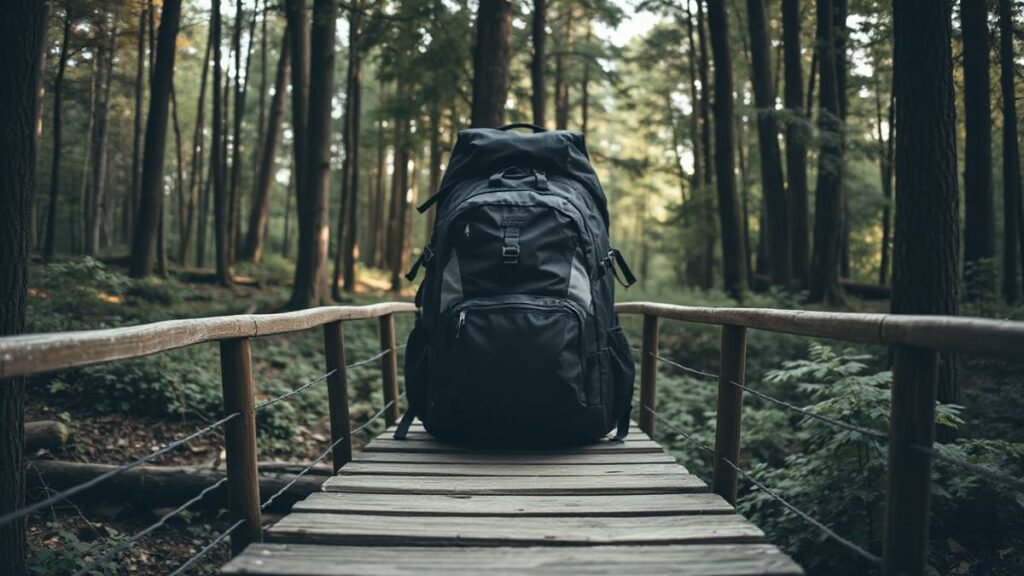
The North Face Borealis is a comfortable everyday and school backpack that works for short, easy day hikes, but it is not a dedicated hiking pack. It has padded straps and a laptop sleeve, yet it lacks the hip belt, hydration-focused design and load support of a true daypack, so it is best for light loads and casual trails. Compare current Borealis-style and hiking daypacks below, then see which suits you.


As an Amazon Associate we may earn from qualifying purchases. The products above are my picks from Amazon search results for this topic, not a verified sales ranking. Prices change often, so use the button to see the current offer. For deals around Black Friday and Cyber Monday, see the Black Friday camping gear hub.
What the Borealis is designed for
The Borealis is one of The North Face’s best-known everyday backpacks. It is aimed at students, commuters and travelers, and it is typically sold in a size of about 28 liters, though versions and sizes can change from season to season, so check the current listing. Features that the maker usually highlights include padded shoulder straps, a ventilated back panel, a padded laptop compartment, a front zippered pocket and side pockets for water bottles.
Those features make it a good everyday bag. They also explain its limits for hiking, because a pack designed around a laptop and school books is not the same as a pack designed around a hip belt and a water bladder.
What it does well on the trail
- Comfortable for light loads. The padded straps and back panel are comfortable for short walks with a few pounds.
- Ventilated back. A mesh-style back panel helps airflow on warm days.
- Easy organization. Multiple pockets keep small items like snacks and keys handy.
- Versatility. One bag can serve for school, travel and light hikes.
- Durability for everyday use. The materials are intended to handle daily wear.
Where it falls short for hiking
- No real hip belt. Many versions have no or only a light waist strap, so all the weight rides on your shoulders.
- Limited load support. Everyday packs lack the frame or stiffness of hiking packs, so heavy loads feel uncomfortable.
- Hydration setup. There may be no dedicated hydration sleeve or port, though a bottle fits in the side pocket.
- Not weatherproof. Zippers and fabric shed light rain but do not keep out a downpour.
- Fit. Everyday packs often come in one size, so they may not fit your torso well.
When it is a reasonable choice
| Situation | Borealis-style pack? |
|---|---|
| Short, easy walk or nature trail | Yes |
| Half-day hike with light gear | Possible if you keep weight low |
| Full-day hike with layers and food | Better to use a hiking daypack |
| Overnight trip | No |
| Commuting and school | Yes |
Better choices for hiking
If you hike regularly, choose a daypack made for trails. Look for a hip belt, hydration compatibility, ventilation and pockets suited for hiking, such as side pockets for bottles and a place for trekking poles. Our guide to the best day hiking backpacks lists what to look for, and our guide on a good backpack for hiking and school covers dual-use options.
If you use it for hiking anyway
- Keep the load under about 10 pounds.
- Use the sternum strap, and tighten the straps so the pack sits high and close to your back.
- Carry water in side pockets or a bladder if it fits.
- Put rain-sensitive items in a waterproof bag.
- Pack the heaviest items close to your back.
- Take breaks to relieve shoulder pressure.
How the Borealis compares with a true daypack
The difference between an everyday pack and a hiking daypack comes down to load transfer and trail features. A hiking daypack has a padded hip belt that takes weight off your shoulders, a sternum strap to stabilize the pack, a ventilated back panel and often a hydration reservoir sleeve. It has side pockets that can be reached while walking, loops for trekking poles and sometimes a rain cover. The Borealis includes some of these elements, such as the padded back and sternum strap on many versions, but not the full set.
On a short hike you may never notice the difference. On a longer hike with three liters of water, lunch, a rain jacket and a first-aid kit, you will feel it. A pack without a hip belt puts all that weight on your shoulders and upper back, and that can lead to soreness within an hour or two.
Capacity and what fits
At around 28 liters, an everyday pack of this size has enough room for a lunch, a water bottle, a light jacket and a small first-aid kit. It does not have much space for bulky layers or extra water, and it lacks the compression system to keep items from shifting. If you carry a laptop in the padded sleeve, you will use a lot of the pack’s volume. For hiking, leave the laptop at home and use the sleeve for a water bladder or a map, if it fits.
Everyday and travel use
The Borealis excels in daily life. It is a good commuter pack, a decent travel bag and a comfortable carry for school. If you want one bag for work during the week and an easy walk on the weekend, it will serve. If your priority is hiking, treat it as an occasional trail pack, and buy a proper daypack as soon as your hikes get longer or harder. Our guide on using a laptop backpack for hiking covers the same trade-offs.
Caring for an everyday pack that sees trail use
Trail dirt, sweat and sunscreen can build up on any bag. After a hike, empty the pockets, shake out debris and wipe the straps and back panel with a damp cloth. Let the pack dry in the shade and avoid washing machines, which can damage coatings and foam. Check the zippers for grit and the stitching at the strap anchors, since those take the most stress. Our guide on washing a hiking backpack explains how to clean a pack safely.
Our recommendation
Use a Borealis-style pack for school, commuting, travel and short, easy walks. For regular hiking, choose a daypack with a hip belt, hydration support and a fit that matches your torso. Check current options and offers through the table, since prices change often, and see our Black Friday camping gear hub if you are shopping around Black Friday.
Choosing a hiking daypack if you like the Borealis
If you like the look and everyday convenience of a Borealis but want better trail performance, look for hybrid packs. Several makers offer daypacks that combine a laptop sleeve and organization with a hip belt, a hydration sleeve and a ventilated back. These work for school, commuting and hiking. Check that the hip belt is padded, not just a webbing strap, and that the back panel is shaped for airflow. Look at the capacity, between 20 and 30 liters is most useful, and the weight of the pack itself, since heavy bags add to your load.
If you are a dedicated hiker, a purpose-built daypack from a hiking brand will outperform a hybrid. Compare options in the table above, and read our guide to day hiking backpacks for what to check.
Packing a light-duty pack for a hike
If you are going to use an everyday pack on a trail, pack it with care. Put water and other heavy items near your back and low enough that the weight sits between your shoulder blades and hips. Put light items, such as a jacket, on top. Use the side pockets for bottles, but check that they do not fall out when you bend over. Keep your phone, snacks and sunscreen in easy-to-reach pockets. Tighten the sternum strap so that the shoulder straps do not slip off, and adjust the shoulder straps so that the pack sits high and close to your back. Take a short test walk to check the fit before you leave the trailhead.
Signs it is time for a hiking pack
- Your shoulders or upper back ache after an hour of hiking.
- You carry more than about 10 pounds on every hike.
- You hike longer than three or four hours.
- You hike in hot weather and want a ventilated back.
- You want easy access to water without taking the pack off.
- You carry extra layers, a first-aid kit and safety gear for varying weather.
If you recognize two or three of these, a hiking-specific daypack is likely worth the investment.
Everyday carry versus trail carry
Many people buy one bag and hope it will do everything. That works only when the activities have similar demands. An everyday pack is optimized for flat, upright walking with a laptop, a water bottle and a few books. A trail pack is optimized for uneven terrain, changing weather and long hours on your feet, with the weight carried on your hips. If most of your use is urban, and your hikes are short, one bag may be enough. If your hikes are regular and longer, a second pack is a better answer, and you can keep the everyday pack for the office and travel.
If you are on a budget, remember that the best pack is the one that fits you and lasts. A well-chosen hiking daypack can often double as a travel bag, and it will carry a day’s gear far more comfortably than a pack not designed for the trail.
Safety notes for hiking with any light pack
Wherever you hike, carry the basics: water, food, a map or navigation, a light layer, sun protection, a first-aid kit and a way to signal for help. Check the weather before you go, and tell someone your route and return time. If your pack is too small to carry all of that, choose a larger one or shorten the hike. Never rely on a single light layer for a day with changeable weather, and remember that a pack that is comfortable for an hour can feel very different after three.
FAQ
Is the North Face Borealis good for hiking?
It works for short, easy hikes with light loads, but it is built for everyday use and lacks the hip belt and support of a hiking pack.
How many liters is the Borealis?
Many versions are around 28 liters, but sizes change by model and year. Check the current listing.
Can the Borealis hold a hydration bladder?
Some versions may, but many do not have a dedicated sleeve. Check the product details.
Is the Borealis waterproof?
No. It sheds light rain but is not waterproof.
What is better for hiking than the Borealis?
A hiking daypack with a hip belt, hydration support and a ventilated back.
Related guides
- What are the best day hiking backpacks
- What is a good backpack for hiking and school
- Are fjallraven kanken backpacks good for hiking