
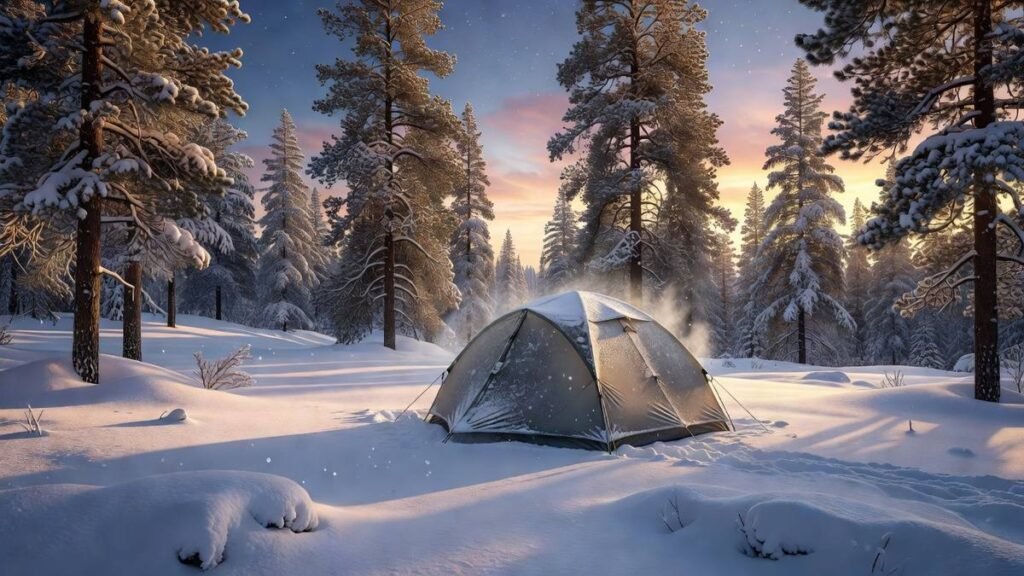
Quick answer: Yes. REI says a 3-season tent can work below tree line in mild winter weather, and a 4-season tent is the choice for high wind and heavy snow. The sleep system matters more than the tent: two full-length pads, a bag rated at least 10 degrees F below the coldest expected temperature, and ventilation. Never run a fuel-burning heater while sleeping, per CPSC.
Winter tent camping is quieter and bug-free, and it punishes mistakes. Cold ground, wet gear and sealed tents cause most problems.
This guide follows REI winter camping basics and CPSC carbon monoxide guidance.
Related: tent camping gear checklist, 3-season tents in winter and sleeping pad R-value.
The Tent
REI advises a 4-season tent for high winds and heavy snow, with sturdier poles and a fly that extends close to the ground. Choose a tent with room for one extra person, and do not seal it completely, because it needs ventilation. Pack down snow with snowshoes or skis before pitching, and position the tent for early sun.
The Sleep System
| Item | REI guidance |
|---|---|
| Pads | Two full-length pads: closed-cell foam on the ground, self-inflating on top. Winter pads are usually R-4 or higher |
| Bag | Rated at least 10 degrees F below the coldest expected temperature |
| Liner | Adds roughly 5 to 25 degrees F |
| Clothing | Sleep in clean, dry base layers |
Staying Warm at Night
- Eat a snack before bed; digestion produces heat.
- Do about 50 jumping jacks before getting in the bag.
- Fill a hard plastic bottle with about 1 liter of boiling water and put it in the bag.
- Keep boots, insoles and batteries inside your bag or jacket.
- Stow water bottles upside down so lids do not freeze.
Heaters and Stoves
REI says liquid-fuel stoves perform well in cold, canister stoves need a pressure regulator, and canisters should be kept warm in a jacket pocket. Cook outside the tent.
Honest Limits
Winter camping carries real risk of hypothermia and frostbite. This guide gives the basics, not a safety guarantee. Start with a short trip near your vehicle and check the forecast.
Frequently Asked Questions
Can you tent camp in winter?
Yes, with the right tent, pads and bag.
Do I need a 4-season tent?
REI says a 3-season tent can work below tree line in mild weather; 4-season for wind and heavy snow.
How many sleeping pads?
Two full-length pads, foam under inflatable.
What bag rating?
At least 10 degrees F below the coldest expected temperature.
Can I use a heater in the tent?
Not a fuel-burning one while sleeping, per CPSC.
Should I seal the tent?
No. REI says it needs ventilation.
Where should I pitch?
Sheltered from wind, away from avalanche slopes and dead limbs, 200 feet from water and trails.
How do I keep water from freezing?
Store bottles upside down.
What stove works in cold?
Liquid-fuel, or a canister stove with a regulator.
What if I start shivering hard?
Get warm and dry. CDC lists confusion and fumbling hands as hypothermia signs; seek help.
Bottom Line
Winter tent camping works with a suitable tent, two pads, a warm bag and ventilation.
Keep fuel heaters out of the tent while you sleep.
Sources: REI, Winter Camping Basics; CPSC, Portable Heaters and Camping Equipment; CDC, Hypothermia.